

If you are new to markets, the term trading platform can sound more technical than it really is. In simple terms, it is the software you use to view prices, place trades, manage positions, and monitor your account. For readers in the UAE, that choice matters because platform quality, fees, and regulation may directly affect your experience and your level of risk. A well-designed platform could make research and order placement easier, while a poor one may create confusion around pricing, speed, or account features. If you are still comparing broad options, our guide to the best trading platform uae is a useful next step before you commit funds to any provider.
What a trading platform actually means
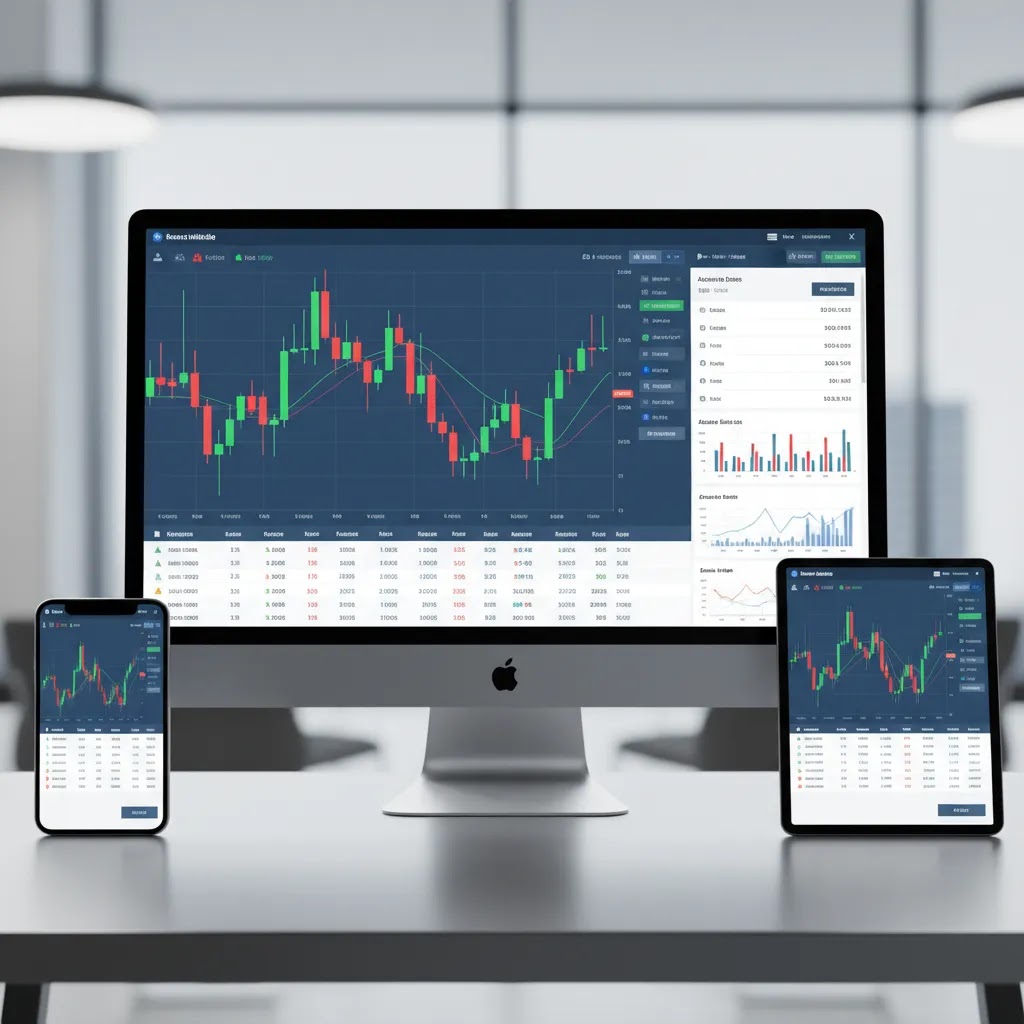
A trading platform is an electronic interface that connects you to financial markets through a broker or investment provider. It typically shows live or delayed price charts, lets you search instruments, enter buy and sell orders, set stop-loss or take-profit levels, and review your transaction history.
The platform itself is not always the same thing as the broker. In many cases, the broker provides market access, custody arrangements, pricing, and account infrastructure, while the platform is the software layer you use day to day. Some firms build their own platform, such as eToro WebTrader, xStation 5, OREX, or Plus500 WebTrader. Others support third-party systems such as MT4, MT5, cTrader, or TradingView integration.
For most retail users, the platform is where your practical experience happens. It influences how easily you can find markets, understand fees, place trades, and manage risk. That matters whether you are trading forex, stocks, ETFs, commodities, indices, or crypto CFDs. If you are still learning the basics of markets before selecting software, our trading for beginners resource may help you build that foundation first.
Main trading platform types
There is no single format that suits every trader. Most platforms fall into a few practical categories.
Web trading platforms
A web trading platform runs in your browser without a full software download. Examples from covered providers include eToro WebTrader, Plus500 WebTrader, AvaTrade WebTrader, and Capital.com Web. These may suit users who want fast access from different devices and prefer a simpler setup.
Desktop trading platforms
Desktop platforms are installed on a computer and often include more advanced charting, order management, and customization. MT4, MT5, cTrader, TWS from Interactive Brokers, and SaxoTraderPRO fit this category. Desktop software may appeal more to active traders who want deeper analytical tools.
Mobile trading apps
Nearly every major broker now offers mobile access. Examples include IBKR Mobile, AvaTradeGO, Exness Terminal, xStation mobile, and eToro’s mobile app. Mobile trading can be convenient, but smaller screens may limit analysis, especially for complex chart work or multi-asset portfolio review.
Proprietary vs third-party platforms
Some brokers build their own software. Others license widely used systems such as MetaTrader. If you want to understand one of the most common third-party platforms in more detail, see our metatrader 5 guide. If you are comparing older and newer MetaTrader options, our mt4 vs mt5 vs ctrader comparison can help clarify the differences.
Key features to look for in an online trading platform
When readers ask what is the best trading platform, the honest answer is that the right choice depends on your needs, not marketing claims. A beginner focused on education and ease of use may prioritize different features than an active forex trader comparing execution and spreads.
These are the most important platform features to assess.
- Regulation and local relevance: In the UAE, many readers look for oversight from bodies such as the DFSA, SCA, or ADGM FSRA. Based on available data, examples include Pepperstone and XTB with DFSA regulation, Capital.com and ADSS with SCA regulation, and AvaTrade with ADGM FSRA regulation.
- Market access: Some platforms are specialized around forex and CFDs, while others offer wider multi-asset access. Interactive Brokers covers 150+ markets, while Saxo Bank lists 72,000+ instruments. eToro includes forex, stocks, ETFs, crypto, commodities, and indices.
- Pricing structure: You should check spreads, commissions, and any inactivity or overnight charges. For example, Pepperstone Razor lists 0.0 pips spreads with a $7 per lot commission, while Plus500 and Capital.com use spread-only pricing on most instruments.
- Ease of use: Platforms such as Plus500 WebTrader and eToro are often easier for beginners to understand. Professional systems like TWS may offer more depth but can also involve a steeper learning curve.
- Research and education: Interactive Brokers emphasizes comprehensive research, Saxo Bank includes premium research and Morningstar integration, and AvaTrade and XTB both highlight strong educational resources.
- Special tools: eToro offers copy trading and Smart Portfolios, Capital.com includes AI-powered insights and TradingView integration, and AvaTrade features AvaProtect risk management.
- Islamic account availability: For many UAE readers, swap-free access matters. Based on current product data, most covered brokers offer Islamic accounts, though Interactive Brokers and Saxo Bank do not.
A useful rule is to match the platform to your actual behavior. If you mainly invest from your phone, mobile quality matters. If you trade currencies more actively, charting, spreads, and order controls may matter more than social features or portfolio themes.
Trading platform security and account protection checklist (UAE-focused)
What many people overlook is that a trading platform is not just charting and order buttons. It is also the front door to your account. From a practical standpoint, the right security and account controls can reduce avoidable risks like unauthorized logins, social engineering, and withdrawal fraud, even though they cannot eliminate market risk.
Start with the security features you can usually verify before depositing. Two-factor authentication (2FA) is one of the most important, ideally with an authenticator app rather than SMS alone. Some platforms also support biometric login (Face ID or fingerprint), device management (seeing and removing trusted devices), session timeouts, and login alerts. Encryption is typically standard for reputable providers, but you still want to see clear explanations of how logins, personal data, and payment details are protected.
Now, when it comes to protecting your funds, withdrawal security matters as much as login security. Many brokers use controls such as name-matching on bank transfers, withdrawal limits, cooling-off periods after changing banking details, and confirmation steps for new withdrawal methods. The exact setup varies by provider, but if a platform makes it unusually easy to change withdrawal details without extra checks, that can be a concern.
For UAE-based traders, regulation is part of the security conversation, but you need to verify the exact entity that will hold your account. A global brand may operate multiple entities, including one regulated by the DFSA, SCA, or ADGM FSRA, and another offshore entity under a different regulator. Consider this: the platform name in the app store does not always tell you which legal entity is serving you. Before you fund, look for the legal entity name inside the platform or on the account opening pages, then cross-check it directly on the regulator’s public register. This is also where you may see whether client money segregation is stated, meaning client funds are generally kept separate from the broker’s operating capital under many regulatory frameworks. The wording and protections can differ by jurisdiction, so it is worth reading the client agreement and key risk disclosures carefully.
Finally, pay attention to red flags in the onboarding flow. Pressure to deposit immediately, unclear fee pages, hard-to-find risk disclosures, or aggressive “account manager” upsells are signals to slow down. If you cannot easily find the regulated entity details, complaints process, and basic fee information from within the platform or the broker’s site, that is usually a sign the experience is built more for marketing than for transparency.
Examples of trading platforms in the UAE market
Looking at real platforms makes the concept easier to understand. Here are a few examples from Business24-7 coverage.
eToro is a multi-asset broker rated 4.5/5, with a $200 minimum deposit, spreads from 1.0 pips, and features such as Copy Trading, Social Trading, Smart Portfolios, and 0% commission on real stocks. It is regulated by CySEC, FCA, ASIC, and ADGM, and supports AED deposits and Arabic support.
Pepperstone is a forex and CFD broker rated 4.5/5 with no minimum deposit. It offers MT4, MT5, cTrader, and TradingView, with Razor spreads from 0.0 pips and a $7 per lot commission. It is regulated by DFSA, FCA, ASIC, CySEC, and BaFin.
Capital.com is a CFD broker rated 4.0/5 with a low $20 minimum deposit. It supports web, mobile, and MT4, offers AI-powered insights and 6,000+ markets, and is regulated by the SCA, FCA, CySEC, and ASIC.
Interactive Brokers is a multi-asset broker rated 4.5/5 that offers TWS, IBKR Mobile, and Client Portal, with pricing from 0.25 pips and access to 150+ markets. It is regulated by DFSA, SEC, FCA, and SFC, but does not offer an Islamic account.
AvaTrade is a forex and CFD broker rated 4.5/5 with a $100 minimum deposit, spreads from 0.9 pips, and support for MT4, MT5, AvaTradeGO, and WebTrader. It is regulated by ADGM FSRA, CBI, ASIC, and FSA Japan, and offers AED accounts.
Trading platform vs broker: what is the difference?
This is one of the most common areas of confusion.
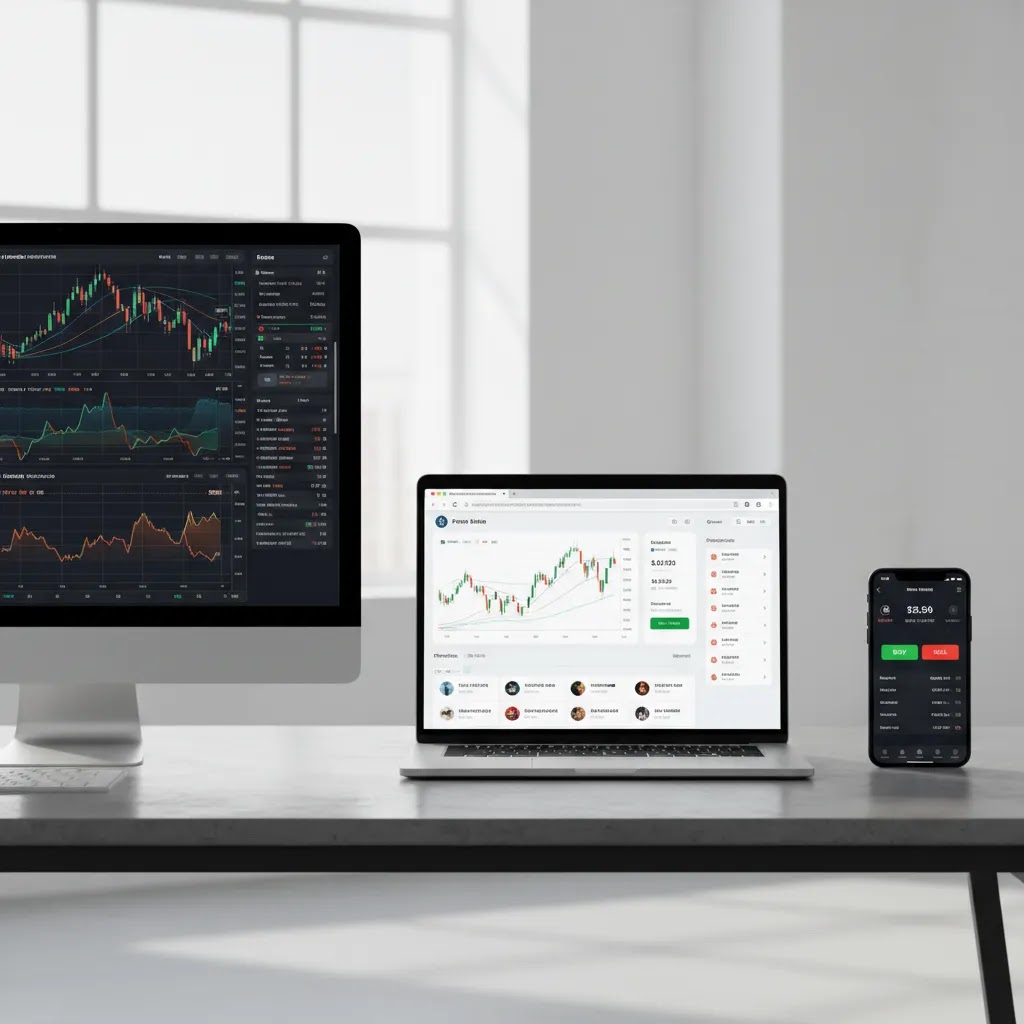
A broker is the company that gives you access to markets, processes your trades, sets pricing terms, handles account opening, and operates under a regulatory framework. A trading platform is the software you use to interact with that broker’s services.
Sometimes the same brand controls both. Plus500, eToro, ADSS, and XTB all offer their own branded platforms. In other cases, the broker gives you a choice of trading software, such as MT4, MT5, cTrader, or proprietary tools. That is why two brokers may both offer MT5, but still differ meaningfully in spreads, commissions, regulation, funding options, and customer support.
For practical decision-making, you need to assess both parts together. Good software does not offset weak regulation. Low spreads do not always compensate for poor usability or limited support. A careful comparison usually looks at the full package, not just the app interface.
How trading platforms work behind the scenes (orders and execution)
Here’s the thing: the platform is what you see, but execution is what actually happens. Understanding the basic trade flow can help you interpret what the platform shows you, especially during fast markets.
In most cases, you place an order inside the platform, for example buy EUR/USD or sell a stock CFD. That order is then transmitted to the broker, which routes it for execution based on its model and the product you are trading. After execution, you see a fill confirmation in the platform, your open position updates, and your account metrics change, such as used margin, available margin, and unrealized profit or loss.
You will also see a few execution terms that confuse many beginners. A market order is designed to fill at the best available price at that moment, which means the final fill price could differ slightly from what you expected, especially in volatile markets. A limit order is designed to fill at your chosen price or better, but it may not fill at all if the market never trades at that level.
Slippage is one reason prices can differ from what you clicked. It usually happens when prices move between the time you send the order and the time it is executed. Requotes are another term some traders run into, typically when a broker cannot fill at the requested price and asks you to accept a new one. Partial fills can occur when only part of your order size is executed immediately, with the rest filled later, depending on liquidity and how the broker handles order routing.
From a practical standpoint, execution quality is difficult to judge from marketing alone. A simple way to sanity-check the experience is to test the platform on a demo account first and use the same order types you expect to use live. Pay attention to whether the platform supports the order controls you need, such as stop-loss, take-profit, trailing stops, and price alerts, and whether the broker provides clear execution disclosures inside the account area. None of this guarantees outcomes, but it can help you avoid unpleasant surprises after funding.
How Business24-7 can help you compare platforms
At Business24-7, our goal is to help UAE-based readers sort through platform marketing with a more evidence-based lens. That approach reflects the site’s editorial focus on safety, clarity, and unbiased comparisons, supported by Braden Chase’s background as a former research specialist at Forex.com. If you are moving from basic research into decision mode, compare platforms side by side on our site, read a full broker review before opening an account, and use our guides to narrow choices by asset class, platform style, and regulatory status.
You can start with our Trading Platforms and Brokers section for broader education, and if mobile investing is your priority, review our guide to the best trading apps in uae before making a final choice.

How to choose a trading platform
If you are comparing platforms for the first time, use a checklist rather than relying on branding alone.
- Check the regulation first. For UAE readers, this is often the first filter. SCA, DFSA, and ADGM FSRA oversight may offer more confidence than unclear offshore authorization. International regulators such as the FCA, ASIC, and CySEC can also be relevant depending on the entity serving your account. For more background on local rules, browse Business24-7’s UAE Regulation and Tax resources.
- Understand the fee model. Ask whether costs come from spreads, fixed commissions, overnight funding, inactivity charges, or all of the above. AvaTrade applies an inactivity fee after 3 months. Exness Raw Spread accounts charge $3.50 per lot. Plus500 applies overnight funding fees. These details may matter more than headline spreads alone.
- Match the platform to your assets. A forex-focused trader may want low spreads and charting depth. A long-term investor may care more about access to stocks, ETFs, and research tools. Interactive Brokers and Saxo Bank provide broader market access than many CFD-focused platforms.
- Assess usability honestly. Some beginners may prefer a cleaner interface such as Plus500 or eToro. More advanced traders may prefer the flexibility of MT5, cTrader, TWS, or TradingView-linked platforms. Convenience matters, but so does the ability to manage risk clearly.
- Review practical account details. Look at minimum deposit, AED support, Arabic support, Islamic account availability, withdrawal processes, and customer service quality. For example, eToro supports AED deposits and Arabic support, while ADSS is UAE-headquartered and offers local support.
One final point: no trading platform removes market risk. Even a well-regulated, user-friendly provider cannot prevent losses if markets move against you. Platform choice may improve transparency and execution, but it does not guarantee profitable outcomes.
Common trading platform mistakes new traders make (and how to avoid them)
Many beginners blame themselves for early mistakes that are actually platform mistakes. Think of it this way: if you do not fully understand what the platform is showing you, it is easy to mis-size a position, misread costs, or take risks you did not intend to take.
One common issue is trying to do everything on mobile. Mobile apps are excellent for monitoring positions and placing straightforward orders, but complex chart work, multi-timeframe analysis, and careful order setup are often easier on web or desktop. If you are placing larger or more complex trades, consider doing the analysis on a bigger screen and using mobile as a companion, not the only tool.
Another frequent problem is misunderstanding leverage and margin displays. Many platforms show available margin, used margin, and margin level, but they may not explain what triggers a margin call or stop-out in simple language. If you trade leveraged products like CFDs, small market moves can create outsized gains or losses, and losses can happen quickly. Before trading live, take time to learn how your platform calculates margin, where it shows liquidation risk, and how to set protective orders such as stop-losses.
Costs are another area where platforms can mislead by omission. New traders often focus on spreads and forget overnight funding (swap) for positions held past a daily cutoff time. Others misread spread-only pricing versus spread plus commission pricing. The easiest way to avoid this is to review your trade confirmations and account history during your first week. Check the spread you paid, whether a commission was charged, and whether any overnight funding was applied, so you are not guessing later.
If you want a simple first-week setup approach, start with a demo account and practice the exact order types you plan to use. Set a default order size that reflects what you can afford to lose, not what looks exciting on the screen. Enable risk controls you will actually use, such as stop-loss defaults where possible, price alerts, and notifications for margin level changes. Make a habit of reviewing statements and trade history so you understand how the platform records fills, fees, and profits or losses.
These steps can help you use platform tools more safely, but they cannot remove risk. Trading, especially with leverage, can lead to losses even if you use stop-losses and alerts, including in fast markets where execution and slippage may affect outcomes.
Pros and Cons
Strengths
- A trading platform gives you a practical way to access markets, monitor prices, place orders, and manage risk from one interface.
- There are multiple platform types, including web, desktop, and mobile, so users can choose based on convenience and trading style.
- Many regulated brokers available to UAE users support recognized platforms or proprietary systems with useful tools such as charting, copy trading, and research.
- Some providers offer low or no minimum deposit requirements, including Pepperstone, Interactive Brokers, and XTB at $0, which may lower the barrier to entry.
- Several covered brokers support Islamic accounts, AED funding, or UAE-specific regulation, which may be especially relevant for local readers.
Considerations
- A strong platform does not remove trading risk, and losses are still possible even with good tools and regulation.
- Pricing can be more complex than it first appears, especially when spreads, commissions, overnight fees, or inactivity charges apply.
- Some advanced platforms may be difficult for beginners to use well without additional learning and practice.
- Platform quality and broker quality are not always the same thing, so you need to evaluate both the software and the company behind it.
Frequently Asked Questions
What is a trading platform in simple terms?
A trading platform is software that lets you access financial markets through a broker. You can usually view charts, search instruments, place buy or sell orders, and monitor your account from it. In most cases, it acts as the working interface between you and the broker’s market access infrastructure.
Is a trading platform the same as a broker?
No. A broker is the regulated company that provides market access and handles your account, while the platform is the software used to place trades and manage positions. Some brokers build their own platforms, and others offer third-party software such as MT4 or MT5 alongside their core brokerage services.
What is the best trading platform for beginners?
There is no single best option for every beginner. In most cases, a good beginner platform has clear pricing, simple navigation, educational support, and strong regulation. Based on available data, some readers may prefer easier interfaces like eToro or Plus500, while others may want more learning tools from AvaTrade or XTB.
What should UAE traders check before opening an account?
You should usually start with regulation, fee transparency, platform usability, and product range. UAE readers may also want to check whether the broker is regulated by the DFSA, SCA, or ADGM FSRA, whether AED funding is available, and whether Islamic accounts or Arabic support are offered where relevant.
Are mobile trading platforms good enough on their own?
They can be, depending on your style. Mobile apps are useful for monitoring positions, entering simple trades, and managing your account while away from a desk. For detailed chart analysis or complex order workflows, many traders still prefer web or desktop platforms because they offer more screen space and often more tools.
Why do some platforms have no commission but still cost money?
A platform may still charge through spreads, overnight funding, currency conversion, or inactivity fees. For example, some brokers offer spread-only pricing rather than fixed dealing commissions. That is why it helps to review the full fee schedule instead of focusing only on whether a platform advertises commission-free trading.
Can I use the same platform for forex and stocks?
Sometimes yes, but it depends on the broker and account structure. Multi-asset brokers such as eToro, Interactive Brokers, and Saxo Bank offer access to several asset classes, while some CFD-focused brokers also cover forex, stocks, indices, commodities, and ETFs through one platform. The exact instrument type may differ between real assets and CFDs.
Do all trading platforms offer Islamic accounts?
No. Many covered brokers do offer swap-free accounts, including eToro, AvaTrade, Pepperstone, Plus500, XTB, Capital.com, ADSS, and Exness. Based on current product data, Interactive Brokers and Saxo Bank do not. If this matters to you, it is worth checking the broker’s terms carefully before applying.
How much money do I need to start using a trading platform?
The minimum varies widely. Capital.com lists a $20 minimum deposit, Exness starts from $10, AvaTrade and Plus500 from $100, and eToro from $200. Some brokers, including Pepperstone, Interactive Brokers, and XTB, list no minimum deposit. A low starting amount may help accessibility, but it should not be the only factor you compare.
What does a trading platform do?
A trading platform displays market prices and gives you tools to place orders, manage open positions, set risk controls like stop-loss and take-profit, and track account activity such as balances, margin, and trade history. It is also where you typically access research, watchlists, and notifications, depending on what the broker provides.
What is an example of a trading platform?
Common examples include web platforms like Plus500 WebTrader, multi-asset interfaces like eToro WebTrader, and widely used third-party platforms like MT4 and MT5. The important detail is that the platform is the software interface, while the broker behind it provides the account and trade execution.
Which trading platform is best?
The best trading platform depends on what you trade, how often you trade, and what you need from the software. Many UAE readers focus on regulation (such as DFSA, SCA, or ADGM FSRA oversight where relevant), total costs (spreads, commissions, and overnight fees), and usability. A platform can be popular, but still not fit your goals or risk tolerance, so it helps to compare based on your real use case.
Can I make $1000 per day from trading?
It is possible for traders to have days with large gains, but it is also possible to have large losses, and there is no reliable daily income level in trading. The reality is that markets are unpredictable, and strategies that appear to work in one period may fail in another. If you see marketing that implies consistent daily profits, treat it cautiously. Use risk controls, understand leverage, and consider whether you can afford the downside before trading live.
Key Takeaways
- A trading platform is the software interface you use to access markets, place trades, and manage your account through a broker.
- The right platform depends on your goals, asset preferences, need for mobile or desktop access, and comfort with trading tools.
- UAE readers should pay close attention to regulation, especially where DFSA, SCA, or ADGM FSRA oversight is relevant.
- Fees may include spreads, commissions, overnight funding, and inactivity charges, so total cost matters more than one headline figure.
- No platform is risk-free, and choosing better software does not guarantee investment success or protect you from market losses.
Conclusion
Understanding what a trading platform is can save you from making a rushed decision based only on branding or app design. The software matters, but so do regulation, fees, supported markets, and the broker behind the platform. For UAE-based readers, a careful review of local relevance, funding options, and regulatory status may be especially important. Business24-7 aims to make that process clearer through independent, research-led reviews and comparisons shaped by practical trading experience. If you are ready to narrow your options, explore our platform guides, compare brokers side by side, and read full reviews before opening an account or funding one for the first time.
Disclaimer: The content published on Business24-7 is intended for informational purposes only and does not constitute financial advice, investment recommendations, or an endorsement of any specific platform or financial product. Trading and investing carry significant risk, including the potential loss of capital. You should conduct your own research and, where appropriate, seek independent financial advice before making any investment decisions. Business24-7 does not accept responsibility for any financial losses incurred as a result of information published on this site.
Disclaimer
eToro is a multi-asset platform which offers both investing in stocks and cryptoassets, as well as trading CFDs.
Please note that CFDs are complex instruments and come with a high risk of losing money rapidly due to leverage. 61% of retail investor accounts lose money when trading CFDs with this provider. You should consider whether you understand how CFDs work, and whether you can afford to take the high risk of losing your money
This communication is intended for information and educational purposes only and should not be considered investment advice or investment recommendation. Past performance is not an indication of future results.
Copy Trading does not amount to investment advice. The value of your investments may go up or down. Your capital is at risk.
Crypto assets are complex and carry a high risk of volatility and loss. Trading or investing in crypto assets may not be suitable for all investors. Take 2 mins to learn more
eToro USA LLC does not offer CFDs and makes no representation and assumes no liability as to the accuracy or completeness of the content of this publication, which has been prepared by our partner utilizing publicly available non-entity specific information about eToro.

If you are new to markets, the term trading platform can sound more technical than it really is. In simple terms, it is the software you use to view prices, place trades, manage positions, and monitor your account. For readers in the UAE, that choice matters because platform quality, fees, and regulation may directly affect your experience and your level…