

If you want gold exposure in the UAE, the first real choice is usually not whether gold has a role in your portfolio, but how you should own it. Some investors prefer coins or bars they can store themselves. Others want the convenience of a gold etf that can usually be bought and sold through a regulated broker. Each route has trade-offs around cost, liquidity, storage, and ease of access. If you are still comparing how gold fits into a broader strategy, our guide to gold trading uae can help frame the bigger picture. In this article, we compare gold ETF vs physical gold in plain language, with a focus on what matters most for UAE-based beginners and cautious investors.
Gold ETF vs physical gold at a glance
A gold etf is a fund that aims to track the price of gold. Instead of holding coins or bars yourself, you hold fund units through a brokerage account. Popular examples globally include products such as SPDR Gold Shares, though the specific ETF available to you may depend on your broker, market access, and region.
Physical gold usually means bars, coins, or jewelry purchased outright. For long-term holders, that direct ownership may feel more tangible and reassuring. Still, it often comes with practical issues such as dealer markups, storage, insurance, and resale spreads.
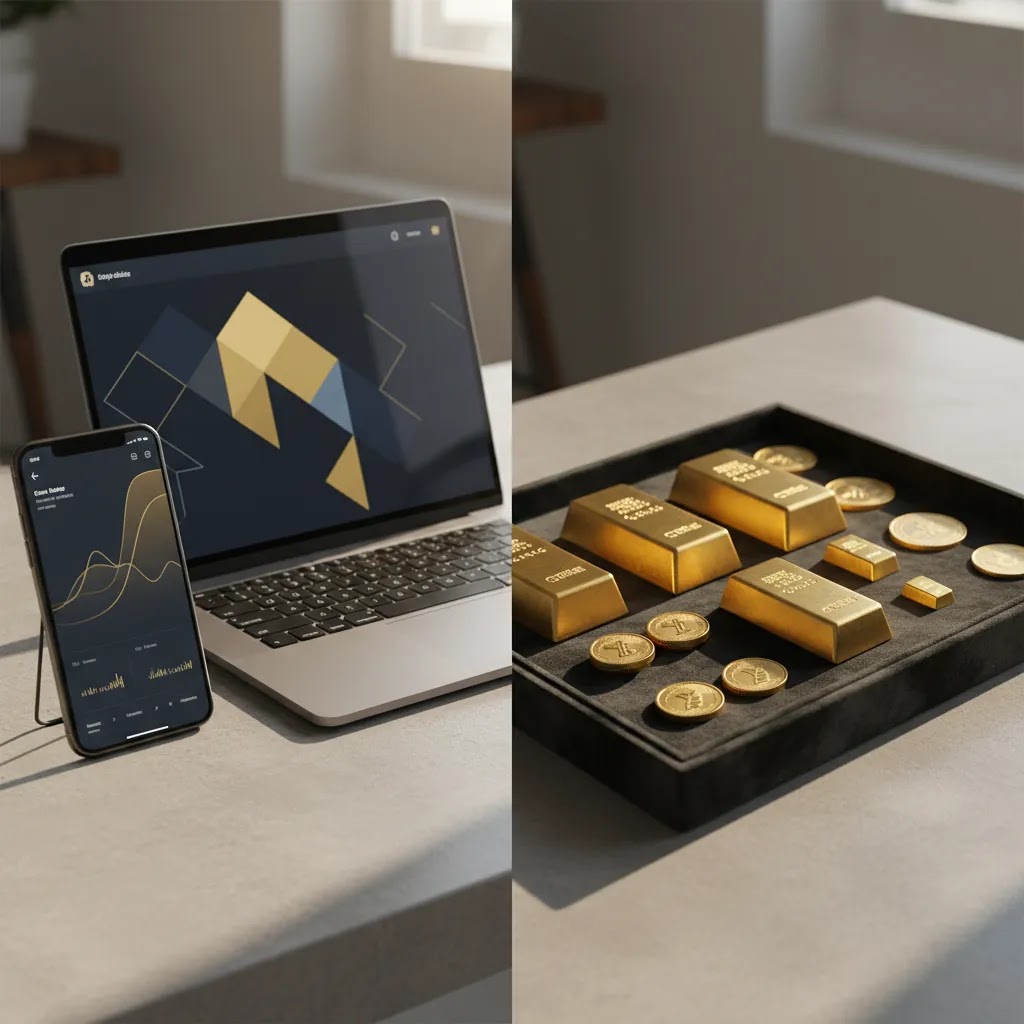
For many UAE investors, the decision comes down to convenience versus direct possession. A gold etf may be easier to buy, monitor, and sell. Physical gold may appeal more if you value custody outside the financial system or prefer assets you can hold directly. Neither approach is automatically better in all cases, and both involve risk. Gold prices can fall, and costs can reduce returns over time.
How a gold ETF works
A gold etf is designed to give you price exposure to gold without requiring you to store metal yourself. In most cases, you buy ETF shares through a brokerage platform, much like buying a stock. The fund itself may hold physical bullion, gold-related derivatives, or a structure intended to track gold prices as closely as possible.
For beginners, the main advantage is accessibility. You may be able to start with a relatively small amount, depending on the ETF share price and your broker’s minimums. Buying and selling also tends to be faster than sourcing and reselling bars through a dealer. If you need a basic primer first, our etf explained resource covers the mechanics in more detail.
That said, a gold etf is still a financial product. You are relying on a broker for execution and custody, and the ETF itself may charge an ongoing expense ratio. Those charges are not always obvious to beginners because they are often embedded in fund performance rather than billed separately. Gold ETF price movements also may not match spot gold perfectly after fees and market frictions.
Gold ETF types to know before you choose one
Here’s the thing: not every product labeled “gold ETF” behaves like simple gold exposure. Two funds can both be marketed as gold-related and still perform differently, especially in volatile markets. From a practical standpoint, understanding the structure helps you avoid buying something that does not match your expectations.
Physically backed gold ETFs
Many mainstream gold ETFs are designed to track gold by holding physical bullion in professional vaults. The fund’s goal is typically to reflect the gold price, minus the fund’s ongoing expenses and small market frictions. For cautious investors, this structure is often the most straightforward to understand because the underlying exposure is tied to physical holdings rather than a trading strategy.
Futures-based gold ETFs
Some funds aim to track gold using futures contracts rather than holding metal. This can introduce extra moving parts. Futures contracts expire, so the fund may need to “roll” them into new contracts, which can create roll costs or benefits depending on market conditions. Think of it this way: you might still be getting gold exposure, but you are also getting exposure to how the futures market is priced over time, which can affect tracking.
Gold miner equity ETFs
Gold miner ETFs hold shares of companies that mine and produce gold. These can move with gold prices, but they also behave like equities. Company management, operating costs, geopolitical risk, and broader stock market sentiment can all affect returns. In many cases, miners can be more volatile than gold itself, which may surprise beginners who expected a simple “gold proxy.”
Leveraged, inverse, and ETN-style products
What many people overlook is that some gold exchange-traded products use leverage, inverse exposure, or an exchange-traded note structure. Leveraged and inverse products are usually designed for short-term trading, not long-term holding, because daily rebalancing can create outcomes that diverge from what you would expect over weeks or months. ETNs can add issuer credit risk, since the product may be an unsecured promise to pay performance rather than a fund holding assets.
If your goal is plain gold exposure, these “extras” can raise the risk profile and complexity. That does not mean they are always inappropriate, but they are typically higher-risk tools rather than simple substitutes for holding gold.
What to check before you buy
Before choosing any gold ETF, it helps to read the fund’s objective and methodology with a skeptical eye. Check what the fund actually holds, whether it uses derivatives, and how it aims to track gold. Also look for language about leverage or inverse performance and confirm whether the product is intended for short-term trading or long-term exposure. These details can materially affect tracking and risk, even if the ETF name sounds similar to other gold products.
What owning physical gold really involves
Physical gold has one major appeal: direct ownership. You can buy a bar or coin and keep it in a home safe, a bank safe deposit box, or a specialist vault. For some investors, especially those who distrust financial intermediaries, that control matters.
Still, physical ownership tends to be less simple than it first appears. You may pay a premium above the gold spot price when buying, especially on small bars or minted coins. When selling, dealers often buy back below spot. That buy-sell gap can be meaningful, particularly for short-term investors.
Storage is another factor. Secure storage and insurance may add recurring costs, while home storage introduces theft risk. If your main goal is portfolio balance rather than possession, a broader diversification guide may help you decide whether gold belongs alongside equities, fixed income, or cash rather than replacing them.
Side-by-side comparison
| Criteria | Gold ETF | Physical Gold |
|---|---|---|
| Access | Bought through a broker during market hours | Bought through dealers, banks, or gold retailers |
| Storage | No personal storage required | You arrange storage or custody |
| Liquidity | Typically high for major ETFs | Varies by dealer, product type, and spread |
| Transaction Costs | Broker commissions may apply plus ETF fund expenses | Dealer premiums, resale discounts, storage, and insurance |
| Minimum Entry | Often lower, based on share price and broker terms | Usually higher for bars and recognized coins |
| Direct Possession | No | Yes |
| Best Use Case | Convenient portfolio exposure | Long-term holders who value physical custody |
If you are deciding between gold and equities more broadly, our comparison of gold vs stocks may help clarify where each asset fits.

How to evaluate and compare “best gold ETF” candidates
If you search for the best gold etf, you will quickly notice that many lists focus on well-known names without explaining the selection logic. Consider this: the “best” option depends less on popularity and more on whether the ETF is built for the exposure you actually want, and whether the trading costs are reasonable for how you plan to use it.
A simple checklist to compare gold ETFs
Expense ratio: This is the ongoing annual fee charged by the fund. It is usually reflected in performance rather than billed to you as a separate charge. Over long holding periods, even modest differences in expense ratio can add up.
Liquidity and trading spread: Many beginners look only at the broker commission and ignore bid-ask spread. A more liquid ETF often has tighter spreads, which can reduce your implicit trading cost when you buy or sell. Look at typical trading volume and how tight the spread tends to be during normal market conditions.
Tracking difference: Two ETFs can both “track gold” and still deliver slightly different results over time. Tracking difference is the real-world gap between the ETF’s performance and what it is trying to track. Fees are part of this, but so are fund mechanics and market frictions.
Fund size (AUM): Larger assets under management can be a proxy for market adoption and trading activity, though it is not a guarantee of quality. Still, very small funds can sometimes have wider spreads or higher risk of closure, which is a practical consideration for long-term holders.
Holdings quality and structure: Confirm whether the fund is physically backed, futures-based, or miner equity based. This is where many accidental mismatches happen. The name can look similar across products, but the underlying behavior can be very different.
What “largest” and “most liquid” can mean in practice
The reality is that execution costs matter most when markets are moving fast. Larger and more liquid ETFs often trade with more consistent spreads and deeper order books, which may make it easier to enter or exit without significant slippage. During high volatility, less liquid products can gap wider, which can increase your total cost even if the expense ratio looks attractive on paper.
UAE context checks before you commit
From a practical standpoint, UAE investors should confirm access and trading conditions through their broker before selecting an ETF. Check which exchanges you can trade on, the market hours you will actually be trading in from the UAE, and whether your account currency affects conversion costs. Tax treatment can also vary by your residency and the ETF’s domicile, so it is sensible to understand whether any withholding rules apply in your situation. This is not about finding loopholes, it is about avoiding surprises after you have already placed a trade.
Platform options for UAE investors who want ETF-style or gold market exposure
Business24-7 covers several regulated brokers that may be relevant if your priority is easy market access rather than holding bullion yourself. Availability of specific gold ETFs can vary by account type, jurisdiction, and exchange access, so you should always confirm instrument availability directly with the provider before funding an account.
Interactive Brokers has a 4.5/5 rating, a $0 minimum deposit, access to 150+ markets, and is regulated by DFSA, SEC, FCA, and SFC. It may suit experienced investors who want broad market access and professional-grade tools. The trade-off is that its platform can feel complex for beginners, and it does not offer an Islamic account.
eToro also holds a 4.5/5 rating and offers a multi-asset setup with features such as Copy Trading, Smart Portfolios, AED deposits, and Arabic support. It is regulated by CySEC, FCA, ASIC, and ADGM. This may appeal to newer investors who want a simpler interface, though the minimum deposit is $200 and product selection should be checked carefully if your focus is specifically gold ETFs rather than broader gold-related exposure.
Saxo Bank carries a 4.0/5 rating and offers 72,000+ instruments, premium research, and portfolio tools. It is regulated by DFSA, FCA, MAS, ASIC, and FSA Denmark. It may be attractive for higher-balance investors, but the $2,000 minimum deposit is a meaningful barrier for many retail users.
If your main aim is to compare regulated brokers before choosing where to access gold-related instruments, you can review the best gold trading platforms in UAE and then check each platform’s available products, costs, and custody model in more detail.
For broader research, readers can also browse Business24-7’s Gold and Commodities section or explore Investing and Wealth Building resources before making a decision.
Pros and Cons
Strengths
- Gold ETFs are usually easier to buy and sell than physical bars, especially through regulated brokers with online platforms.
- Physical gold gives direct ownership, which some investors value for psychological comfort and long-term holding.
- Gold ETFs may require less upfront capital than buying standard bars or premium coins.
- There are no personal storage or insurance logistics when you hold a gold ETF through a brokerage account.
- UAE investors have access to several regulated broker options covered by Business24-7, including DFSA-, SCA-, ADGM-, FCA-, and ASIC-regulated firms depending on the provider.
- Multi-asset brokers such as Interactive Brokers, eToro, and Saxo Bank may allow gold exposure to sit alongside stocks, ETFs, and other holdings in one account.
Considerations
- Gold ETFs involve intermediary risk, fund fees, and possible tracking differences from spot gold.
- Physical gold often comes with dealer premiums, resale discounts, storage costs, and insurance considerations.
- Not every broker offers every gold ETF, and instrument availability can differ by region and account structure.
- Gold itself can be volatile, so neither a gold ETF nor physical gold should be treated as risk-free.
- Some brokerage options that may suit ETF investors have higher complexity or higher account minimums than beginners may prefer.

Who each option may suit
A gold etf may suit UAE-based beginners, busy professionals, and investors who want simple portfolio exposure without thinking about storage. It may also fit those who already use a regulated brokerage account and want to rebalance holdings more efficiently.
Physical gold may suit long-term holders who want direct possession, dislike relying on financial intermediaries, or value bullion ownership for personal or family wealth preservation reasons. It may be less practical for investors who expect to trade in and out frequently, since transaction and storage costs can reduce flexibility.
Gold ETF vs physical gold performance expectations
A common question is framed like this: what if I invested $10,000 in gold 20 years ago? It is a reasonable way to test whether gold “worked,” but it can also create a false sense of certainty. Outcomes depend heavily on the start date and end date you pick, because gold has had long stretches of strong returns and long stretches of disappointing or negative performance. Past performance also does not guarantee future results.
Now, when it comes to the ETF versus physical decision, your real-world outcome is not just about gold’s price. Fees and frictions can compound over time. A gold etf typically has an expense ratio that creates a small drag each year, and you may also face brokerage spreads and possible currency conversion costs depending on how your account is funded. Over many years, those seemingly small costs can become meaningful.
Physical gold has a different cost profile. You might avoid a fund expense ratio, but smaller purchases often face higher dealer premiums, and the resale spread can be a major drag if you sell back to a dealer. Storage and insurance can add recurring costs too, especially if you want professional custody. For some investors, those costs can outweigh ETF fees, while for others the ability to hold metal directly may still be worth it.
The reality is that neither vehicle guarantees preservation or profit. Gold can underperform inflation, underperform equities, or move sideways for years. If you are using gold as a stabilizer or a hedge, it helps to set realistic expectations and focus on total costs, liquidity, and the product structure rather than assuming the “right” choice will automatically protect you.
How to choose more carefully
If you are deciding between a gold etf and physical gold, it helps to use a simple decision framework rather than relying on headlines or assumptions.
- Start with your purpose. If you want quick, low-friction exposure to gold prices, a gold etf may be the cleaner fit. If your priority is direct ownership and long-term custody, physical gold may be more suitable.
- Compare total costs, not just the sticker price. For ETFs, look at brokerage commissions, custody terms, and ongoing fund expenses. For physical gold, include dealer markup, resale spread, storage, insurance, and transport if relevant.
- Check regulation and platform credibility. UAE investors should pay attention to oversight from bodies such as the DFSA, SCA, or ADGM FSRA where relevant, as well as major international regulators like the FCA, ASIC, or CySEC. Regulation does not remove market risk, but it may improve standards around client protection and operational transparency.
- Think about liquidity. If you may need to sell quickly, major ETFs generally offer better day-to-day liquidity than coins or bars. Physical gold resale depends on dealer demand, product form, and the spread you accept.
- Match the vehicle to your experience level. Beginners often prefer simplicity. A broker with clear pricing and an accessible platform may be easier to manage than dealing with authenticity checks, storage planning, and resale logistics for physical bullion.
Business24-7’s editorial approach is built around helping readers compare these trade-offs clearly, not pushing one route for everyone. That matters in a market where investor needs can differ sharply by budget, faith-based requirements, trading experience, and comfort with risk.
Frequently Asked Questions
Is a gold ETF safer than physical gold?
They involve different kinds of risk. A gold etf may reduce storage and theft concerns, but it adds fund and brokerage dependencies. Physical gold removes some intermediary exposure, yet it introduces storage, insurance, and resale risks. Neither option is inherently risk-free, and gold prices themselves can decline.
Can UAE investors buy a gold ETF easily?
In many cases, yes, provided they use a broker that offers ETF market access in their jurisdiction. Product availability may depend on regulation, exchange access, and account type. Before opening an account, confirm whether the specific gold ETF you want is actually tradable from the UAE.
What is the main difference between gold ETF vs physical gold?
The core difference is ownership structure. With a gold etf, you own fund shares that track gold exposure. With physical gold, you own the metal directly. ETFs usually offer easier trading and lower logistical burden, while physical gold offers direct possession but typically higher handling frictions.
Are gold ETF returns the same as gold prices?
Not exactly in all cases. Gold ETF returns may track gold closely, but fund expenses, trading spreads, and minor tracking differences can affect results. Over longer periods, those small gaps may become noticeable. Past performance also does not guarantee future results, whether you choose ETF exposure or bullion.
Is physical gold better for long-term wealth preservation?
It may be, depending on your goals. Some long-term investors prefer physical gold because they value direct ownership. Others prefer ETFs because they are easier to manage inside a diversified portfolio. The better choice usually depends on whether you prioritize possession, convenience, liquidity, or total cost over time.
How do I buy gold ETF exposure through a broker?
You typically open a brokerage account, complete identity checks, fund the account, search for the ETF ticker, and place an order during market hours. Before doing so, review broker fees, available exchanges, and account protections. You should also confirm whether the ETF structure matches your intended use.
Which Business24-7 covered brokers may suit ETF investors in the UAE?
Based on available Business24-7 product data, Interactive Brokers, eToro, and Saxo Bank are among the more relevant choices for investors seeking broad market access. Still, suitability depends on factors such as minimum deposit, platform complexity, Islamic account availability, and whether the exact ETF you want is supported.
Do I need a large amount of money to start with a gold ETF?
Usually not compared with buying standard bars. Your minimum may depend on the ETF share price, broker dealing terms, and funding requirements. Some brokers covered by Business24-7 have $0 minimum deposits, while others require more. Even so, starting small does not remove market risk.
Is physical gold more private than a gold ETF?
It can be, especially if purchased and stored directly, but privacy depends on how and where you buy and hold it. A gold etf is held through a regulated financial account, which may offer convenience and records but less direct privacy than personally held bullion.
What is the best ETF for gold?
The best gold etf depends on what kind of exposure you want and what you can access through your broker. Many cautious investors focus on physically backed funds with reasonable expenses, strong liquidity, and consistent tracking. Before choosing, check the fund’s structure, expense ratio, typical bid-ask spread, and whether it is designed to track gold bullion, gold futures, or gold mining companies.
Is gold ETF worth buying now?
That depends on your goals and risk tolerance. A gold etf can be a convenient way to gain exposure to gold prices, but gold can be volatile and can underperform for long periods. It is usually more helpful to think about gold as one possible piece of a diversified portfolio and to weigh total costs, liquidity, and product structure rather than trying to time short-term price moves.
What is the largest gold ETF in the world?
By global market recognition, SPDR Gold Shares is often cited among the largest gold ETFs, but “largest” can change over time based on assets under management and market pricing. If size matters to you, confirm the current AUM, average daily volume, and typical trading spread, since those factors can influence execution quality.
What if I invested $10,000 in gold 20 years ago?
The outcome would depend on the exact start date, end date, and how you held gold. A gold etf could have reduced storage issues but added ongoing fees and trading spreads. Physical gold might have avoided fund fees but introduced dealer premiums, resale spreads, and possible storage costs. Past performance does not guarantee future results, and the practical costs of holding method can make a meaningful difference over long time horizons.
Key Takeaways
- A gold etf may be better for convenience, liquidity, and lower logistical burden.
- Physical gold may be better for investors who value direct ownership and personal custody.
- Total cost matters more than the headline price, especially once storage, spreads, and fund expenses are included.
- UAE investors should check broker regulation, platform access, and whether specific gold ETFs are available in their jurisdiction.
- Neither option guarantees profit, and both remain exposed to gold price risk.
Conclusion
For many UAE investors, a gold etf may be the more practical route because it is usually easier to access, trade, and monitor through a regulated broker. Physical gold still has a clear role for those who want direct possession and are comfortable with storage and resale logistics. The better choice depends on your priorities, not on a universal rule. If you are still weighing where to gain gold exposure, Business24-7 can help you compare the available routes more carefully. Browse our broker resources, review regulated platform options, and use our side-by-side guides before committing funds. That extra research may help you avoid unnecessary costs and choose an option that fits your goals more realistically.
Disclaimer: The content published on Business24-7 is intended for informational purposes only and does not constitute financial advice, investment recommendations, or an endorsement of any specific platform or financial product. Trading and investing carry significant risk, including the potential loss of capital. You should conduct your own research and, where appropriate, seek independent financial advice before making any investment decisions. Business24-7 does not accept responsibility for any financial losses incurred as a result of information published on this site.
Disclaimer
eToro is a multi-asset platform which offers both investing in stocks and cryptoassets, as well as trading CFDs.
Please note that CFDs are complex instruments and come with a high risk of losing money rapidly due to leverage. 61% of retail investor accounts lose money when trading CFDs with this provider. You should consider whether you understand how CFDs work, and whether you can afford to take the high risk of losing your money
This communication is intended for information and educational purposes only and should not be considered investment advice or investment recommendation. Past performance is not an indication of future results.
Copy Trading does not amount to investment advice. The value of your investments may go up or down. Your capital is at risk.
Crypto assets are complex and carry a high risk of volatility and loss. Trading or investing in crypto assets may not be suitable for all investors. Take 2 mins to learn more
eToro USA LLC does not offer CFDs and makes no representation and assumes no liability as to the accuracy or completeness of the content of this publication, which has been prepared by our partner utilizing publicly available non-entity specific information about eToro.

If you want gold exposure in the UAE, the first real choice is usually not whether gold has a role in your portfolio, but how you should own it. Some investors prefer coins or bars they can store themselves. Others want the convenience of a gold etf that can usually be bought and sold through a regulated broker. Each route…