
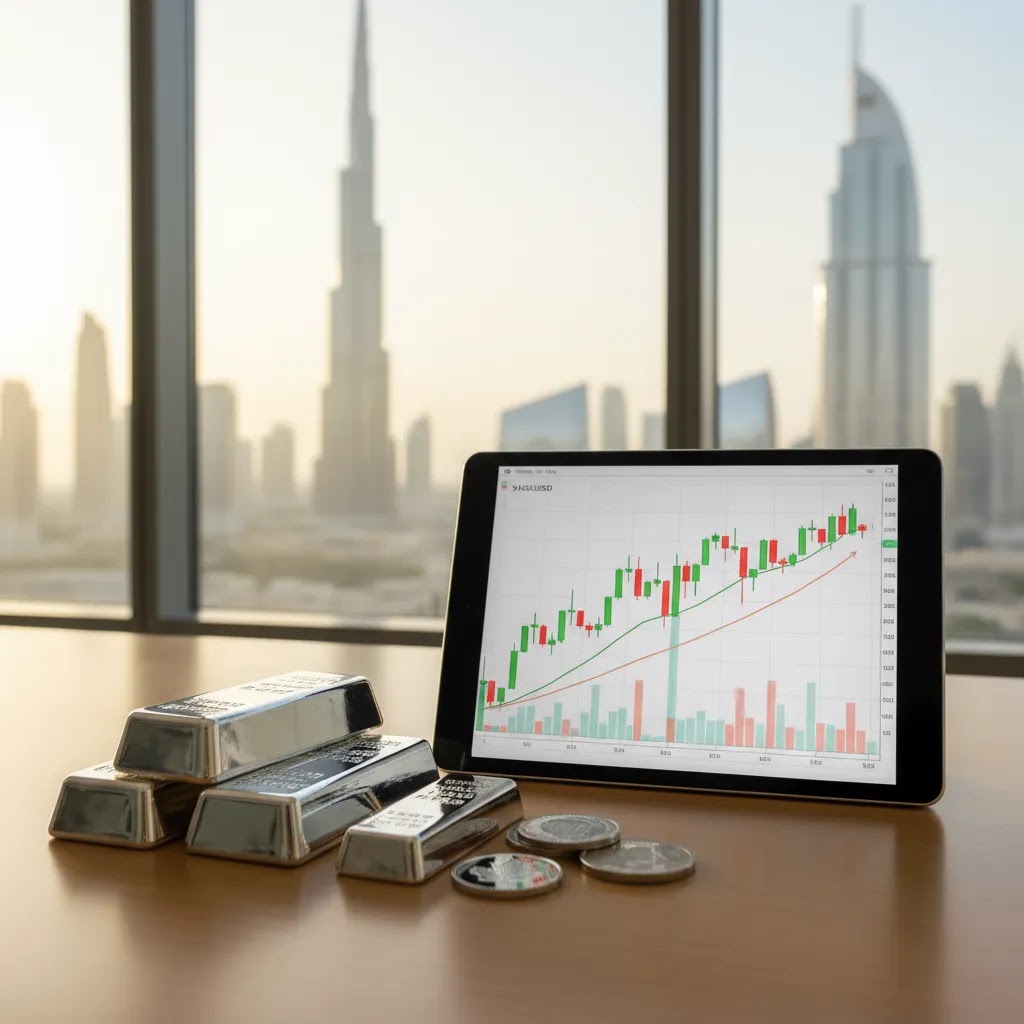
If you are researching the silver price UAE traders and investors follow, you are usually trying to answer two questions at once: what is silver doing now, and what is the safest way to gain exposure to it? In the UAE, silver can appeal to buyers looking for a lower-cost precious metal than gold, but the route you choose matters. Physical bullion, silver ETFs, and silver CFDs each carry different costs, risks, and practical trade-offs. If you are also comparing silver with precious metals more broadly, our guide to gold trading uae may help frame the bigger picture. This article explains how silver is priced, how XAGUSD trading works, and which regulated platforms available to UAE residents may suit different types of silver strategies.
Why silver matters in the UAE
Silver often sits in an interesting middle ground. It is a precious metal like gold, but it also has broad industrial use. That means its price may react not only to inflation expectations and U.S. dollar moves, but also to manufacturing demand, electronics trends, and broader commodity sentiment.
For UAE-based readers, silver can be accessed in several ways. You could buy physical bars or coins in Dubai, use a broker to trade silver CFDs, or consider an exchange-traded fund if your chosen broker gives access to listed markets. If you are still comparing commodities more broadly, our overview of commodities trading may help you understand where silver fits relative to oil, gold, and agricultural products.
Most online traders watch silver through the XAGUSD pair. This reflects the price of silver quoted in U.S. dollars. Local retail discussions about the silver rate in Dubai or today silver rate UAE typically start from global spot pricing, then adjust for product type, dealer premium, taxes or charges where applicable, and retail markup.
Silver spot price charts and how to read them
Many UAE readers search for a “live silver price” and land on a spot chart first. Here’s the thing: a spot chart is useful, but it is not the same thing as the all-in price you will pay for a bar or coin, and it is not a guarantee of what you can execute at with every broker.
Most live spot charts track the global reference price of silver, often derived from the XAGUSD market. Depending on the data source, you may see bid and ask prices, time stamps, and different timeframes such as intraday moves, 1-week trend, or multi-year cycles. Intraday charts can help you see volatility and momentum, while longer-term views can help you contextualize whether silver is trading near historically high or low zones.
Consider this: a chart can show you where silver traded, but it does not show your platform’s full trading cost. If you trade silver CFDs, your broker’s spread and any commissions, plus overnight funding if you hold positions past the trading day, can affect the outcome. If you buy physical silver, the difference can be even more obvious because dealer premiums, fabrication costs, and buyback spreads are not reflected in the “spot” line you see on a chart.
Another common point of confusion is the quote convention. Silver spot is usually quoted per troy ounce, not a regular ounce, and not per gram. A troy ounce is about 31.1035 grams. First-time buyers in the UAE often think in grams or kilos because that is how many retail products are labeled. The conversion is straightforward, but the retail price you see in AED per gram can still differ by product and dealer even if the global spot chart is unchanged.
From a practical standpoint, chart reading matters most when you are timing entries and exits for XAGUSD trading. For physical buyers, the chart is better viewed as the baseline reference price, then you work out the real purchase cost by adding the premium and understanding your likely resale terms.
What moves the silver price in UAE markets
The silver price in UAE markets is not set independently from the rest of the world. Local buyers generally follow international spot prices, with AED conversions shaping what you see at dealer level. A few common factors may have an outsized effect:
- U.S. dollar direction: Silver is usually priced in dollars, so a stronger dollar may pressure prices, while a weaker dollar may support them.
- Interest rate expectations: Precious metals may react when markets reassess Federal Reserve policy and real yields.
- Industrial demand: Silver is used in electronics, solar applications, and manufacturing, so growth expectations can matter.
- Safe-haven demand: During geopolitical stress or market uncertainty, silver may attract some defensive flows, though often with more volatility than gold.
- Chart structure and momentum: Short-term traders often use a technical analysis guide to identify support, resistance, breakouts, and trend continuation setups.
That last point is important. Silver can be more volatile than many first-time traders expect. A silver price forecast should never be treated as certainty. It is usually better to think in scenarios, not promises. Capital is at risk, particularly when leverage is involved.
Silver price in AED: grams, ounces, and kilos
If you are trying to translate the global silver price into something useful for day-to-day UAE shopping, the missing step is usually the unit and currency conversion. Global spot silver is commonly quoted as XAGUSD, meaning the price of one troy ounce of silver in U.S. dollars. In the UAE, retail pricing is typically discussed in AED, and often in grams or kilos.
Now, when it comes to currency, the UAE dirham is pegged to the U.S. dollar at a fixed rate in normal conditions, which is one reason local silver pricing tends to closely follow the global spot move rather than currency swings. Even with that peg, the AED number still changes because the underlying USD spot price moves up and down throughout the day.
UAE buyers commonly search for silver pricing by weight, especially for small and medium bar sizes. In retail contexts, you will often see quotes or product listings for 1 gram, 50 grams, 100 grams, and 1 kg, plus common coin formats that still ultimately relate back to the per troy ounce reference price. The conversion itself is not the hard part. The real issue is that “spot” is a reference price, while “retail” is what you actually pay.
Think of it this way: a spot price is the baseline market price for silver, while a retail price includes the dealer premium and product costs. For physical products, the premium can reflect fabrication, minting, distribution, and the dealer’s margin. Coins often carry higher premiums than plain bars, especially if they have collectible appeal or limited minting. Some dealers may also build in a wider buy-sell spread than others, so the silver rate in Dubai can look different depending on who you ask and which product you are comparing.
What many people overlook is that the chart price you see online, even if it is labeled “live,” is not automatically the all-in purchase price for physical silver. The same idea applies to trading platforms too. A broker’s quote may be close to the underlying market, but your executed price still depends on spread, any commissions, and the way the product is structured. That is why two people can talk about the “silver price UAE” on the same day and still be referring to meaningfully different numbers.
How to invest in silver
There is no single best route for every reader. The right choice depends on whether you want ownership, flexibility, short-term speculation, or diversification.
1. Physical silver
If you want direct ownership, buying bars or coins may be the clearest route. This can suit long-term holders who value possession over trading flexibility. The trade-off is that storage, insurance, dealer spread, and resale convenience all matter.
2. Silver ETFs
A silver ETF may suit investors who want market exposure without handling bullion. If you are new to listed funds, this short primer on etf explained can help. ETF access depends on whether your broker offers stock and fund market access rather than only CFDs.
3. Silver CFDs
A silver CFD is typically used by traders who want to speculate on price moves without owning the metal. CFDs can offer flexibility, short-selling capability, and leverage, but they also increase risk. Overnight charges may apply if positions are held beyond the trading day.
4. Broader multi-asset exposure
Some investors use silver as one part of a diversified portfolio rather than a standalone bet. In many cases, this is a more measured approach than concentrating capital in a single commodity.
Physical silver buying checklist for UAE buyers
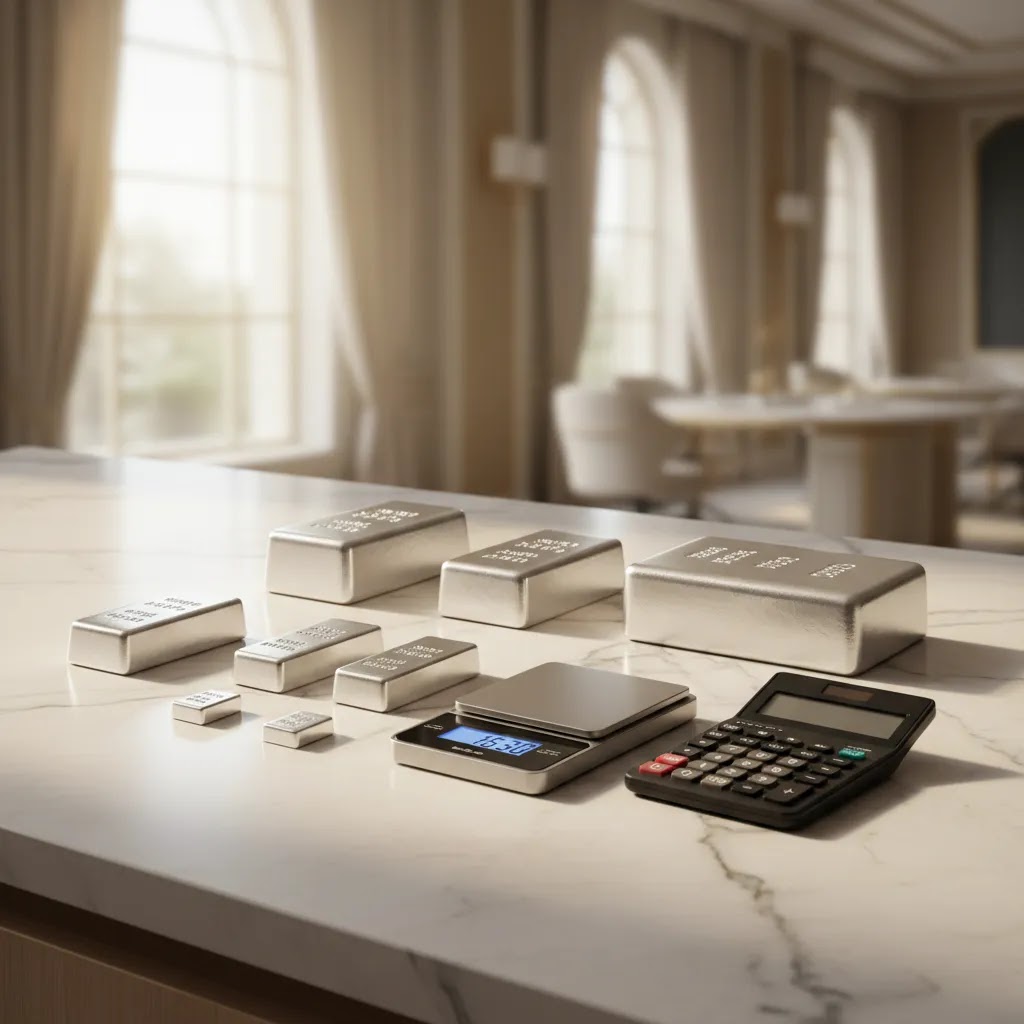
Buying physical silver in the UAE can be straightforward, but the details matter if your goal is investment exposure rather than gifting or collecting. The reality is that the spread between what you pay and what you can sell for later is often the biggest hidden cost in physical bullion.
Start with product basics. Check the purity (often listed as .999 for investment-grade silver), and look for clear manufacturer markings, weight, and an identifiable refiner or mint. For bars, sealed packaging and an assay card may help with resale, depending on the dealer. For coins, condition and recognizability can influence liquidity, even if the silver content is similar.
Documentation and buyback terms are also worth clarifying upfront. Reputable dealers typically explain how they price buybacks, whether they reference spot, and what spread or fees may apply. If you plan to resell in the UAE later, keep invoices and product details. That paperwork can help reduce friction if a dealer asks for proof of purchase or product specifications.
Storage is another practical factor that changes your real-world cost. Home storage may seem “free,” but it introduces security risk, and some buyers choose insurance or a more secure storage setup. Professional vaulting can reduce personal security concerns but adds ongoing fees. These costs can materially affect the return profile compared with paper exposure such as an ETF or a CFD, where storage is not your responsibility.
Liquidity is not identical across product types. Bars may offer a lower premium per gram in many cases, especially at larger sizes, but that does not automatically make them the best choice. Some coins can be easier to sell because they are widely recognized, while certain specialty products can be harder to offload without accepting a larger discount. If you are choosing between products, it can help to think beyond the “cheapest per gram” headline and focus on the expected resale spread and how quickly you could realistically convert back to cash.
None of this removes market risk. Silver prices can move sharply, and physical ownership does not protect you from price declines. It only changes the cost structure and the practical steps you must manage.
Platforms that may suit silver trading
If you want to trade silver online from the UAE, regulation, pricing model, and instrument access matter more than marketing language. Based on available Business24-7 platform data, several regulated brokers may suit different approaches to silver exposure.
Pepperstone has a 4.5/5 rating and is regulated by the DFSA, FCA, ASIC, CySEC, and BaFin. It offers ultra-low spreads, fast execution, MT4, MT5, cTrader, and TradingView support, with no minimum deposit. For traders focused on active silver CFD trading, its Razor account structure with $7/lot commission and spreads from 0.0 pips may appeal, though commissions need to be weighed carefully.
Capital.com holds a 4.0/5 rating and is regulated by the SCA, FCA, CySEC, and ASIC. It has a low $20 minimum deposit, spread-only pricing, and 6,000+ markets. That may make it easier for newer traders to test silver CFD exposure with smaller starting capital, although spreads still represent a real trading cost.
Plus500, rated 4.0/5, is regulated by the DFSA, FCA, CySEC, ASIC, and MAS. Its simple interface and risk management tools may suit beginners, and guaranteed stop-loss is available on some products. That said, overnight funding fees apply, which may matter if you hold silver positions longer.
XTB, also rated 4.0/5, is regulated by the DFSA, FCA, CySEC, and KNF. It offers xStation 5, strong education, and a $0 minimum deposit. For readers still building confidence, the educational side may be useful before committing to a live silver strategy.
Interactive Brokers carries a 4.5/5 rating and is regulated by the DFSA, SEC, FCA, and SFC. It offers access to 150+ markets, very broad instrument coverage, and professional-grade tools. This may better suit experienced investors who want access beyond silver CFDs, including listed products where available through the platform.
If you are close to making a platform choice, our guide to the best commodity trading platforms in the UAE can help you compare regulated options side by side before you open an account.
Pros and Cons
Strengths
- Silver offers more than one access route, including physical bullion, ETFs, and CFDs, so you can match the vehicle to your time horizon and risk tolerance.
- Several brokers in Business24-7 coverage are regulated by UAE-relevant authorities such as the DFSA, SCA, or ADGM FSRA, which may improve trust and oversight compared with offshore-only options.
- There are low-entry platform choices for UAE readers, including Capital.com with a $20 minimum deposit and brokers such as Pepperstone and XTB with $0 minimum deposit requirements.
- Multi-asset brokers such as Interactive Brokers may help if you want silver exposure alongside stocks, ETFs, bonds, or forex in one account.
- Platforms such as Plus500 and AvaTrade include risk management features that may help traders manage downside, although they do not remove risk.
Considerations
- Silver can be volatile, and price swings may be sharper than many new traders expect, especially during global macro events.
- CFD trading may involve spreads, commissions, and overnight funding charges, which can materially affect results even when the market moves in your favor.
- Not every platform offers the same form of silver exposure. Some may be more suitable for CFDs, while others may better suit ETF or broader portfolio investing.
- Islamic account availability differs by broker structure and product type, and swap-free access may not apply identically across all instruments.
Who silver trading may suit
Silver may suit UAE-based readers who want precious metals exposure but prefer a lower nominal entry point than physical gold. It may also interest active traders looking for short-term opportunities in XAGUSD, especially if they already understand leverage, stop-loss placement, and event risk.
It may be less suitable for readers who are uncomfortable with commodity volatility or who need stable, predictable outcomes. If your main goal is capital preservation, silver should usually be viewed as one part of a broader plan rather than a guaranteed store of value. Your chosen route, physical, ETF, or CFD, should reflect that.
How Business24-7 helps you compare options
At Business24-7, the goal is to help UAE readers evaluate platforms with a clear view of regulation, fees, and practical usability. The site’s editorial approach reflects the work of Braden Chase, a former research specialist at Forex.com, with an emphasis on impartial comparison rather than sales language. That matters in a market where platform marketing often feels stronger than platform transparency.
If you are narrowing your shortlist, browse our Trading Platforms and Brokers resources and review platform-specific breakdowns before making a final decision. For readers focused specifically on metals and resource markets, the Gold and Commodities section is a useful next step.
How to choose a silver trading platform
A cautious platform review process may save you from the most common mistakes. Here are the main criteria worth applying before you fund an account.
1. Start with regulation
For UAE readers, this is the first filter. Look for oversight from bodies such as the DFSA or SCA where relevant, or other established regulators such as the FCA, ASIC, CySEC, or ADGM FSRA. Regulation does not eliminate risk, but it may improve client money protections, conduct standards, and complaint pathways.
2. Match the platform to the silver product you want
If you want to trade short-term moves in XAGUSD, a CFD broker may be suitable. If you want longer-term market exposure with exchange-listed products, a multi-asset broker may fit better. Do not assume every platform offers the same silver instrument.
3. Read the fee model carefully
Silver traders often focus on spreads but overlook everything else. Pepperstone lists Razor commission at $7/lot, Exness lists Raw Spread commission at $3.50/lot, Plus500 uses spread-only pricing with overnight funding, and Capital.com typically uses spread-only pricing on most instruments. Your holding period affects which model may be more efficient.
4. Consider your experience level
Beginners may value simplicity, lower minimum deposits, and educational support. In that case, platforms such as XTB, AvaTrade, Capital.com, or Plus500 may be easier starting points based on available feature sets. More advanced traders may prefer the flexibility of Interactive Brokers or Pepperstone.
5. Think beyond the first trade
If silver becomes part of a broader investing plan, account flexibility matters. You may later want gold, ETFs, stocks, or forex in the same account. Planning for that now may reduce friction later.
Most importantly, test your process before scaling risk. Use demo features where available, keep position sizes small at first, and remember that silver price forecasts can fail quickly under changing market conditions.
Frequently Asked Questions
What is the silver price UAE buyers usually follow?
Most UAE buyers and traders track the global silver spot price, usually quoted as XAGUSD. Local retail prices in Dubai or elsewhere in the UAE may then reflect AED conversion, dealer markup, product type, and any handling or storage costs. The number you see online is often a reference point rather than the exact all-in purchase cost.
Is silver trading legal in the UAE?
Silver trading may be available to UAE residents through regulated brokers and authorized financial firms. The safer approach is to check whether the platform is regulated by bodies such as the DFSA, SCA, or other established regulators listed in the broker’s disclosures. Availability may still depend on the product type and your residency status.
What is the difference between silver CFDs and physical silver?
Physical silver gives you direct ownership of the metal, while a silver CFD lets you speculate on price movements without holding the asset itself. CFDs may offer flexibility and leverage, but they also carry financing costs and higher risk. Physical silver avoids leverage risk but introduces storage, insurance, and dealer spread considerations.
Can I buy silver in Dubai for investment?
Yes, many investors choose to buy silver in Dubai through bullion dealers, though product quality, pricing, and resale terms should be checked carefully. If your aim is convenience or faster trading, an online broker may be more practical. The better option depends on whether you want ownership, liquidity, or shorter-term market exposure.
Which broker may suit silver trading for beginners?
Beginners often benefit from a simple platform, transparent pricing, a lower minimum deposit, and strong regulation. Based on Business24-7 platform data, Plus500, XTB, and Capital.com may be easier starting points for some users, while Pepperstone and Interactive Brokers may better suit experienced traders. Suitability still depends on your goals and product choice.
Are silver ETFs available through UAE-accessible brokers?
Some multi-asset brokers may provide access to exchange-listed ETFs, while CFD-focused platforms may not offer the same route. Interactive Brokers is one example of a broker with broad market access. You should still verify the exact instrument lineup for your jurisdiction before opening an account, because product availability can vary.
How risky is XAGUSD trading?
XAGUSD trading can be high risk, especially when leverage is used. Silver may move sharply around inflation data, U.S. dollar swings, central bank expectations, and geopolitical stress. Traders should usually use position sizing, stop-loss planning, and a predefined risk limit per trade. Capital is at risk, and short-term volatility can be significant.
How do I compare silver trading fees?
Look at the full cost, not just the spread. Some brokers charge spread-only pricing, while others combine tight spreads with commissions. Holding costs also matter if you keep silver CFD positions overnight. Comparing the fee model against your trading style is usually more useful than chasing the lowest advertised spread alone.
Is silver better than gold as an investment?
Silver is not automatically better or worse than gold. Silver may offer higher upside in some market environments, but it can also be more volatile. Gold is often viewed as the steadier precious metal, while silver has a stronger industrial demand component. Your time horizon, risk tolerance, and purpose for investing should shape the decision.
How much is 1 gram of silver in UAE?
The price of 1 gram of silver in the UAE depends on the global spot price (usually quoted per troy ounce as XAGUSD), the USD to AED conversion framework, and the dealer premium on the specific product. Because retail products include fabrication and dealer spreads, the per-gram retail price you are quoted can be higher than a simple spot conversion.
What is 1 kg of silver today?
1 kg of silver is typically priced off the live global spot price, converted into local currency, then adjusted by the seller’s premium and spread. If you are comparing 1 kg bars, keep in mind that different refiners and packaging can lead to different premiums, even on the same day.
What is the price of 1 kg of silver in Emirates today?
In the Emirates, a 1 kg silver price you see from a retailer is usually the spot-based value plus dealer costs, which can vary by product type and seller. The “live” chart price is best treated as a baseline reference, then you confirm the all-in purchase price and the buyback terms before you commit.
Is silver also cheap in Dubai?
Silver is often described as “cheaper” than gold because the nominal price per unit is lower, but that does not mean it is automatically inexpensive or low risk. In Dubai, the retail silver rate can still include meaningful premiums and buy-sell spreads, and silver’s price can be volatile. If your focus is investment exposure, it helps to compare the all-in cost and expected resale spread, not just the headline spot price.
Key Takeaways
- The silver price UAE investors monitor is usually derived from global XAGUSD pricing, then adjusted for local costs and AED conversion.
- Silver exposure can come through physical bullion, ETFs, or CFDs, and each route carries different costs and risks.
- For UAE residents, broker regulation matters. DFSA, SCA, ADGM FSRA, FCA, ASIC, and CySEC oversight may provide stronger safeguards than loosely regulated alternatives.
- Platform choice should be based on product access, fees, usability, and your experience level, not marketing claims.
- Silver can be volatile. Risk management, especially with leveraged products, is essential.
Conclusion
Silver can play several roles for UAE-based investors and traders. It may serve as a short-term trading market, a precious metals diversifier, or a lower-cost alternative to gold for some buyers. What matters most is not just where the silver price is today, but how you choose to access it. Physical silver, ETFs, and CFDs each create a different balance of cost, convenience, and risk. Before opening an account, compare regulation, pricing, and platform fit carefully. Business24-7 aims to give you a practical, unbiased reference point while you evaluate those choices. If you are still deciding which broker may suit commodity exposure, explore our comparison resources and platform reviews before committing funds.
Disclaimer: The content published on Business24-7 is intended for informational purposes only and does not constitute financial advice, investment recommendations, or an endorsement of any specific platform or financial product. Trading and investing carry significant risk, including the potential loss of capital. You should conduct your own research and, where appropriate, seek independent financial advice before making any investment decisions. Business24-7 does not accept responsibility for any financial losses incurred as a result of information published on this site.
Disclaimer
eToro is a multi-asset platform which offers both investing in stocks and cryptoassets, as well as trading CFDs.
Please note that CFDs are complex instruments and come with a high risk of losing money rapidly due to leverage. 61% of retail investor accounts lose money when trading CFDs with this provider. You should consider whether you understand how CFDs work, and whether you can afford to take the high risk of losing your money
This communication is intended for information and educational purposes only and should not be considered investment advice or investment recommendation. Past performance is not an indication of future results.
Copy Trading does not amount to investment advice. The value of your investments may go up or down. Your capital is at risk.
Crypto assets are complex and carry a high risk of volatility and loss. Trading or investing in crypto assets may not be suitable for all investors. Take 2 mins to learn more
eToro USA LLC does not offer CFDs and makes no representation and assumes no liability as to the accuracy or completeness of the content of this publication, which has been prepared by our partner utilizing publicly available non-entity specific information about eToro.

If you are researching the silver price UAE traders and investors follow, you are usually trying to answer two questions at once: what is silver doing now, and what is the safest way to gain exposure to it? In the UAE, silver can appeal to buyers looking for a lower-cost precious metal than gold, but the route you choose matters.…