
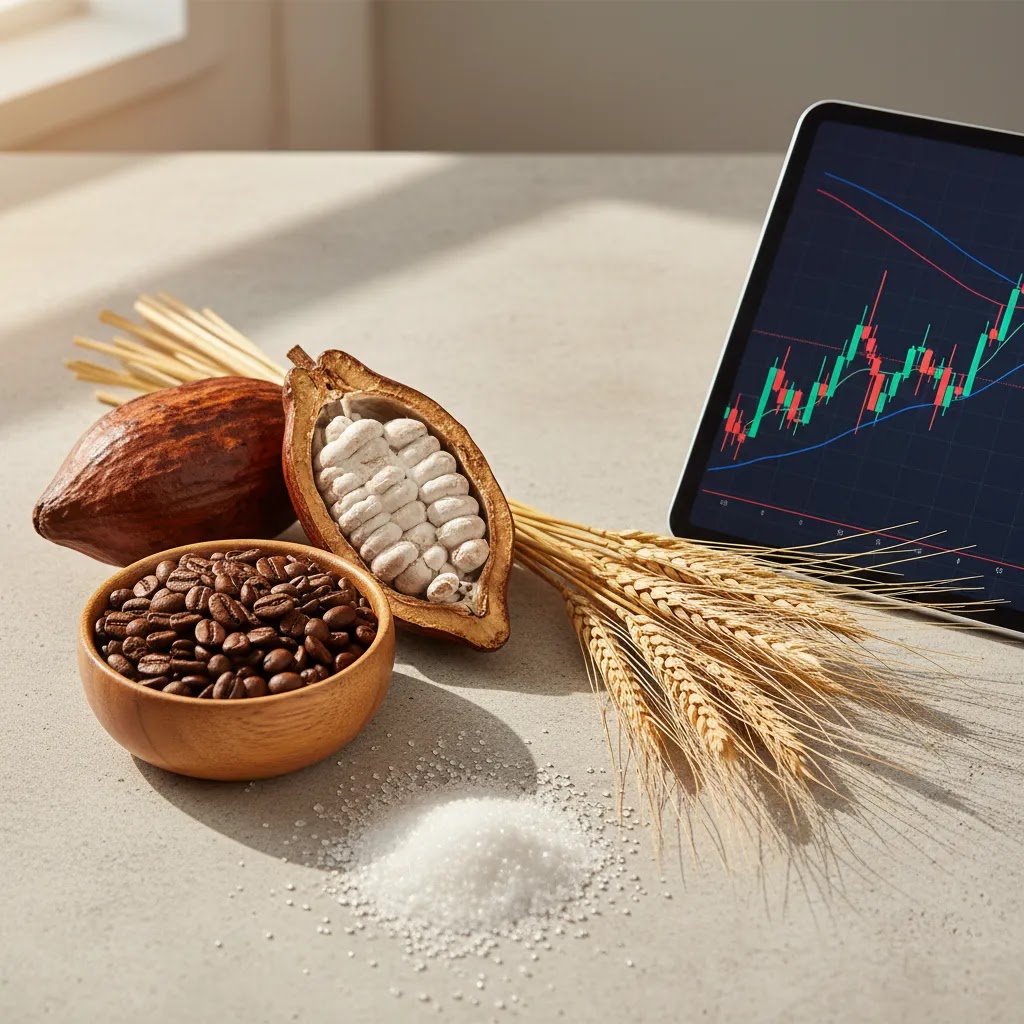
Soft commodities can look simple on the surface because they are everyday products like coffee, cocoa, wheat, and sugar. In practice, they are driven by weather, harvest quality, export flows, inflation, and shifting global demand. For UAE-based traders, this part of the market may offer a useful alternative to metals and energy, but it also comes with specific risks that are easy to underestimate. If you are building out your understanding of gold trading uae or broader commodity markets, softs deserve separate attention. This guide explains what soft commodities are, how agricultural commodities trading typically works, which platforms may suit this market, and what to check before placing real capital at risk.
What soft commodities are
Soft commodities are agricultural raw materials grown rather than mined or extracted. Common examples include coffee, cocoa, sugar, wheat, corn, and cotton. They sit inside the wider commodities trading universe, but they behave differently from gold or crude oil because supply can change quickly with rainfall, drought, disease, transport bottlenecks, and seasonal harvest cycles.
You will often see the term soft commodities used alongside agricultural commodities or food commodities. In retail trading, exposure usually comes through futures, CFDs, related shares, ETFs, or broader commodity products offered by a regulated broker. The route you choose matters because pricing, leverage, overnight costs, and market access can differ significantly.
For readers in the UAE, regulation should stay at the center of the decision. Brokers supervised by bodies such as the DFSA, SCA, FCA, ASIC, or CySEC may offer stronger oversight than firms operating with unclear licensing. That does not remove market risk, but it may improve client protection standards and operational transparency.
The main types of commodities (and where soft commodities fit)
What many people overlook is that commodity classifications are not always consistent across sources. You will often see a simple split between hard vs soft commodities, but you may also see a “three types of commodities” framing that breaks the market into hard commodities, soft commodities, and livestock. Other sources describe the same idea as energy and metals vs agriculture vs livestock. The labels vary, but the goal is the same: to group markets by how they are produced, stored, and priced.
From a practical standpoint, here is how the grouping typically works for retail traders:
Hard commodities usually include energy (such as crude oil and natural gas) and metals (such as gold, silver, copper, and aluminum). These are mined or extracted, which tends to make supply respond to capex cycles, geopolitics, and industrial demand.
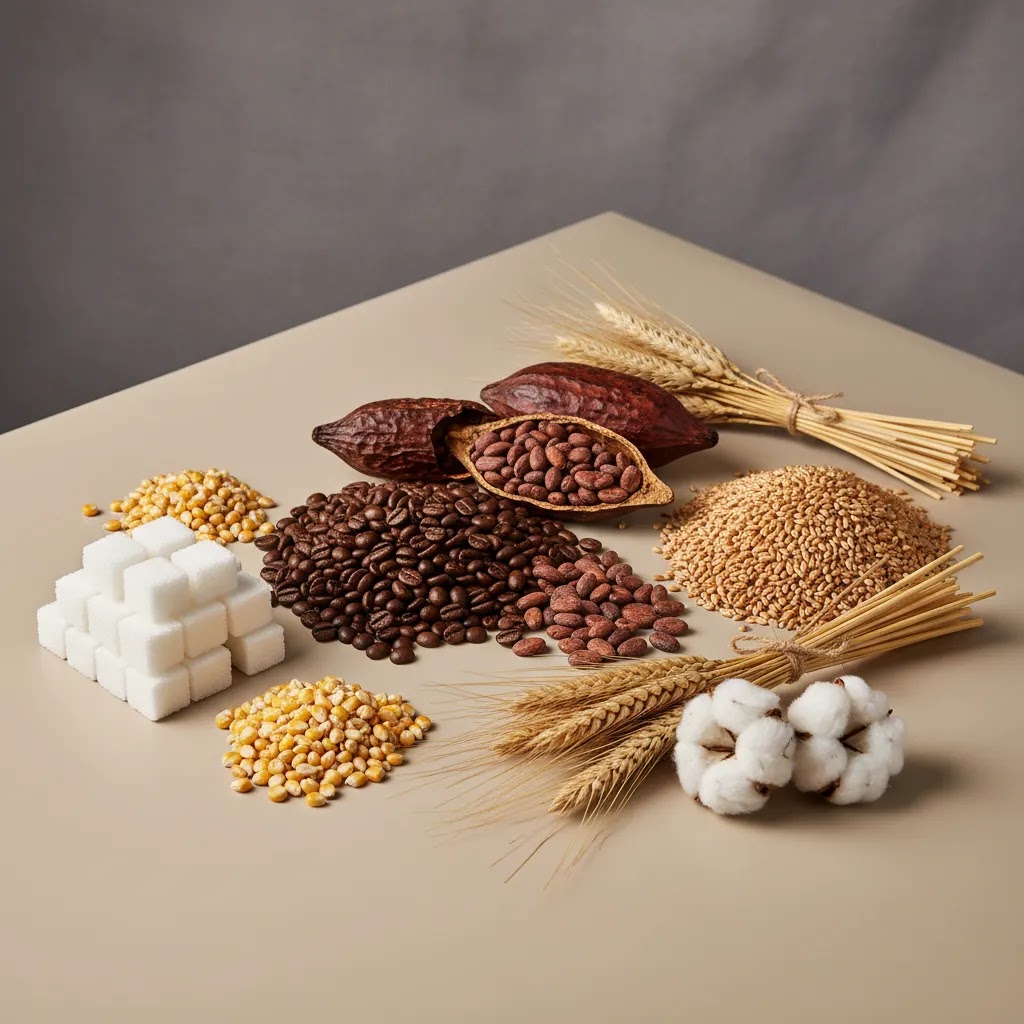
Soft commodities are agricultural crops that are grown and harvested. When readers search for a “soft commodities list,” they are usually looking for crops that trade actively in global futures markets. Think of it this way: softs often break into three crop-style buckets, grains, tropical softs, and fibers. Grains often include wheat, corn, soybeans, rice, and oats. Tropical softs often refer to coffee, cocoa, and sugar, and sometimes orange juice depending on the context. Fibers are usually centered on cotton.
Livestock is often treated as a related bucket because it is agricultural, but not a crop. Common examples include live cattle, feeder cattle, and lean hogs. Some sources include livestock inside “soft commodities,” while others keep it separate. Either approach can be reasonable as long as you know what your broker or data provider means by the label.
Consider this: the category can influence how you trade the market. Soft commodities and livestock are often more seasonal than metals, with distinct planting, feeding, and harvest cycles. Many contracts trade on different exchanges, use different contract sizes, and can react differently to storage constraints or spoilage risk. That is one reason volatility patterns can look different from one commodity group to another, even when the charts seem similar on the surface.
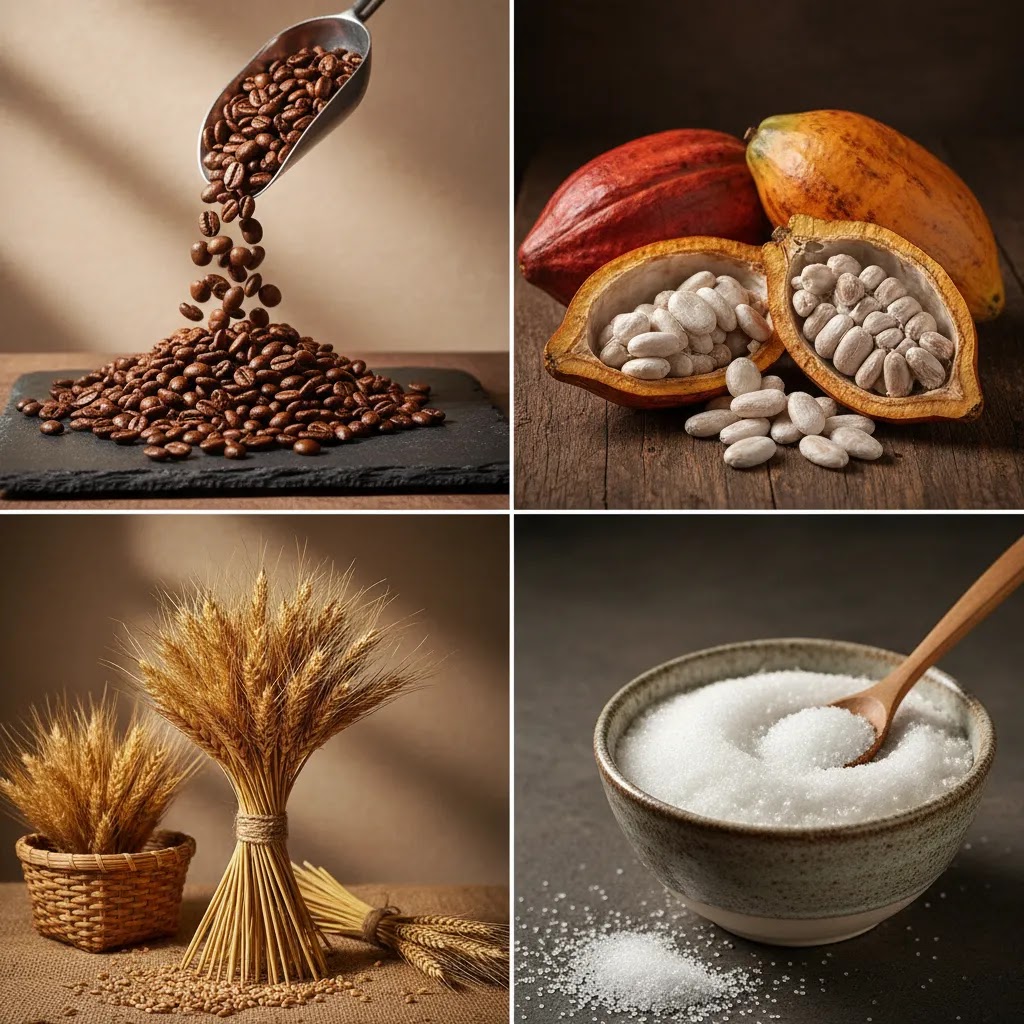
Coffee, cocoa, wheat, and sugar explained
Coffee futures are among the most weather-sensitive agricultural contracts. Frost in Brazil, shipping disruption, and changes in consumer demand can all move prices quickly. Coffee may attract active traders because volatility can be high, but that same volatility can increase loss potential.
Cocoa futures are heavily influenced by crop conditions in West Africa, where a large share of global supply originates. Political instability, crop disease, and export policy changes may create sharp price swings. This can make cocoa interesting for short-term traders, though not necessarily easy for beginners.
Wheat futures are closely tied to global food security, weather events, and trade policy. Wheat also reacts to geopolitical shocks because grain exports are strategically important. Traders who follow macro events often watch wheat alongside corn and broader grain trading markets.
Sugar futures are driven by harvest conditions, ethanol demand, currency effects, and producer behavior in major exporting countries. Sugar can trend for long periods, but it may also reverse quickly when production forecasts change.
Beyond these four, many traders also look at cotton futures and corn futures to build a broader view of agricultural markets. Compared with oil trading, soft commodities may react more to crop and logistics data than to refinery capacity or OPEC headlines. That difference is one reason traders often treat softs as their own category rather than just another commodity chart.
Soft commodities list (examples) and commonly followed contracts
If your goal is simply to understand which are soft commodities, it helps to see a broader list than the usual examples of coffee, cocoa, wheat, and sugar. The reality is that most retail exposure is concentrated in a handful of widely followed agricultural futures markets, and then expanded through CFDs, ETFs, or related equities depending on the platform.
Grains and oilseeds are often the core of agricultural commodities coverage. Traders commonly watch wheat, corn, soybeans, and sometimes soybean meal and soybean oil because they are closely tied to animal feed demand, cooking oil consumption, and export flows. Rice and oats may also appear in a soft commodities list, although access and liquidity can depend on your broker and product format. Weather risk matters here, but so do storage levels, planting decisions, and government policy such as export restrictions or strategic stockpiling.
Tropical softs are another major group. Coffee, cocoa, and sugar tend to attract attention because supply can be concentrated in specific regions, which can amplify the impact of local weather or political disruptions. Orange juice is also frequently mentioned in soft commodities examples because it can be highly weather-sensitive, especially during hurricane seasons. With these markets, currency moves can matter as well, since production and trade are often priced in $ (USD) while local costs are not.
Fibers are typically represented by cotton. Cotton prices can be influenced by planting acreage, weather, global textile demand, and inventory levels. It can also react to shifts in consumer spending, since apparel demand may soften in slower economic periods.
Now, when it comes to “top 10 commodities,” many lists mix hard and soft commodities together, often including oil, gold, and major industrial metals alongside key agricultural contracts. If you are thinking specifically in soft commodity terms, the commonly followed set often includes wheat, corn, soybeans, coffee, cocoa, sugar, cotton, rice, oats, and orange juice. Not every broker offers all of these in the same format, and availability can vary between direct futures and CFD pricing.
One more practical note: even within “softs,” the price drivers can differ. Corn may react to ethanol demand and feed usage, soybeans to export buying and crushing margins, wheat to geopolitical and food security headlines, and coffee and cocoa to localized crop conditions. That difference is why many traders treat soft commodities research as a mix of weather monitoring, supply chain awareness, and macro context, not only technical analysis.
How to trade soft commodities
There is more than one way to approach agricultural commodities trading, and the right route depends on your experience, risk tolerance, and account size.
- Futures contracts: Direct market exposure through standardized exchange-traded contracts. This is the classic route for coffee futures, cocoa futures, wheat futures, and sugar futures. It can offer transparent pricing, but contract specifications and margin requirements may be demanding for newer traders. If you are new to this area, our guide to futures trading may help with the basics.
- CFDs: Many retail brokers provide CFD access to agricultural markets. CFDs can be more accessible than direct futures, but spreads, overnight funding, and leverage costs need close attention.
- ETFs and exchange-traded products: A soft commodity etf or agriculture-focused fund may provide diversified exposure, though product structure varies and some funds rely on futures rolling, which can affect returns.
- Related stocks: Some traders take indirect exposure through producers, processors, or transport firms. This may reduce direct contract complexity, but it adds company-specific risk.
Whichever route you use, soft vs hard commodities is not just a label. Hard commodities such as metals and energy are often driven by extraction economics and industrial demand. Softs may be more seasonal and weather-dependent. That can create opportunity, but it also means sudden price gaps are possible.
Risk warning: leveraged trading in agricultural markets can lead to rapid losses as well as gains. Capital is at risk, and past performance does not guarantee future results.
Soft commodities vs hard commodities: what changes for traders
Here’s the thing: the biggest difference is not only where the commodity comes from, but how prices behave around time. Soft commodities often have clearer seasonality because supply is tied to planting and harvest windows, and forecasts can shift quickly as the season develops. Hard commodities can be volatile too, but their supply constraints are more often linked to production capacity, inventories, geopolitics, and industrial cycles rather than a single weather event.
Soft commodities can also have pricing mechanics that are easy to miss if you mainly trade stocks or major forex pairs. Many agricultural markets are traded through futures contracts with specific contract months and expirations. The quoted price you see is often for a particular delivery month, not a timeless “spot” price. As contracts approach expiry, traders typically close, settle, or roll positions into a later month. That roll process can change your effective entry and holding cost, especially in markets where the forward curve differs meaningfully from month to month.
Perishability and storage constraints can matter more in softs than in metals. Grain storage levels, shipping capacity, and quality deterioration can influence spreads between nearby and deferred contracts. In some conditions, a supply shock can produce sharp moves and occasional price gaps, and some futures markets can experience daily price limits. Even with CFDs, you may still be exposed to these dynamics because CFD pricing often references underlying futures contracts.
From a risk standpoint, this is where outcomes can change quickly. Leverage plus event-driven gaps can create losses that exceed what many beginners expect, particularly if stops cannot fill at the intended level during fast markets. Before trading, it is sensible to check the contract specifications or product details your platform provides, including margin requirements, trading hours, contract size, and what happens at expiry or when the broker rolls the instrument. Those details are not just paperwork, they shape how much risk you are actually taking.
Platforms that may suit soft commodities traders
If you want to trade soft commodities through CFDs, futures-related products, or broad multi-asset accounts, platform choice matters as much as market analysis. Based on current Business24-7 product data, several brokers stand out for commodities access, regulation, or platform depth, though each comes with trade-offs.
Interactive Brokers has a 4.5/5 rating, a $0 minimum deposit, access to 150+ markets, and professional-grade tools through TWS, IBKR Mobile, and Client Portal. It is regulated by DFSA, SEC, FCA, and SFC. For serious market coverage and research depth, it may appeal to experienced traders, though its platform can feel demanding for beginners.
Saxo Bank holds a 4.0/5 rating and offers 72,000+ instruments, premium research, Morningstar integration, and portfolio tools on SaxoTraderGO and SaxoTraderPRO. It is regulated by DFSA, FCA, MAS, ASIC, and FSA Denmark, but its $2,000 minimum deposit is much higher than many retail alternatives.
AvaTrade has a 4.5/5 rating, a $100 minimum deposit, spreads from 0.9 pips, and access to commodities through MT4, MT5, AvaTradeGO, and WebTrader. Regulation includes ADGM FSRA and ASIC, with Islamic accounts available. Its ADGM presence may matter to UAE readers who want a regionally relevant regulatory angle.
Pepperstone also carries a 4.5/5 rating, no minimum deposit, spreads from 0.0 pips on Razor, and support for MT4, MT5, cTrader, and TradingView. It is regulated by DFSA, FCA, ASIC, CySEC, and BaFin. That combination may suit traders who value low-cost execution and flexible charting.
Plus500 and Capital.com may suit readers who prefer simpler interfaces. Plus500 is DFSA regulated with spread-only pricing and a beginner-friendly platform. Capital.com is SCA regulated in the UAE, has a low $20 minimum deposit, spreads from 0.6 pips, and offers 6,000+ markets with web, mobile, and MT4 access.
If you are comparing platforms before opening an account, Business24-7’s Trading Platforms and Brokers resources can help you sort by regulation, fees, and platform type rather than marketing claims alone.
Pros and Cons
Strengths
- Soft commodities can broaden a portfolio beyond metals and energy, which may help traders avoid relying on one market theme.
- Price drivers are often distinct from stock market headlines, which may create different trading opportunities.
- Retail traders can usually access agricultural markets through multiple formats, including futures, CFDs, and some ETFs.
- Several regulated brokers covered by Business24-7 offer commodities exposure with UAE-relevant oversight, including DFSA, SCA, or ADGM-linked regulation depending on the platform.
- Platforms such as Interactive Brokers and Saxo Bank provide wide market access, while brokers like Pepperstone, AvaTrade, Plus500, and Capital.com may offer easier retail entry points.
Considerations
- Weather, disease, and harvest disruptions can produce sharp and unpredictable price moves.
- CFD trading may involve overnight funding charges, while futures trading may require a stronger understanding of contract size, expiry, and margin.
- Not every broker offers the same depth in agricultural contracts, so “commodities access” does not always mean broad soft commodity coverage.
- Low minimum deposits can make access easier, but they do not reduce market risk or the impact of leverage.

Who this market may suit
Soft commodities may suit traders who want exposure to macro themes beyond stocks, forex, and precious metals. They can also appeal to intermediate traders who already understand leverage and want to track weather, trade flows, and seasonal patterns as part of their process. For UAE-based readers with an interest in food commodities or agricultural trading, this market may provide useful diversification.
It may be less suitable for complete beginners who are still learning margin, order types, and volatility management. If that sounds familiar, spending more time in the broader Gold and Commodities section first could be a more measured starting point.
Business24-7 perspective
Business24-7 approaches commodities coverage with the same safety-first lens used across its broker research. The site’s editorial positioning is built around helping UAE and MENA readers compare platforms more carefully, with clear attention to fees, regulatory standing, usability, and real limitations. That matters in agricultural markets, where volatility and contract complexity may punish rushed decisions.
Braden Chase is identified by Business24-7 as a former research specialist at Forex.com, and that background supports the site’s focus on evidence over hype. If you move from learning about soft commodities into selecting a broker, it is sensible to compare regulation first, then platform tools, then total trading cost. For direct platform research, readers can check the current Business24-7 reviews for Interactive Brokers, AvaTrade, Pepperstone, Plus500, Capital.com, and Saxo Bank before opening an account.
How to choose a platform for soft commodities trading
Before you trade coffee, cocoa, wheat, or sugar with real money, apply a consistent filter to any broker or platform you are considering.
- Check regulation first
For UAE-based readers, supervision by the DFSA or SCA may be especially relevant. International oversight from the FCA, ASIC, or CySEC can also strengthen trust signals. Regulation does not remove trading risk, but it may improve standards around client money handling, disclosures, and conduct. - Confirm actual market access
Some brokers advertise commodities access but only offer a narrow list of contracts. Check whether the platform really provides agricultural exposure and whether that access is through CFDs, futures, ETFs, or related instruments. This is especially important if your goal is specific exposure to wheat futures or sugar futures rather than a broad commodity basket. - Compare total cost, not just spreads
Low spreads can look attractive, but they are only part of the picture. For example, Pepperstone offers Razor pricing with $7 per lot commission and spreads from 0.0 pips, while Plus500 uses spread-only pricing and applies overnight funding fees. AvaTrade notes an inactivity fee after 3 months. These details can materially affect your cost base. - Match platform complexity to your experience
Interactive Brokers and Saxo Bank may be strong options for advanced users who need research depth and broad market reach. Capital.com and Plus500 may feel easier to navigate for newer traders. Ease of use should not be the only factor, but it matters if you want to avoid execution mistakes. - Review account features that matter in the UAE
Islamic account availability, AED funding options, Arabic support, and local or regional regulation may all matter depending on your circumstances. For example, AvaTrade, Pepperstone, Plus500, XTB, Capital.com, ADSS, and eToro all list Islamic account availability in Business24-7’s current platform data, while some multi-asset brokers such as Interactive Brokers and Saxo Bank do not.
As you compare options, keep expectations realistic. Agricultural markets may offer opportunity, but they can also be thin, volatile, and costly to hold over time. A careful platform review is often more valuable than chasing the platform with the lowest advertised spread.
Frequently Asked Questions
What are soft commodities in trading?
Soft commodities are agricultural products that are grown rather than mined or extracted. Common examples include coffee, cocoa, sugar, wheat, corn, and cotton. Traders typically access them through futures, CFDs, ETFs, or related shares. Their prices may be influenced by harvest conditions, weather, logistics, and global demand.
How are soft commodities different from hard commodities?
Soft vs hard commodities usually comes down to origin and price drivers. Hard commodities include assets such as gold or crude oil, which are mined or extracted. Soft commodities are farm-based products, so seasonality, weather shocks, crop disease, and trade routes often play a larger role in pricing behavior.
Can beginners trade coffee or wheat?
They can, but beginners should be cautious. Coffee and wheat can move sharply on weather, supply updates, and geopolitical news. Many new traders choose lower-complexity products such as CFDs or broad ETFs first, but even these carry risk. It may be sensible to start with small position sizes and strong risk controls.
Which brokers may suit soft commodities traders in the UAE?
Based on current Business24-7 data, Interactive Brokers, Saxo Bank, AvaTrade, Pepperstone, Plus500, and Capital.com may be worth comparing depending on your needs. The best fit often depends on whether you value broad market access, low-cost execution, simpler interfaces, or UAE-relevant regulation such as DFSA, SCA, or ADGM supervision.
Are soft commodities available through CFDs?
In many cases, yes. Several retail brokers provide commodity CFDs or related products that may include agricultural exposure. Product depth differs by broker, so you should verify the exact instruments available before funding an account. Also review overnight funding costs carefully, especially if you plan to hold positions for more than one session.
What affects coffee futures prices the most?
Coffee futures may react strongly to Brazilian weather, crop quality, shipping conditions, currency moves, and global consumption trends. Because supply is concentrated in major producing regions, localized disruptions can influence global pricing quickly. That makes coffee attractive to some active traders, but it can also increase volatility risk.
Is a soft commodity etf safer than futures?
A soft commodity etf may be simpler to access and easier to size than futures, but “safer” depends on the product structure and your objective. Some commodity funds use rolling futures contracts, which can create performance drag in certain market conditions. ETFs may reduce operational complexity, but market risk still remains.
Do UAE regulations matter if the broker is international?
Yes. Even when a broker operates internationally, the quality and relevance of its regulation still matter. UAE readers often prefer firms supervised by the DFSA or SCA, or by major regulators such as the FCA, ASIC, or CySEC. Strong oversight may improve transparency and client protections, though it cannot eliminate trading losses.
What is the main risk in agricultural commodities trading?
The biggest risk is usually volatility combined with leverage. Agricultural markets can react quickly to weather events, crop reports, and trade policy changes. If you are using CFDs or margined products, even a relatively small price move can have a meaningful effect on your account balance. Capital is always at risk.
Which are soft commodities?
Soft commodities are typically crop-based commodities such as wheat, corn, soybeans, coffee, cocoa, sugar, cotton, rice, oats, and sometimes orange juice. Different sources may categorize them slightly differently, and some will list livestock separately rather than including it inside soft commodities.
What are hard and soft commodities?
Hard commodities are usually mined or extracted resources, mainly energy (such as crude oil) and metals (such as gold). Soft commodities are agricultural products that are grown, such as grains and crops like coffee, cocoa, sugar, and cotton. The distinction matters because soft commodities often show more seasonality and weather-driven supply shocks.
What are the three types of commodities?
A common “three types” framing is hard commodities, soft commodities, and livestock. You may also see it described as energy and metals vs agriculture vs livestock. The category names are not universal, but the idea is to separate markets by production method and typical price drivers, including seasonality and storage constraints.
What are the top 10 commodities?
“Top 10 commodities” lists vary depending on whether the focus is global benchmarks, trading activity, or economic importance. Many lists mix hard and soft commodities together. If you are looking specifically at widely followed soft and agricultural markets, traders often track wheat, corn, soybeans, coffee, cocoa, sugar, cotton, rice, oats, and orange juice, although availability can depend on your broker and product type.
Key Takeaways
- Soft commodities include agricultural markets such as coffee, cocoa, wheat, sugar, corn, and cotton.
- These markets are often driven by weather, harvest quality, logistics, and global demand rather than mining or energy supply factors.
- UAE-based traders should compare brokers by regulation, real agricultural market access, total cost, and platform usability.
- Interactive Brokers and Saxo Bank may suit deeper multi-asset research needs, while AvaTrade, Pepperstone, Plus500, and Capital.com may offer more retail-friendly entry points.
- Trading soft commodities involves real risk, especially when leverage or short-term speculation is involved.
Conclusion
Soft commodities can be a useful part of a broader trading plan, but they are not straightforward just because the products are familiar. Coffee, cocoa, wheat, and sugar often react to weather, seasonality, and supply disruptions in ways that can surprise newer traders. That is why platform choice, fee awareness, and regulatory checks matter as much as chart analysis. If you are moving from education into broker research, use Business24-7 as a reference point to compare platforms more carefully, especially on regulation, account features, and total trading costs. You can also browse related guides on Trading Platforms and Brokers before making a final decision.
Disclaimer: The content published on Business24-7 is intended for informational purposes only and does not constitute financial advice, investment recommendations, or an endorsement of any specific platform or financial product. Trading and investing carry significant risk, including the potential loss of capital. You should conduct your own research and, where appropriate, seek independent financial advice before making any investment decisions. Business24-7 does not accept responsibility for any financial losses incurred as a result of information published on this site.
Disclaimer
eToro is a multi-asset platform which offers both investing in stocks and cryptoassets, as well as trading CFDs.
Please note that CFDs are complex instruments and come with a high risk of losing money rapidly due to leverage. 61% of retail investor accounts lose money when trading CFDs with this provider. You should consider whether you understand how CFDs work, and whether you can afford to take the high risk of losing your money
This communication is intended for information and educational purposes only and should not be considered investment advice or investment recommendation. Past performance is not an indication of future results.
Copy Trading does not amount to investment advice. The value of your investments may go up or down. Your capital is at risk.
Crypto assets are complex and carry a high risk of volatility and loss. Trading or investing in crypto assets may not be suitable for all investors. Take 2 mins to learn more
eToro USA LLC does not offer CFDs and makes no representation and assumes no liability as to the accuracy or completeness of the content of this publication, which has been prepared by our partner utilizing publicly available non-entity specific information about eToro.

Soft commodities can look simple on the surface because they are everyday products like coffee, cocoa, wheat, and sugar. In practice, they are driven by weather, harvest quality, export flows, inflation, and shifting global demand. For UAE-based traders, this part of the market may offer a useful alternative to metals and energy, but it also comes with specific risks that…