

If you want to learn how to invest in UAE stock market opportunities through the Dubai Financial Market and Abu Dhabi Securities Exchange, the process is fairly straightforward once you know the correct sequence. You typically need an investor number, a broker or trading platform, verified ID documents, and a funded account before you can place your first order. This guide is designed for UAE residents and other eligible investors who want a practical route into local shares without relying on vague advice. It also works as a useful next step after our broader how to invest uae overview. At Business24-7, our editorial approach focuses on clarity, regulation, fees, and realistic suitability, so you can make a more informed decision before committing capital.
UAE Stock Market Overview
The UAE stock market is mainly centered on two major exchanges, the Dubai Financial Market, often called DFM, and the Abu Dhabi Securities Exchange, often called ADX. If you plan to invest in DFM or invest in ADX listed companies, you are buying shares in businesses traded on those local exchanges, subject to exchange rules, broker access, and investor eligibility.
For many retail investors, the attraction is local market familiarity. You may already know some of the leading banking, real estate, utilities, telecom, or energy-related names listed in the UAE. That familiarity can help, but it should not replace research. Local shares still rise and fall based on earnings, interest rates, market sentiment, regional conditions, and company-specific news.
If you are still comparing the structure of the uae stock market guide with other regional or international options, it helps to understand first whether you want direct exchange access, a multi-asset broker, or a platform that mainly offers CFDs rather than real shares. That distinction matters because buying the underlying stock is different from trading a derivative.
Readers who want broader educational context can also explore Business24-7 coverage in Investing and Wealth Building, especially if they are deciding between long-term investing and shorter-term stock trading.
Watch our walkthrough on how to invest in the UAE stock market, including how to get your NIN number and choose a broker.
How Trading Accounts Work on DFM and ADX (Direct Exchange Access)
Here is the thing: when people say “open a trading account” for DFM or ADX, they are often describing an exchange-level setup, not just a login for a broker app. In practice, direct UAE exchange trading typically requires a few moving parts to be connected properly before your first order can be accepted and settled.
First is your investor identification on the exchange side, which is commonly an investor number used for tracking ownership and settlement. Second is your broker account, which is where you place orders and fund your trades. Third is the settlement and custody arrangement that links the investor identity to the broker so that when you buy shares, they can be allocated to you and settled under the exchange rules.
What many people overlook is that a broker account can be open and verified, but still not enabled for DFM or ADX share dealing. Some platforms are designed mainly for global markets or for CFDs, and they may not offer direct access to UAE-listed shares at all. Others may offer share dealing, but not necessarily for both UAE exchanges. From a practical standpoint, you want to confirm two separate points: that you can access DFM and or ADX instruments you care about, and that the account type you are opening is designed for real share ownership rather than a derivative product.
It also helps to set expectations around the basic mechanics. UAE exchanges have defined trading hours, and order execution typically happens only when the market is open. Settlement is not instant, and share ownership is recorded through the exchange infrastructure once the trade completes under the local settlement cycle. None of this changes the market risk, but it does explain why onboarding can feel more “process-driven” than buying a large US stock through a global app.
If you want to prepare without overcomplicating it, think of a short checklist at the concept level: valid ID documentation, proof of address where required, your investor number or the details needed to obtain it, and a broker account that explicitly supports UAE exchange access. Once those pieces are aligned, the rest of the process becomes much more straightforward.

What You Need Before You Start
Before you can buy stocks UAE exchanges list, you usually need three things in place.
First, you need investor identification. For local exchange participation, many investors will need a National Investor Number, often called an NIN. The exact process can differ between DFM and ADX, and the documentation required may vary depending on your residency status and the broker you choose. If you are unsure how the system works, review our guide to the nin number uae process.
Second, you need an approved broker or platform. Some investors use local brokers with direct market access to UAE exchanges. Others may choose a broader investment platform if it supports the shares or markets they want. Based on Business24-7 product data, examples of regulated multi-asset brokers and investment platforms used by UAE residents include Interactive Brokers, Saxo Bank, eToro, and XTB, while brokers such as Capital.com, ADSS, and Plus500 are more oriented toward CFD trading. This is why checking whether you are buying real shares or trading CFDs is essential.
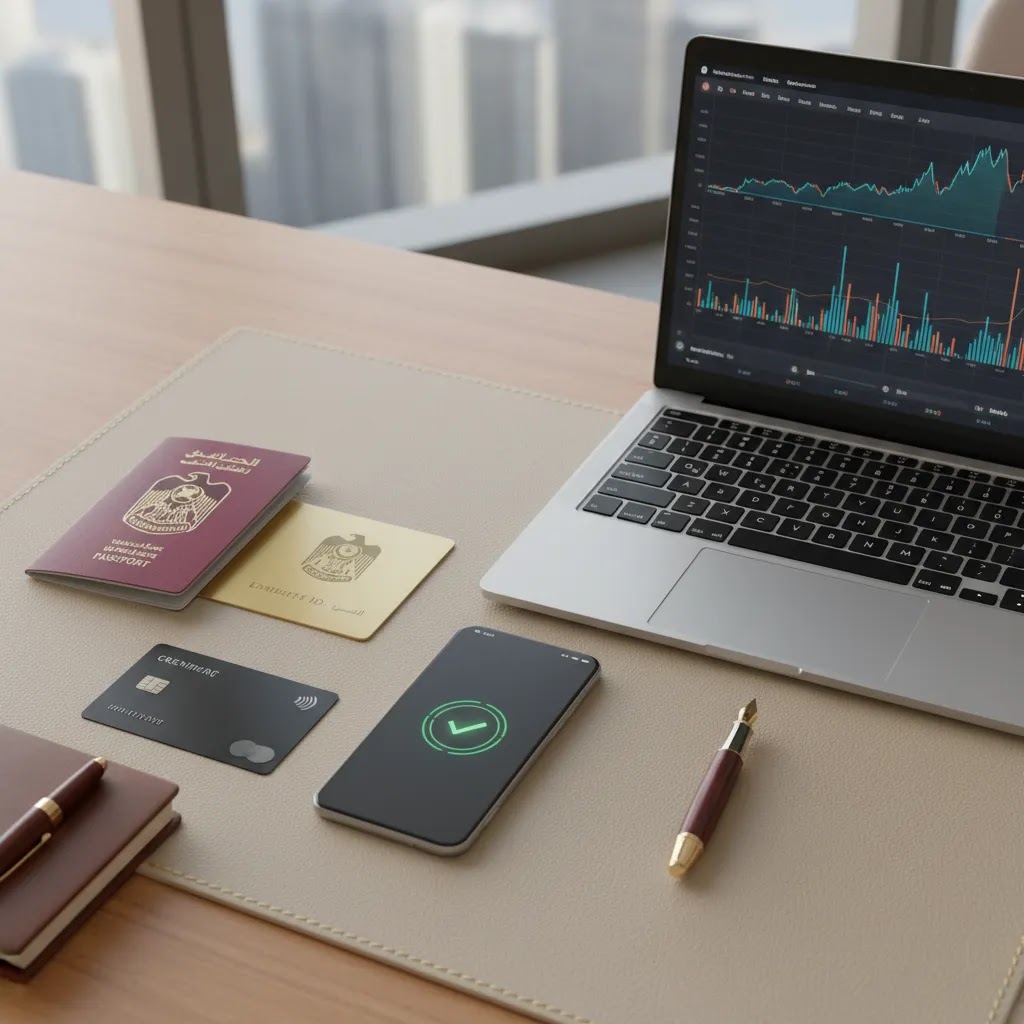
Third, you need identity and funding documents. In most cases, brokers will request a passport or Emirates ID, proof of address, and sometimes tax or residency information as part of know your customer and anti-money laundering checks.
Choosing Between DFM and ADX (And What the UAE Stock Market Index Tells You)
If you are new to local investing, it is normal to ask whether you should focus on Dubai Financial Market or Abu Dhabi Securities Exchange first. Think of it this way: both are UAE exchanges, but they can feel different in terms of the types of companies you are exposed to, sector concentration, and how active trading is in specific names.
DFM is often associated with listings that many UAE residents encounter through day-to-day business and real estate activity, while ADX has historically featured a different mix that can include large national champions and energy-related exposure. The exact composition changes over time as listings evolve, and liquidity can vary significantly stock by stock. That is why a simple “DFM vs ADX” decision is usually less important than understanding what you are actually buying and whether your portfolio is overly concentrated in one sector or theme.
Consider this: diversification across both exchanges may reduce single-exchange concentration risk, but it does not eliminate market risk. If your holdings are mostly tied to one sector, or to a small number of large companies, your portfolio may still move sharply on sector news, interest rate changes, or regional events.
A useful way to stay grounded is to watch UAE market indexes as a temperature check. An index can help you see whether a broad market move is happening versus a company-specific event. At the same time, index movements are not a guarantee of what any one stock will do. A single stock can rise while the index falls, or drop sharply even in a generally rising market. Local familiarity is valuable, but knowing the brand names around you is not the same as understanding concentration risk, valuation, and how quickly sentiment can shift.
How to Buy Stocks in UAE Step by Step
Here is the process most investors will follow when opening a trading account UAE residents can use for local shares.
1. Decide whether you want real shares or CFDs. If your aim is long-term investing in UAE companies, direct share dealing is usually more aligned with that goal than short-term CFD speculation. A CFD lets you trade price movements, but it is not the same as owning the underlying stock.
2. Obtain your investor number if required. DFM and ADX may require exchange-level registration before you can trade listed shares. Your broker may help you complete this step, or you may need to register separately depending on the channel you use.
3. Choose a regulated broker. Regulation matters. In the UAE, you may come across firms supervised by bodies such as the Securities and Commodities Authority (SCA), the Dubai Financial Services Authority (DFSA), or the Financial Services Regulatory Authority (FSRA) in Abu Dhabi Global Market. For example, Capital.com is listed in our data as SCA regulated, ADSS is SCA regulated, Pepperstone is DFSA regulated, and Interactive Brokers is DFSA regulated via its DIFC branch.
4. Complete account verification. Most platforms will ask you to upload identification, answer suitability questions, and confirm your source of funds in some cases.
5. Fund the account. Funding methods differ by broker. Minimum deposits also vary widely. Business24-7 product data shows $0 minimums at Interactive Brokers and XTB, $20 at Capital.com, $100 at ADSS and Plus500, $200 at eToro, and $2,000 at Saxo Bank.
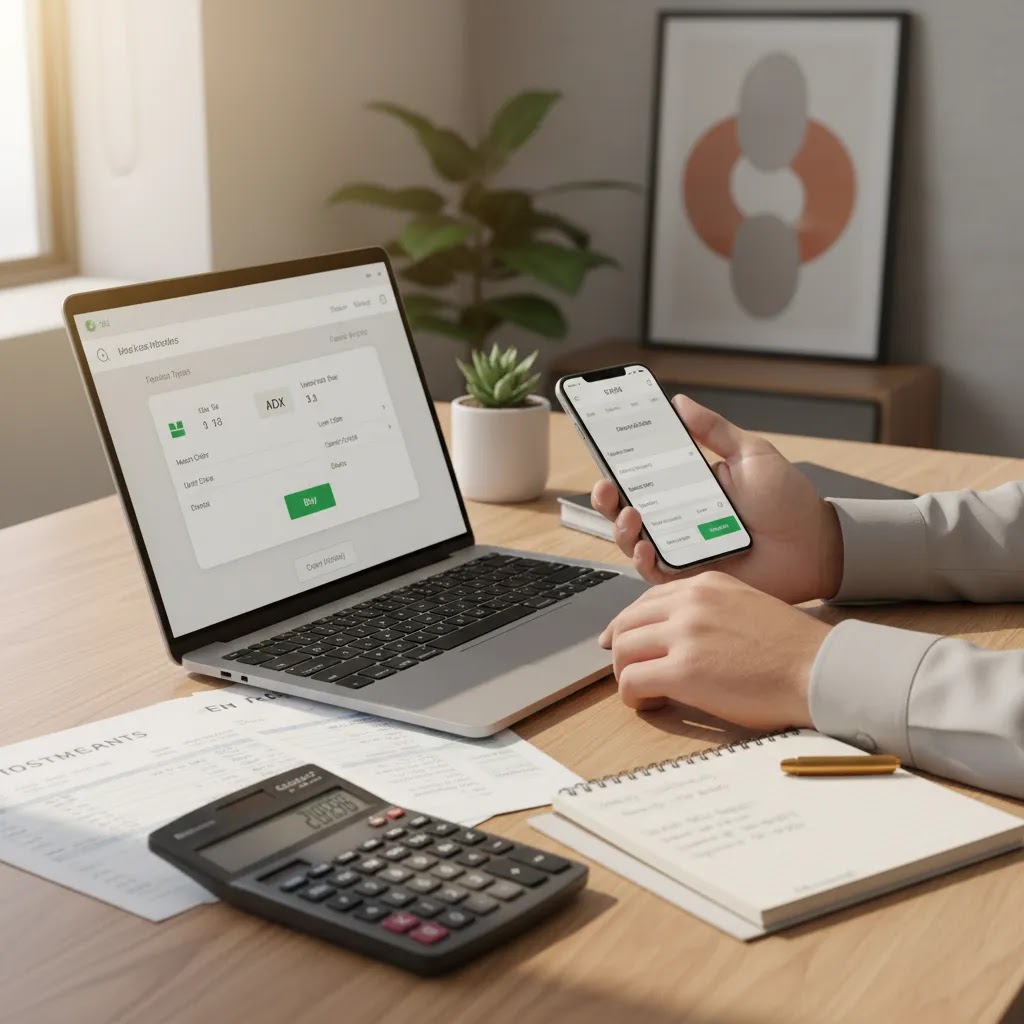
6. Search for the stock and place an order. Once your account is active, you can search by company name or ticker, choose the number of shares, review the order details, and submit a market or limit order depending on platform functionality.
First-Time Order Essentials (Order Types, Pricing, and Avoiding Bad Fills)
Placing your first order is where many beginners take on avoidable risk, even if they have chosen a regulated broker and completed the paperwork correctly. The two order types you will see most often are market orders and limit orders.
A market order generally tells the broker to execute as soon as possible at the best available price. This can be convenient in liquid stocks, but the reality is that the “best available price” can move quickly, especially in fast markets or in shares with thinner trading activity. A limit order sets the maximum price you are willing to pay when buying, or the minimum price you are willing to accept when selling. It may not fill immediately, but it can help you control price risk in less liquid names.
Now, when it comes to assessing share prices, it is not only about whether the stock looks “cheap” or “expensive.” From a practical standpoint, you also want to think about liquidity and the spread, meaning the gap between the buy and sell price you may see on screen. Wider spreads and low trading volume can increase the chance of a worse fill, especially if you place a market order and the order book is thin.
Common first-order mistakes to avoid include placing market orders in illiquid shares where price can jump between quotes, ignoring total costs such as commissions or exchange fees that can change your effective entry price, and overconcentrating by putting too much of your account into one stock because it feels familiar. None of these points guarantee a better outcome, since markets can still move against you, but they can help you reduce execution-related surprises that are not part of the investment thesis itself.
Choosing a Broker or Platform
Your choice of platform may shape your costs, market access, and overall investing experience more than many beginners expect. The right option depends on whether your priority is UAE shares, international diversification, low minimum deposit, Islamic account access, or advanced tools.
For investors who want broad market reach, Interactive Brokers stands out in our product data for access to 150+ markets, professional-grade tools, and a $0 minimum deposit. Saxo Bank is another multi-asset option, with 72,000+ instruments and premium research, though its $2,000 minimum deposit makes it less accessible for smaller starting balances.
If you are looking for a lower barrier to entry, Capital.com has a $20 minimum deposit and is listed as regulated by the Securities and Commodities Authority in the UAE. eToro offers features such as copy trading, social trading, smart portfolios, and 0% commission on real stocks, with a $200 minimum deposit and support for AED deposits. XTB also lists 0% commission stocks up to volume thresholds and has a $0 minimum deposit.
Not every well-known broker is automatically ideal for direct UAE share investing. Some platforms focus more on forex and CFDs than exchange-traded local equities. ADSS may appeal to some UAE-based users because it is UAE-headquartered, SCA regulated, offers local support, and supports AED accounts, but you should still confirm exactly which underlying markets and share dealing routes are available before opening an account.
If your next step is broker comparison rather than exchange mechanics, see our breakdown of the best stock brokers in UAE and our broader review of the best trading platform uae options.
Costs, Fees, and Practical Checks
Costs are one of the easiest areas for new investors to misunderstand. If you are buying listed shares, the fee structure may include broker commission, exchange fees, custody fees, currency conversion, and transfer charges. If you are using a CFD broker instead, costs are more likely to show up through spreads, overnight funding, and in some cases inactivity fees.
Business24-7 product data shows meaningful differences across major platforms. eToro offers 0% commission on real stocks, but spreads apply on CFDs. XTB also offers 0% commission stocks up to certain volume limits, while Capital.com uses spread-only pricing on most instruments and lists no commissions on most products. Interactive Brokers uses tiered or fixed pricing and is often more cost-efficient for higher-volume users. Saxo Bank also uses tiered pricing, while Plus500 applies spread-only pricing with overnight funding fees. AvaTrade notes an inactivity fee after 3 months.
Check these points before you fund any account:
- Are you buying real UAE shares or a CFD linked to a stock price?
- Is there a minimum deposit that changes your flexibility?
- Will your account be funded in $ or AED, and are conversion fees involved?
- Does the broker charge custody, withdrawal, or inactivity fees?
- Is an Islamic or swap-free account available if you need one?
For regulation-focused background before committing capital, readers can browse Business24-7 resources in UAE Regulation and Tax.
Risks and Common Mistakes
Investing in the dubai stock market or the Abu Dhabi market may look simple from the outside, but there are several common mistakes that can increase risk.
The first is confusing investing with leveraged trading. Some brokers prominently market CFDs, which can amplify gains and losses. Capital is at risk, and losses can exceed deposits where margin is used. If your goal is ownership of UAE shares, verify the instrument type before placing an order.
The second is focusing only on minimum deposit instead of total suitability. A low entry point can be helpful, but research quality, regulatory oversight, execution model, and market access often matter more over time.
The third is assuming local familiarity means lower risk. Knowing a company name does not mean its valuation is attractive or that the business will perform well. UAE shares can still be volatile, especially around earnings releases, sector-specific developments, and broader market shifts.
The fourth is skipping the regulatory check. A platform supervised by the SCA, DFSA, FSRA, Financial Conduct Authority (FCA), or other recognized authority may offer a stronger compliance framework than an offshore-only entity, though regulation never removes market risk completely.
Frequently Asked Questions
Can foreigners invest in the UAE stock market?
In many cases, yes. Eligibility depends on the exchange, the listed company, and the broker onboarding policy. Some shares may have foreign ownership limits, and you may need an investor number before trading. Brokers will also apply identity and compliance checks before approving your account.
Do I need an NIN to buy UAE shares?
If you want to trade directly on DFM or ADX, you will often need a National Investor Number or the exchange equivalent required for settlement and identification. Some brokers help clients complete this process during onboarding, but you should confirm the exact procedure before opening the account.
What is the minimum amount needed to start?
There is no single answer because the exchange requirement and the broker requirement are separate. Based on Business24-7 product data, broker minimums range from $0 at Interactive Brokers and XTB to $2,000 at Saxo Bank. Your actual starting amount should also account for fees and share prices.
Is it better to use a local broker or an international platform?
That depends on your objective. A local broker may offer more direct support for UAE market access, investor number setup, and AED-based processes. An international platform may provide wider diversification, stronger research tools, or lower pricing for global assets. The right choice depends on whether UAE shares are your main focus.
Can I buy DFM and ADX shares from a mobile app?
Often yes, but app availability does not automatically mean full direct market access. Many modern brokers offer mobile trading, including eToro, XTB, Capital.com, Plus500, ADSS, and Interactive Brokers. You should still verify that the specific app supports the UAE-listed shares you want to buy, not just global CFDs.
Are Islamic accounts available for UAE investors?
Many brokers in our data offer Islamic or swap-free accounts, including eToro, AvaTrade, Pepperstone, Plus500, XTB, Capital.com, ADSS, and Exness. Interactive Brokers and Saxo Bank are listed as not offering Islamic accounts. Availability may depend on region, account type, and instrument selection.
Is the UAE stock market safe for beginners?
The market itself is regulated, but that does not mean prices are stable or that investing is low risk. Beginners may find UAE shares easier to follow because of local familiarity, yet they still need to understand diversification, order types, fees, and company risk before investing.
Can Americans invest in the UAE stock market?
In many cases, US citizens may be able to invest, but access depends on the broker’s policies, the exchange rules, and the specific instrument. Some platforms have additional onboarding steps for US persons, and certain products may have restrictions. If you are a US citizen or US tax resident, it is important to confirm eligibility during account opening and understand any tax reporting obligations that may apply.
Which is the best stock to invest in UAE?
There is no single “best” UAE stock for every investor. Suitability depends on your time horizon, risk tolerance, sector exposure, valuation, and whether you are building a diversified portfolio or taking a concentrated position. Many investors start by comparing companies based on fundamentals and liquidity rather than choosing solely based on popularity or recent performance.
Is it worth investing in UAE stocks?
It can be worth considering if you want exposure to UAE-listed companies and you understand the risks involved. UAE shares can offer access to sectors tied to regional growth, but they can also be volatile and concentrated in certain industries. Whether it is “worth it” depends on how UAE equities fit into your overall diversification and risk profile, not on any guarantee of returns.
Can I make $1000 per day from trading?
Some traders aim for daily profit targets, but there is no reliable or low-risk way to make $1,000 per day from trading. Markets can move against you, and costs, spreads, slippage, and leverage can increase losses. If you are considering short-term trading, it helps to focus first on risk management and realistic expectations rather than fixed daily income goals.
Key Takeaways
- To invest in DFM or ADX, you usually need an investor number, a regulated broker, verified ID, and a funded account.
- Always confirm whether you are buying real shares or trading CFDs, because the risk profile and cost structure are different.
- Broker minimum deposits vary significantly, from $0 at some platforms to $2,000 at premium providers such as Saxo Bank.
- Regulatory oversight matters. Look for supervision by authorities such as the SCA, DFSA, FSRA, or other recognized regulators.
- Business24-7 research is most useful at the comparison stage, especially when narrowing down platform type, fees, and UAE suitability.
Conclusion
If you are researching how to invest in uae stock market opportunities, the core process is not complicated, but the quality of your setup matters. The biggest decisions are usually not about which stock to buy first, but which broker structure fits your goals, whether you need direct DFM or ADX access, and how fees and regulation affect your experience. For some investors, a low-cost international broker may be enough. For others, local support, AED funding, or SCA-linked oversight may matter more. The sensible next step is to compare brokers side by side, verify whether they offer real UAE shares, and review all charges before funding an account. Business24-7 is built for exactly that stage of the decision process.
This article is for informational purposes only and does not constitute personalized financial or investment advice. Investing and trading in shares, CFDs, and other financial instruments involve risk, and capital is at risk. Where leverage is used, losses can exceed deposits. Before opening an account or investing in UAE-listed securities, review the applicable rules of the Securities and Commodities Authority (SCA), the Dubai Financial Services Authority (DFSA), or other relevant regulators, and consider whether the product is appropriate for your financial situation and risk tolerance.
Disclaimer
eToro is a multi-asset platform which offers both investing in stocks and cryptoassets, as well as trading CFDs.
Please note that CFDs are complex instruments and come with a high risk of losing money rapidly due to leverage. 61% of retail investor accounts lose money when trading CFDs with this provider. You should consider whether you understand how CFDs work, and whether you can afford to take the high risk of losing your money
This communication is intended for information and educational purposes only and should not be considered investment advice or investment recommendation. Past performance is not an indication of future results.
Copy Trading does not amount to investment advice. The value of your investments may go up or down. Your capital is at risk.
Crypto assets are complex and carry a high risk of volatility and loss. Trading or investing in crypto assets may not be suitable for all investors. Take 2 mins to learn more
eToro USA LLC does not offer CFDs and makes no representation and assumes no liability as to the accuracy or completeness of the content of this publication, which has been prepared by our partner utilizing publicly available non-entity specific information about eToro.

If you want to learn how to invest in UAE stock market opportunities through the Dubai Financial Market and Abu Dhabi Securities Exchange, the process is fairly straightforward once you know the correct sequence. You typically need an investor number, a broker or trading platform, verified ID documents, and a funded account before you can place your first order. This…