
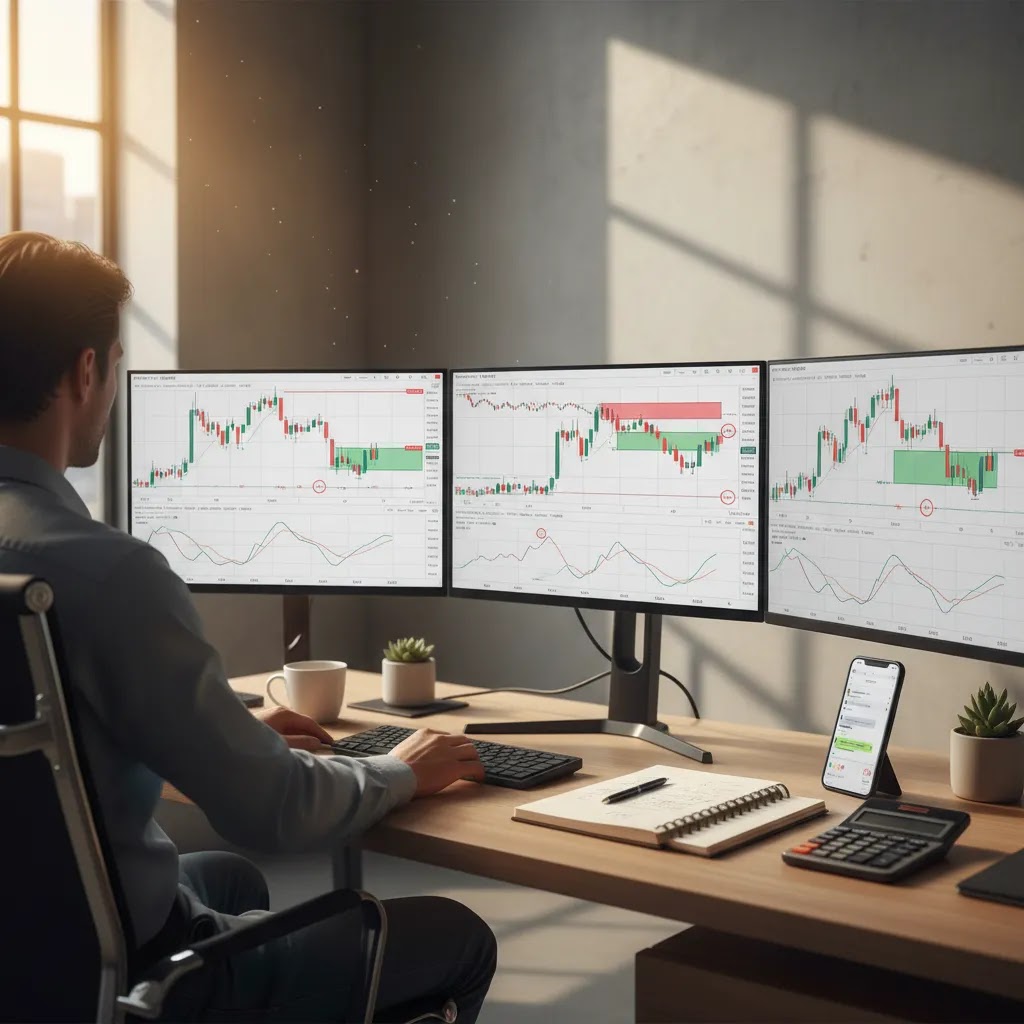
Forex signals can look appealing if you want trade ideas without spending hours analyzing charts yourself. For many UAE-based traders, that appeal is strongest at the beginning, when the market feels complex and online claims are often inconsistent. The problem is that not all forex trading signals are created equally. Some may be based on a clear method, while others could be little more than marketing wrapped around risky speculation. Before you pay for a forex signal service or act on free forex signals from Telegram, WhatsApp, or social media, it helps to understand what signals can and cannot do. If you are still building your foundation, start with our guide to trading strategies so you can judge whether a signal actually fits a real plan rather than replacing one.
What forex signals actually are
Forex signals are trade ideas that tell you what to buy or sell, usually with an entry price, stop-loss, and take-profit target. In some cases, they also include the time frame, risk level, and a short explanation of the setup. A signal may come from a human analyst, an algorithm, an indicator-based system, or an AI trading signals model.
That sounds simple, but the quality gap can be wide. A useful signal is normally part of a repeatable process with clear risk management. A weak signal may rely on vague promises, no real track record, or unrealistic claims about win rates. This is why asking “are forex signals worth it?” usually leads to a more useful question: are they transparent, testable, and suitable for your risk tolerance?
Signals also differ from execution services. A signal tells you what someone else thinks may happen. You still decide whether to act on it. By contrast, in copy trading, trades are often mirrored automatically. That difference matters because manual signals leave more room for discipline errors, delayed entries, and emotional decision-making.
How forex signals work
Most forex signal providers deliver alerts through mobile apps, Telegram channels, email, Discord, broker platforms, or in-platform notifications. A typical forex signal app or channel may send:
- Instrument, such as EUR/USD or GBP/JPY
- Direction, buy or sell
- Suggested entry zone
- Stop-loss level
- One or more take-profit targets
- Brief market rationale
Some services are discretionary, meaning a trader interprets the market and sends setups manually. Others use pre-set rules or machine learning. If you are considering ai automated trading, keep in mind that automation does not remove risk. It may speed up analysis, but it can also magnify poor assumptions if the model is weak or market conditions change.
Signals are often used in spot forex and CFDs, so you may also see cfd trading signals offered on indices, gold, or crypto. If you are using leveraged products, losses can build quickly if position sizing is too large or if the stop-loss is ignored. In most cases, signals should be treated as one input into your process, not as a substitute for understanding the trade.

A practical execution checklist for following signals
Here’s the thing: even if a signal is well-structured, your result can differ from the provider’s posted outcome because you are not getting the same entry, the same spread, or the same execution conditions. This gap tends to show up most during fast markets, around major economic releases, or when you are trading from a phone while working.
From a practical standpoint, the biggest issue is the distance between when a signal is posted and when you actually get filled. Spreads can widen during news, liquidity can thin during off-market hours, and a market order can slip if price is moving quickly. Even a short delay can matter if the signal uses a tight stop-loss or aims for a small target.
Fees are the other friction point that can quietly turn a marginal signal negative. With spread-only accounts, your cost is embedded in the bid-ask spread. With commission-based accounts, spreads may be lower but you pay a separate per-lot commission. Then there are overnight funding costs (swap) on many leveraged products, which can matter if a signal turns into a multi-day hold. None of these costs are “good” or “bad” by themselves, but they change the real break-even point of a trade.
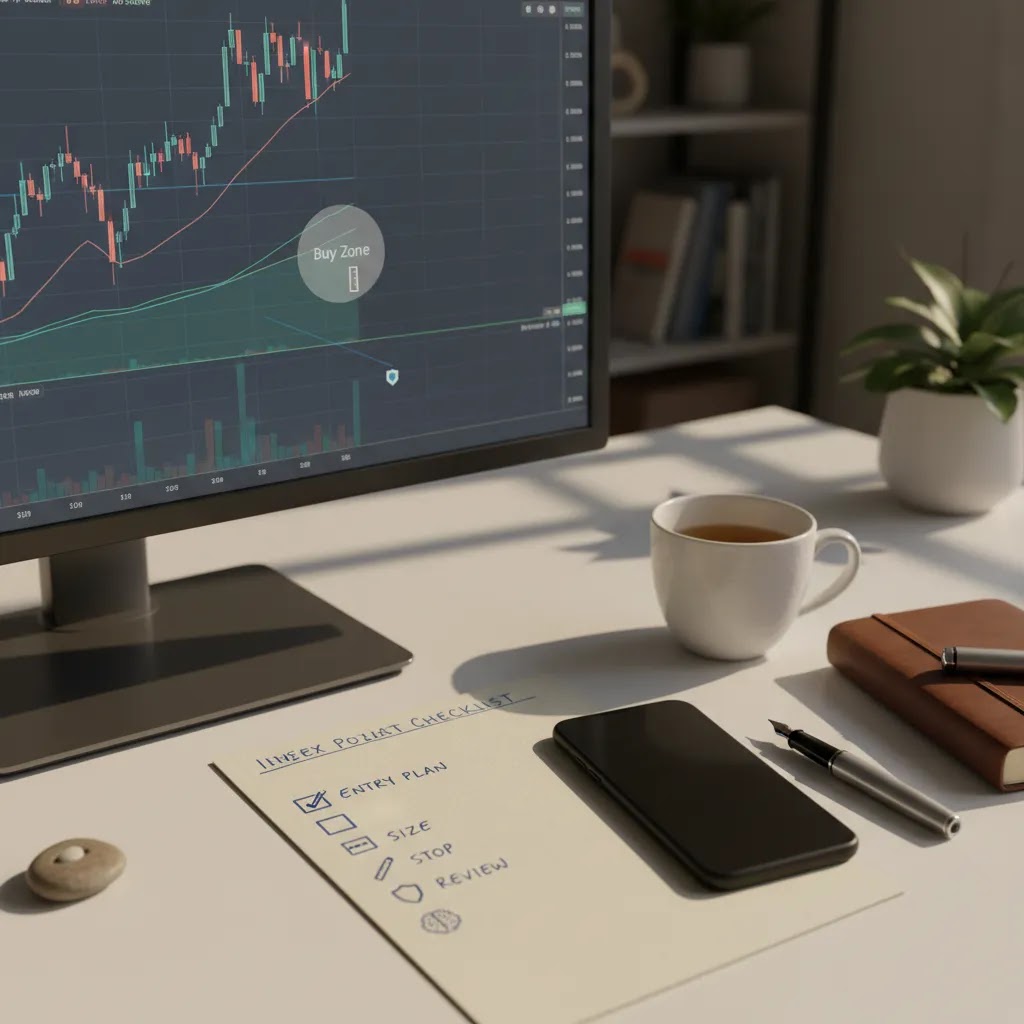
Before you place any signal-based trade, it helps to run a quick routine that keeps you anchored in risk, not excitement:
- Confirm the position size is realistic for your account. A signal that looks small in pips can still be large in $ terms if the lot size is too big.
- Check the stop-loss distance and your margin impact. If the stop is far away or leverage is high, the drawdown on the trade can be larger than you expect.
- Look at your broker’s typical spread on that pair during the time you trade. If the spread is wider than usual, the signal’s entry and stop may not make sense anymore.
- Consider whether the trade timing is practical. If you cannot monitor it, you may need to use a hard stop-loss and avoid “manual close” instructions that depend on being online.
- Factor in overnight funding if you are likely to hold beyond the session. A signal service may post targets, but funding charges can reduce net performance over time.
None of this guarantees a better outcome, and trading always carries risk. The goal is simpler: make sure the signal you are copying can actually be executed in your account, with your broker’s pricing, under real market conditions.
Pros and Cons
Strengths
- Forex signals may help beginners learn how entries, stop-losses, and take-profit levels are structured in live market conditions.
- They can save time for traders who cannot watch charts throughout the day.
- Some signal services may improve discipline by forcing users to follow predefined risk parameters rather than impulsive trades.
- Good providers sometimes explain the logic behind a trade, which can support education rather than pure dependence.
- Signals may be useful for idea generation across forex, commodities, indices, and other CFD markets.
Considerations
- Many signals are hard to verify, especially when performance claims are shared without audited records or full losing-trade history.
- Execution differences matter. If you enter late, use a different broker, or face wider spreads, your result may differ from the posted signal.
- Signals can create dependency, where the trader never develops analysis skills or risk management judgment.
- Free forex signals shared on social media may be used mainly to attract sign-ups rather than provide a consistent edge.
- Leveraged forex and CFD trades involve real risk, and following signals does not protect your capital from loss.
How to judge signal “accuracy” in a way that reflects real risk
What many people overlook is that “accuracy” is one of the easiest marketing numbers to misuse. You will often see claims like 80% to 90% accuracy, but win rate alone does not tell you whether a signal service may be profitable, or whether it exposes you to large drawdowns along the way. Trading outcomes depend on how big the winners are relative to the losers, how often losses happen in a row, and whether the results include realistic costs.
Consider this: a service can be “right” most of the time and still lose money if its losing trades are larger than its winners. A simple example in plain language is a strategy that wins 9 trades and loses 1 trade. If each win makes $10, that is $90. If the one loss is $120 because the stop is wide, the stop is moved, or the loss is not cut quickly, the net result is still negative. That is why high accuracy does not automatically equal a positive expectancy.
If you want a more complete picture, look for metrics that reshape the story beyond win rate:
- Risk-to-reward ratio: how much the average win is compared to the average loss.
- Average win vs average loss: this is often more revealing than “accuracy” because it shows the typical trade outcome.
- Maximum drawdown: the deepest peak-to-trough decline over a period, which helps you judge the worst historical losing stretch.
- Consecutive losses: even strong strategies can have losing streaks, and you need to know whether you could realistically tolerate them.
- Instrument list and frequency: what pairs are traded, how often, and whether results depend on a narrow window of conditions.
Proof matters too, and it should be basic and verifiable. If a provider wants to be taken seriously, it should be able to show a full trade history that includes losses, with time stamps, the instrument traded, and the exact entry and exit levels. It should also be clear whether performance reflects real trading costs, including spreads, commissions, and typical slippage. If results are presented as perfect fills with no costs, you should assume the live experience could look different, especially in volatile conditions.
Now, when it comes to reading signal performance, be cautious with anything that relies only on screenshots, selective “today’s wins,” or vague claims about accuracy. In leveraged markets, the downside is real, and the way risk is handled usually matters more than how good the marketing looks.
Paid vs free forex signals
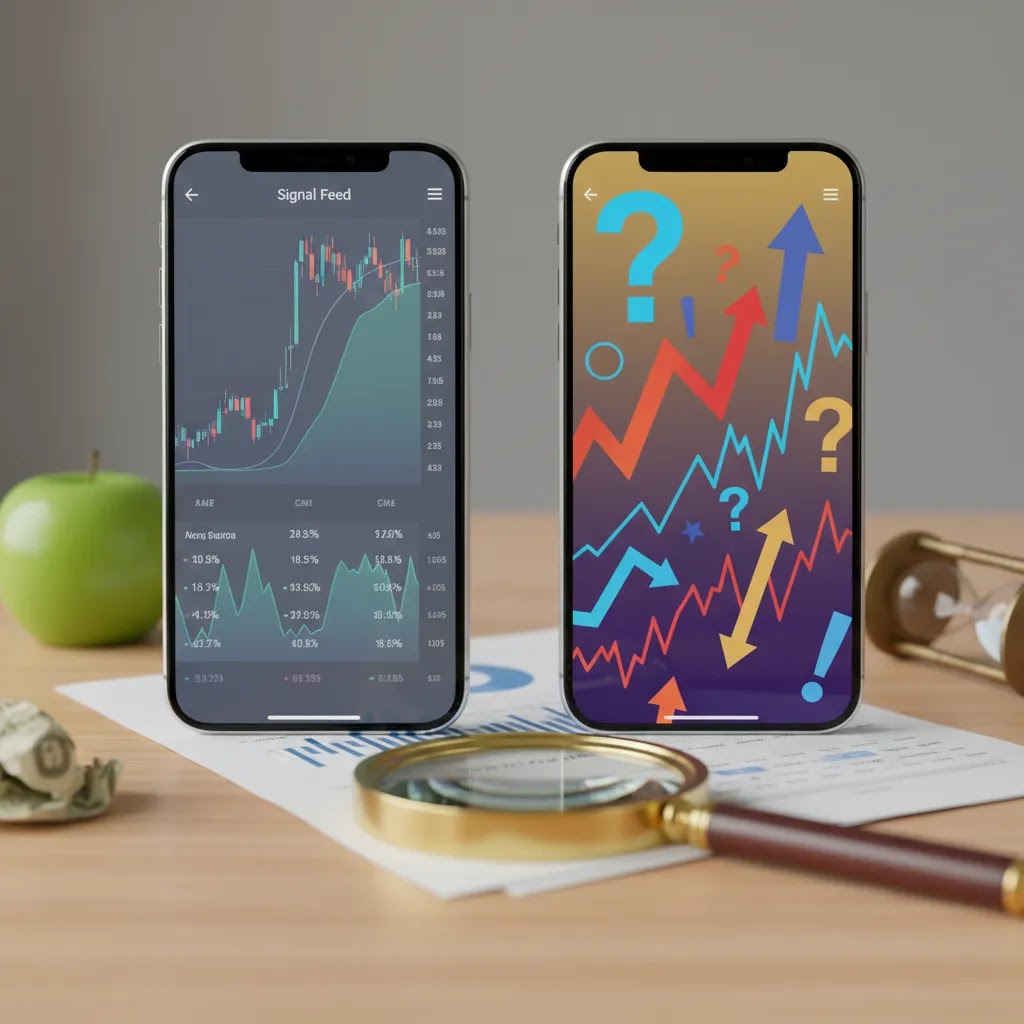
Free forex signals are common, but “free” does not always mean low cost. Sometimes the real cost appears through affiliate-driven broker referrals, aggressive upsells, poor risk control, or low-quality trade ideas. A free channel may still be useful, but it deserves the same scrutiny as a paid service.
Paid vs free signals often comes down to transparency. A paid forex signal provider should be able to explain its method, publish realistic performance data, and show how risk is managed. If the offer focuses mainly on lifestyle imagery, guaranteed accuracy, or pressure to join quickly, that is a warning sign.
In practice, a reasonable way to compare them is to ask:
- Is there a verified history that includes losing trades?
- Are stop-losses mandatory or optional?
- How often are signals sent, and on which pairs?
- Does the provider explain the basis for the trade?
- Do costs go beyond the subscription, such as spreads, commissions, or overnight funding?
If you cannot answer those questions clearly, the service may not be mature enough to trust with live capital.
Forex signals on Telegram, WhatsApp, and bots: what changes
Free channels and paid groups on Telegram and WhatsApp are popular because they feel immediate. You get a “buy” or “sell” message and you can act in seconds. The reality is that social-channel signals come with unique verification problems that you do not always see with app-based services that publish a more stable track record.
One concern is message integrity. Chat channels can be edited, deleted, or reposted in a way that makes losing calls disappear from the visible history. Some groups also run “VIP” upsells where the free channel shows a few selective wins while the paid tier is marketed as the real source of profitability. Impersonation is another common problem in this ecosystem, where copycat accounts mimic a known channel name and then push referral links or payment requests.
It is also common to see affiliate broker funnels built around signals. That does not automatically mean the signals are bad, but it does raise the question of incentives. If the business model depends on you opening an account with one specific broker, you should be extra careful about both the broker’s regulation and the quality of the signal track record.
Bots add another layer. A bot can be consistent because it follows rigid rules, but that rigidity can be a weakness in changing market conditions. Some bots may overtrade, especially in choppy markets, because they are designed to “always find a setup.” If you are evaluating a bot-based signal stream, you want to know how it handles stop-loss placement, whether it adapts to volatility, and how it behaves around major news events. Without that context, a clean-looking stream of entries and targets may not tell you much about real risk.
Verification habits matter more in chat-based signals. If you are going to follow them at all, look for archived logs that keep losses visible, consistent formatting that reduces ambiguity, and clear risk guidance per trade, not just entries and take-profits. A provider that explains why a stop is placed where it is, and how much of an account is typically put at risk, is usually giving you more useful information than one that only posts “TP hit” screenshots.
How to spot a signal scam
A signal scam usually follows a recognizable pattern. The provider promises very high win rates, shows screenshots instead of audited results, deletes losing trades from chat history, or pushes users toward an unfamiliar broker. Some go further by avoiding clear regulatory language or hiding who is actually behind the service.
For UAE-based readers, checking the broker side matters just as much as checking the signal provider. If signals route you toward a platform with weak or unclear oversight, your risk may increase beyond the trade itself. Our broker scam check guide can help you review common warning signs before you fund any account.
Pay close attention to these red flags:
- Guaranteed profits or “no-loss” messaging
- Claims of 90% to 100% accuracy without third-party verification
- No mention of stop-losses or drawdowns
- Pressure to use one specific broker without explaining why
- No disclosure of fees, ownership, or methodology
- Heavy focus on screenshots, luxury lifestyle content, or referral codes
Under UAE-focused due diligence, it is sensible to favor brokers overseen by bodies such as the DFSA or SCA where relevant, or by established international regulators such as the FCA, ASIC, or CySEC when available in the platform data.
Platforms that may suit signal users
If you plan to act on forex signals, the broker you use still matters. Execution speed, spreads, platform quality, and regulatory status can affect your outcome. Below are examples from Business24-7 coverage that may appeal to traders who use signals, depending on their priorities.
| Broker | Starting Cost | Platforms | Regulation | Why it may appeal |
|---|---|---|---|---|
| Pepperstone | From 0.0 pips on Razor, $7/lot commission | MT4, MT5, cTrader, TradingView | DFSA, FCA, ASIC, CySEC, BaFin | May suit active signal followers who want low spreads and advanced charting. |
| Plus500 | From 0.8 pips, spread-only pricing | Plus500 WebTrader, Mobile App | DFSA, FCA, CySEC, ASIC, MAS | May suit beginners who want a simple interface and risk management tools. |
| Capital.com | From 0.6 pips, no commissions on most instruments | Capital.com Web, Mobile App, MT4 | SCA, FCA, CySEC, ASIC | May suit UAE readers seeking low minimum deposit access and SCA regulation. |
| AvaTrade | From 0.9 pips, inactivity fee after 3 months | MT4, MT5, AvaTradeGO, WebTrader | ADGM FSRA, CBI, ASIC, FSA Japan | May suit traders who value education and ADGM-regulated access. |
| eToro | From 1.0 pips, no commission on real stocks | eToro WebTrader, Mobile App | CySEC, FCA, ASIC, ADGM | May suit users comparing signal following with social and copy-based alternatives. |
Each of these brokers has trade-offs. Pepperstone offers ultra-low spreads on Razor, but commission pricing may be less intuitive for new traders. Plus500 keeps pricing simple, though overnight funding fees apply. Capital.com has a low $20 minimum deposit and SCA regulation, but it remains a CFD-focused offering. AvaTrade includes education and is regulated by ADGM FSRA, though inactivity fees may matter if you trade infrequently. eToro may appeal to traders who want to compare manual signal use with social features, but forex spreads start from 1.0 pips.
How Business24-7 suggests you use signals
At Business24-7, the goal is not to tell you to follow or avoid all trading signals. It is to help you evaluate them with the same caution you would apply to any broker or trading tool. That means checking regulation, fee structure, platform suitability, and whether the service encourages sound risk management rather than blind execution.
Braden Chase’s editorial approach is grounded in practical broker research and safety-first comparisons for UAE readers. If a signal service points you toward a broker, review that broker independently before opening an account. You can browse our Trading Strategies resources for broader context and check our UAE Regulation and Tax content to understand the compliance side more clearly before making a decision.
How to choose safely
If you are evaluating the best forex signals, it helps to score the service against a simple checklist instead of relying on testimonials alone.
- Check the broker relationship. If the signal provider pushes one broker, ask whether that broker is regulated by authorities such as the DFSA, SCA, FCA, ASIC, or CySEC, based on what is publicly confirmed. A weak broker can turn a decent signal into a poor trading experience.
- Review the full cost. Signals are never just about subscription price. You may also face spreads, commissions, slippage, and overnight fees. For example, Pepperstone’s Razor account uses $7/lot commission with spreads from 0.0 pips, while Plus500 and Capital.com use spread-based pricing.
- Test transparency. A serious forex signal service should show more than winning screenshots. Look for losing trades, average drawdown, and how stops are handled. A provider that hides bad periods is giving you incomplete risk information.
- Assess usability. The best signal in theory may still fail in practice if the platform is slow, confusing, or poorly suited to mobile trading. This matters if you enter trades manually from alerts during the workday.
- Decide whether signals fit your style. Some traders may be better served by learning one system, while others may prefer structured social models such as copy trading. If you are comparing methods, study signals alongside copy-based approaches rather than assuming one is automatically superior.
For most retail traders, the safest starting point is a demo environment or very small live position sizes. Signals can be useful for observation and structure, but they do not remove execution risk, market risk, or the need for discipline.
Frequently Asked Questions
Are forex signals worth it for beginners?
They may be useful for learning trade structure, but they are rarely enough on their own. Beginners still need to understand position sizing, stop-loss placement, and the risks of leverage. If you follow signals without understanding the setup, you could make poor decisions when the market moves quickly or when a provider has a losing streak.
Are free forex signals reliable?
Some may be decent, but many free services are mainly lead-generation tools for broker referrals or upsells. Reliability depends less on price and more on transparency, consistency, and risk control. A free provider that shows full performance history may be more useful than a paid one that only advertises winners.
What is the difference between copy trading and signals?
Signals usually require you to place the trade manually after receiving an alert. Copy trading often mirrors trades automatically from another trader’s account. Signals give you more control but also more room for execution mistakes. Copy trading may be more convenient, but it can create a different type of dependency.
Can AI trading signals be trusted?
AI-generated signals may help identify patterns, but they should not be trusted blindly. Any model can struggle in changing market conditions or rare events. What matters is whether the provider explains how risk is controlled, how the model is monitored, and whether results are presented realistically rather than as certain outcomes.
What is a common signal scam warning sign?
A major red flag is any provider promising guaranteed profits or unusually high accuracy without audited records. Other warnings include deleted losing trades, pressure to join quickly, and referral pushes to unclear brokers. If the provider avoids discussing drawdown or stop-losses, caution is warranted.
Do I need a special broker to use forex signals?
No, but your broker still matters. Spreads, commissions, execution quality, and regulation can all affect the result you get from a signal. A provider may recommend a broker, but you should review that platform independently before depositing funds, especially if you are trading from the UAE.
Which brokers may suit traders following signals in the UAE?
Based on current Business24-7 platform data, brokers such as Pepperstone, AvaTrade, Plus500, Capital.com, and eToro may be considered depending on your needs. Their appeal varies by spreads, platform tools, and regulation. None should be treated as automatically right for every trader, and each has trade-offs.
Are forex signals legal in the UAE?
The legal treatment may depend on how the service is structured and whether it crosses into regulated advisory activity. Separately, the broker you use should be checked for proper oversight. For UAE residents, DFSA or SCA relevance may be an important part of the due diligence process alongside international regulation.
Should I use signals for CFD trading?
You can, but CFD trading signals carry the same risks as any leveraged CFD position. Price moves can be fast, and overnight costs may apply depending on the broker and product. Signals do not reduce the underlying market risk, so position sizing and stop-loss discipline remain essential.
Which forex signal is most accurate?
There is no single “most accurate” forex signal that can be named reliably without consistent, independently verified reporting. Accuracy is also not the only metric that matters. A provider with a lower win rate could still perform better over time if average wins are larger than average losses and drawdowns are controlled. If a service cannot provide a full history including losing trades, time stamps, and realistic costs like spreads and commissions, any accuracy claim should be treated cautiously.
Is it possible to make $1000 a day in forex?
It is possible for some traders to have days where they make $1000, but it is not a realistic baseline expectation for most retail accounts. Targets like this often imply either a large account size, high leverage, or taking significant risk, and those factors can also increase the chance of large losses. Past performance is not a guarantee of future results, and day-to-day outcomes in forex can be highly variable.
Can ChatGPT give forex signals?
ChatGPT can generate educational examples and explain how signals are structured, but it should not be treated as a real-time signal provider. It does not have guaranteed live market access, and it cannot verify execution conditions, spreads, slippage, or broker-specific pricing. If you use AI tools at all, they are typically best used for learning and research, not as a substitute for risk management and independent decision-making.
Can you make $100 a day on forex?
Some traders may have days where they make $100, but consistent daily targets are difficult in practice because the market does not offer the same conditions every day. For smaller accounts, aiming for a fixed daily amount can also push traders toward oversized positions and weaker setups. A safer way to think about it is whether your process controls risk per trade and remains disciplined through losing streaks, rather than chasing a daily number.
Key Takeaways
- Forex signals may help with idea generation and trade structure, but they are not a substitute for risk management.
- Paid vs free signals should be judged on transparency, not marketing style or subscription price alone.
- Signal scams often rely on guaranteed-profit messaging, hidden losses, and pressure to use unclear brokers.
- For UAE traders, broker regulation through bodies such as the DFSA or SCA may be an important safety check.
- The broker you use, including spreads, commissions, and platform quality, can affect signal results as much as the signal itself.
Conclusion
Forex signals can be useful, but only when you treat them as a tool rather than a shortcut. A credible signal provider should be transparent about method, risk, and past losses, while the broker you use should be reviewed just as carefully for regulation, costs, and platform quality. For many readers in the UAE, the safest approach is to test any signal process slowly and verify both the provider and the execution platform before committing meaningful capital. If you are still comparing your options, return to Business24-7 to explore platform reviews, broker resources, and practical guides that can help you judge whether a signal-based approach fits your goals and risk tolerance.
Disclaimer: The content published on Business24-7 is intended for informational purposes only and does not constitute financial advice, investment recommendations, or an endorsement of any specific platform or financial product. Trading and investing carry significant risk, including the potential loss of capital. You should conduct your own research and, where appropriate, seek independent financial advice before making any investment decisions. Business24-7 does not accept responsibility for any financial losses incurred as a result of information published on this site.
Disclaimer
eToro is a multi-asset platform which offers both investing in stocks and cryptoassets, as well as trading CFDs.
Please note that CFDs are complex instruments and come with a high risk of losing money rapidly due to leverage. 61% of retail investor accounts lose money when trading CFDs with this provider. You should consider whether you understand how CFDs work, and whether you can afford to take the high risk of losing your money
This communication is intended for information and educational purposes only and should not be considered investment advice or investment recommendation. Past performance is not an indication of future results.
Copy Trading does not amount to investment advice. The value of your investments may go up or down. Your capital is at risk.
Crypto assets are complex and carry a high risk of volatility and loss. Trading or investing in crypto assets may not be suitable for all investors. Take 2 mins to learn more
eToro USA LLC does not offer CFDs and makes no representation and assumes no liability as to the accuracy or completeness of the content of this publication, which has been prepared by our partner utilizing publicly available non-entity specific information about eToro.

Forex signals can look appealing if you want trade ideas without spending hours analyzing charts yourself. For many UAE-based traders, that appeal is strongest at the beginning, when the market feels complex and online claims are often inconsistent. The problem is that not all forex trading signals are created equally. Some may be based on a clear method, while others…