

Natural gas trading attracts traders because prices can move quickly, react sharply to weather, and respond to supply disruptions in ways that feel very different from stocks or major forex pairs. For UAE-based readers researching energy markets, this can create opportunity, but it also raises the stakes around platform choice, costs, and risk control. If you already follow gold trading or broader commodity markets, natural gas may seem like a logical next step. The key is understanding what drives the market before you open a position. In this guide, you will learn how natural gas is priced, the main ways retail traders access it, what risks matter most, and which regulated platforms listed on Business24-7 may suit different trading styles.
What natural gas trading means
Natural gas trading usually refers to speculating on changes in the price of gas rather than taking physical delivery. Retail traders most often access the market through CFDs, futures-related products, or broader commodity instruments offered by regulated brokers. That makes it a close relative of commodities trading, but with its own volatility profile.
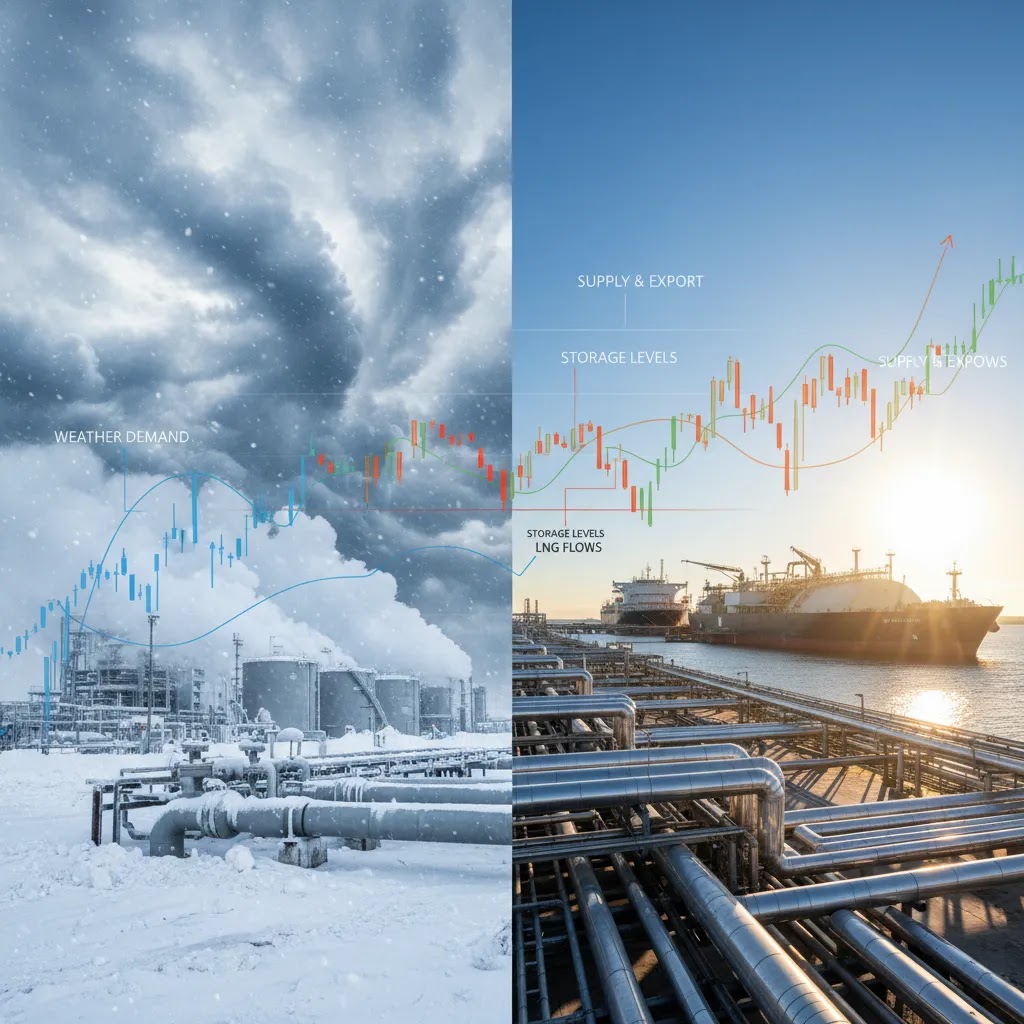
The benchmark most traders watch is Henry Hub natural gas, commonly quoted in U.S. dollars. Prices may move quickly because the market is heavily influenced by seasonal demand, storage data, export flows, and production changes. Winter heating demand in North America, LNG shipments, and supply outages may all affect price direction.
Natural gas also differs from many other assets because short-term sentiment can shift within hours. A weather update, a storage surprise, or a pipeline headline may change the market outlook fast. For that reason, natural gas often appeals more to active traders than to long-term passive investors.
If you are new to energy markets, it helps to understand how gas compares with oil trading. Oil is influenced heavily by geopolitics and global transport demand, while gas may be more sensitive to weather, regional infrastructure, and storage expectations.
Natural gas price today: how to read live quotes and contracts
What many people overlook is that “natural gas price today” is rarely a single universal cash price. For retail traders, the quote you see on a platform is usually tied to a benchmark futures contract, most often Henry Hub, and it is typically expressed in $ per MMBtu. Many brokers mirror this pricing through a natural gas CFD, which means your chart often tracks the same underlying reference even though you are not trading the exchange contract directly.
Here’s the thing: the market trades by contract month. The “front month” is the nearest active futures contract, and as it approaches expiry, liquidity typically shifts to the next month. This is why the “price” can appear to jump or gap on some charts around rollover. The move is not always a real supply-demand shock. In many cases, it reflects switching from one contract month to the next, where pricing can differ based on storage expectations and seasonal demand.
From a practical standpoint, you should get comfortable with three details whenever you check a live quote: the benchmark (often Henry Hub), the unit ($ per MMBtu), and the contract month being referenced. If your platform offers multiple natural gas instruments, you may also see labels that indicate which contract it is tracking. If the month changes, what looks like “today’s price” may change with it, even if the broader market trend feels intact.
Henry Hub is a U.S. benchmark, but it still matters globally because it is widely referenced in derivatives markets and in many retail trading products. Other regions have their own benchmarks, and they can behave differently due to local storage, pipeline constraints, and LNG flows. UAE-based traders often still follow Henry Hub because it is commonly used as the underlying reference for CFDs and because market news coverage and analytics frequently center around it. That does not mean Henry Hub always reflects local gas economics, but it is usually the price series most retail traders are actually trading.

What moves the natural gas price
Natural gas prices may look erratic at first, but the biggest drivers are usually identifiable. Understanding them can help you judge whether a move is driven by short-term noise or a broader market shift.
- Weather demand: Cold winters may increase heating demand, while hot summers may lift electricity demand for cooling.
- Storage reports: Weekly storage data often affects short-term volatility because traders compare actual inventory changes against expectations.
- Production trends: Rising output may pressure prices, while disruptions or lower drilling activity could tighten supply.
- LNG exports and global demand: Export demand can connect U.S. gas pricing more closely to international energy markets.
- Infrastructure issues: Pipeline bottlenecks, maintenance, or outages may affect regional supply and short-term price behavior.
- Correlation with other commodities: Gas sometimes trades alongside broader energy sentiment, though its behavior may differ from gold trading uae and metals.
Because gas can be highly event-driven, price forecasts should be treated carefully. A forecast is a scenario, not a promise. Capital is at risk, and even well-reasoned market views may be invalidated by a sudden weather revision or supply shock.
Ways to trade natural gas
There is more than one way to access the natural gas market, and the right route depends on your experience, capital, and time horizon.
Natural gas CFDs
CFDs are usually the most accessible option for retail traders. They let you speculate on rising or falling prices without owning the underlying commodity. Many UAE-accessible brokers offer gas CFDs alongside forex, indices, and metals. CFDs may be simpler to access than exchange-traded contracts, but overnight funding and spread costs can matter if you hold positions for longer.
Natural gas futures
Futures are standardized exchange-traded contracts and are generally better suited to experienced traders who understand contract specifications, margin, and expiry cycles. If you want a primer on this structure, our guide to futures trading covers the basics. Futures may offer tighter institutional pricing, but complexity is usually higher than with CFDs.
Multi-asset exposure
Some traders use a diversified platform to follow natural gas as part of a wider energy or macro strategy. That can make sense if you also trade oil, indices, stocks, or forex and want everything under one account. In most cases, this approach is less about specializing in gas and more about managing exposure across markets.
Short-term vs swing trading
Natural gas can suit both day traders and swing traders, but the risk profile differs. Day traders may focus on intraday volatility around data releases. Swing traders may look at weather trends, storage cycles, or broader supply-demand themes over several days or weeks. Neither approach is inherently safer. Position sizing and risk controls matter more than strategy labels.
Natural gas futures contract basics: tick size, contract value, margin, and rollover risk
If you are considering futures, the contract mechanics matter because they directly affect your risk per point of movement. Exchange-traded futures are standardized, which is helpful, but the standardization also means you are trading in fixed increments with a defined expiry cycle. In practice, most retail traders who use futures focus on the actively traded month and close or roll positions before expiry rather than holding into delivery-related processes.
Contract specs vary by venue and product, so you should verify details through your broker or the exchange, but there are a few core concepts that tend to trip up newer traders. Tick size is the minimum price movement, and tick value is what that move means in profit or loss for one contract. Contract size determines how much exposure you control, and margin is the collateral required to open and maintain the position. The reality is that margin can change during volatile periods, and leverage can magnify losses just as easily as it can magnify gains.
Settlement is another practical difference. Many futures contracts are cash-settled or are closed by traders before expiry. Some energy contracts can involve physical delivery terms at expiry. Retail traders usually avoid that by not holding the contract into the delivery window, but you should still understand your broker’s rules on last trading day, close-out timing, and any fees or restrictions around expiring contracts.
Now, when it comes to holding a position beyond the front month, rollover becomes the key issue. When the market shifts from one contract month to the next, the price level can differ because the forward months price in storage, seasonality, and expected supply-demand. If later months are priced higher than the front month, the curve is often described as contango. If later months are priced lower, it is often described as backwardation. That difference can create a rollover cost or benefit over time, sometimes called roll yield. Even if spot conditions do not change much, repeatedly rolling in contango can weigh on longer holds, while backwardation can have the opposite effect.
CFDs do not remove this issue, they just package it differently. Many natural gas CFDs reference a futures price, and the broker may apply an adjustment, wider spread, or funding to account for holding costs and rolling exposure. Think of it this way: whether you trade futures directly or use a CFD, holding periods and contract transitions can influence results, not just your directional call.
Because natural gas can gap on major news, futures traders should also plan for event risk. Weekly storage releases, sudden weather model shifts, and infrastructure headlines can trigger sharp moves and slippage, especially outside peak liquidity. Using leverage without a clear loss plan can turn a normal market swing into an outsized account drawdown, so it is worth treating margin as risk capital, not free buying power.
Natural gas trading platforms to compare
If you are evaluating a natural gas trading platform in the UAE, regulation, spreads, usability, and risk controls should carry more weight than marketing claims. Based on Business24-7 product data, several brokers offer commodity access that may include natural gas exposure through CFDs or broader energy products.
| Platform | Type | Starting Cost Info | Regulation | Why Traders Consider It |
|---|---|---|---|---|
| AvaTrade | Forex/CFD Broker | Spreads from 0.9 pips, $100 minimum deposit | ADGM FSRA, CBI, ASIC, FSA Japan | Risk tools, education, AED accounts |
| Pepperstone | Forex/CFD Broker | Razor from 0.0 pips plus $7/lot commission, $0 minimum deposit | DFSA, FCA, ASIC, CySEC, BaFin | Low spreads, fast execution, advanced platforms |
| Plus500 | CFD Broker | Spreads from 0.8 pips, $100 minimum deposit | DFSA, FCA, CySEC, ASIC, MAS | Simple interface, guaranteed stop-loss available |
| Capital.com | CFD Broker | Spreads from 0.6 pips, $20 minimum deposit | SCA, FCA, CySEC, ASIC | Low entry point, 6,000+ markets, mobile usability |
| Interactive Brokers | Multi-Asset Broker | Spreads from 0.25 pips, $0 minimum deposit | DFSA, SEC, FCA, SFC | Professional tools, broad market access |
These are not one-size-fits-all choices. Pepperstone may appeal to active traders focused on pricing and charting. Plus500 may suit readers who want a cleaner interface and built-in risk features. Capital.com stands out for its low minimum deposit and SCA regulation in the UAE. Interactive Brokers may better fit experienced traders who want broad market access rather than a beginner-first layout. AvaTrade could suit readers who value educational support and ADGM regulation.
Pros and Cons
Strengths
- Natural gas gives traders access to a major global energy market with frequent price movement and clear macro drivers.
- Retail access is widely available through regulated CFD brokers such as AvaTrade, Pepperstone, Plus500, and Capital.com.
- Some UAE-relevant brokers are regulated by authorities such as the DFSA, SCA, or ADGM FSRA, which may improve trust and oversight.
- Platform choice is fairly broad, ranging from beginner-friendly apps to advanced setups with MT4, MT5, cTrader, TradingView, or proprietary terminals.
- Low starting deposits are available on some platforms, including Capital.com at $20 and Pepperstone or Interactive Brokers at $0 minimum deposit.
Considerations
- Natural gas can be highly volatile, especially around storage data, weather updates, and supply headlines.
- CFD trading may involve overnight funding charges, spread costs, and leverage risk, which can affect outcomes even if the market eventually moves in your favor.
- Not every platform suits beginners. Professional-grade tools may be powerful but harder to learn.
- Price forecasts in energy markets can change quickly, so relying too heavily on one view may be risky.
Who natural gas trading may suit
Natural gas trading may suit active traders who are comfortable following macro news, weather data, and short-term volatility. It can also appeal to intermediate traders who already understand leverage and want to expand beyond forex or equity indices. For beginners, the market may still be accessible, but usually only if you start small, use a regulated broker, and understand that fast price swings can work against you as easily as they can work in your favor.
If your goal is simply broad commodity exposure rather than frequent trading, you may want to compare energy markets with metals and other sectors first. Readers still deciding between broker options can browse our guide to the best commodity trading platforms in uae before making a platform decision.
Business24-7 perspective
Business24-7 approaches natural gas trading as a platform-selection and risk-awareness question, not just a market-opportunity story. The site is built for UAE readers who want clearer information on fees, regulation, and practical fit before committing capital. Its editorial voice reflects Braden Chase’s background as a former research specialist at Forex.com, with an emphasis on evidence, transparency, and plain-English explanations.
If you are narrowing down brokers, the most useful next step is often comparison, not commitment. Explore the Trading Platforms and Brokers section for broader broker research, then review individual platform pages for pricing models, licensing, and account features. That process may help you avoid common mistakes, especially if you are choosing your first energy trading platform in the UAE market.
How to choose a natural gas trading platform
The strongest natural gas trading platform for you depends less on advertising and more on five practical checks.
1. Regulation first
Start with licensing. In the UAE context, many readers will prefer brokers regulated by the DFSA, SCA, or ADGM FSRA, or by established international regulators such as the FCA, ASIC, or CySEC. Regulation does not remove trading risk, but it may provide stronger conduct standards and clearer oversight.
2. Understand the cost structure
Look beyond headline spreads. Pepperstone’s Razor account, for example, offers spreads from 0.0 pips with a $7/lot commission, while Plus500 and Capital.com use spread-only models on most instruments. AvaTrade lists competitive spreads but charges an inactivity fee after 3 months. The lowest visible spread is not always the lowest total cost.
3. Match the platform to your skill level
Beginners may prefer simpler interfaces such as Plus500 WebTrader or Capital.com’s app-based experience. More experienced traders may want MT4, MT5, cTrader, TradingView integration, or professional-grade workstations like TWS from Interactive Brokers. A platform that feels comfortable to use may reduce execution mistakes.
4. Check product access and account terms
Not all brokers structure commodity access in the same way. Some focus more heavily on CFDs, while others offer broader market access. You should also check minimum deposit requirements, Islamic account availability where relevant, and whether AED funding or local support is offered. For UAE readers, that may improve convenience and clarity.
5. Review risk controls and support
Natural gas can move fast, so risk tools matter. Plus500 offers guaranteed stop-loss availability, while AvaTrade highlights AvaProtect risk management. Educational support may also matter if you are still learning energy markets. You can browse more market coverage in the Gold and Commodities section if you want to compare gas with other tradable commodities before choosing a broker.
How to trade natural gas step-by-step (beginner workflow)
Consider this: most beginner mistakes in natural gas happen before the trade is even placed. The market can move quickly, so a simple workflow helps you avoid reacting emotionally to a sudden weather headline or a fast candle on the chart. This is informational guidance, not a recommendation, and readers should consider their own circumstances before taking risk.
Start by choosing the instrument that matches your account and experience. If you are using a regulated CFD broker, you are typically trading a derivative that references a benchmark price, with costs that may include spread and overnight funding. If you are trading futures through a multi-asset broker, you are trading an exchange contract with margin requirements and an expiry cycle. Your choice affects everything from position sizing to how you manage rollover.
Next, define your timeframe. Day trading and swing trading can both work as approaches, but they require different expectations. Day traders often plan around specific releases and liquidity windows. Swing traders usually focus on multi-day catalysts like shifting temperature outlooks or evolving storage trends. A mismatch here can cause avoidable losses, like taking a swing-sized position but managing it with an intraday mindset.
Then pick the catalyst you are actually trading. Natural gas often responds to a small set of recurring drivers, especially weather forecasts and storage data. Many traders in practice watch weekly storage releases, major forecast model updates, and large LNG or pipeline headlines. Volatility can spike around these events, and spreads can widen on some platforms, so it helps to plan entries and exits before the announcement rather than after the move starts.
Before you place the order, define your entry, stop-loss, and position size together. If your stop is too close, normal volatility may stop you out even if your market view is reasonable. If your position size is too large, a routine swing can do disproportionate damage. Think of it this way: the stop-loss is not just a line on the chart, it is a measurement tool for how much you are willing to lose if you are wrong. This matters even more in leveraged products, where gaps and slippage can occur.
Finally, use order types intentionally. Limit orders can help control entry price in fast markets, while stop orders can help automate exits if the move goes against you. Some platforms also offer special stop features, but you should still understand how they behave in volatile conditions. Natural gas can move sharply on surprise headlines, so planning for slippage and avoiding oversized leverage are basic risk controls, not advanced tactics.
Frequently Asked Questions
What is natural gas trading?
Natural gas trading usually means speculating on changes in natural gas prices through products such as CFDs or futures-related instruments. Retail traders typically do not take physical delivery. Instead, they use online brokers to gain price exposure. Because gas prices may react quickly to weather, storage, and supply news, the market can be more volatile than many beginners expect.
How do beginners trade natural gas?
Beginners often start through a regulated CFD broker because the setup is usually simpler than direct futures access. It may still help to begin with small position sizes, clear stop-loss rules, and a basic understanding of storage reports and seasonal demand. A beginner-friendly platform does not remove market risk, so education and discipline remain essential.
What is the difference between natural gas CFDs and natural gas futures?
CFDs are broker-issued derivative products that let you speculate on price changes without owning the underlying asset. Futures are exchange-traded contracts with standardized terms and expiries. CFDs may be easier for retail access, while futures may suit experienced traders who understand contract rollover, margin mechanics, and exchange-based pricing.
Is natural gas more volatile than oil?
In many periods, natural gas may be more volatile than oil, especially when weather forecasts or storage data surprise the market. Oil is also volatile, but its price drivers are often broader and more global. Gas can react sharply to regional infrastructure and seasonal demand patterns, which may create larger short-term swings.
Which brokers on Business24-7 may suit natural gas trading?
Based on listed product data, brokers such as Pepperstone, Plus500, AvaTrade, Capital.com, and Interactive Brokers may be relevant for traders seeking commodity exposure. The better fit depends on your priorities, including regulation, pricing model, minimum deposit, platform complexity, and whether you prefer CFD access or wider multi-asset capability.
Are there UAE-regulated options for energy trading?
Yes, several brokers in the Business24-7 product list show UAE-relevant regulation. Examples include Capital.com with SCA regulation, Pepperstone and Plus500 with DFSA regulation, AvaTrade with ADGM FSRA regulation, and Interactive Brokers through a DFSA-regulated DIFC branch. Regulation may improve trust, but it does not eliminate trading losses.
What is a good natural gas trading strategy?
A suitable strategy depends on your time horizon and risk tolerance. Some traders focus on data-driven moves around storage releases, while others prefer swing setups based on seasonal demand or trend structure. No strategy guarantees results. A practical plan typically includes entry rules, exit levels, position sizing, and strict loss control.
Can I trade natural gas with a small account?
In many cases, yes. Some brokers listed by Business24-7 have relatively low minimum deposits, such as Capital.com at $20, AvaTrade at $100, and Plus500 at $100. Pepperstone and Interactive Brokers list $0 minimum deposits. Even so, small-account trading may be more sensitive to fees, leverage, and price swings.
What should I check before opening a natural gas trading account?
Check regulation, fee structure, product access, platform usability, support, and risk tools. It also helps to review whether the broker offers Islamic accounts, AED funding, or local support if those features matter to you. A careful review process may be more valuable than chasing the lowest advertised spread alone.
How can you trade natural gas?
Retail traders typically trade natural gas through CFDs with a regulated broker or through exchange-traded futures via a multi-asset broker. CFDs are often simpler to access, while futures come with standardized contract terms, margin requirements, and expiries. In both cases, traders are usually speculating on price movement rather than buying physical gas, and losses can exceed what beginners expect if leverage is used without strict risk controls.
Is natural gas trading profitable?
Natural gas trading can be profitable for some traders in some periods, but there is no reliable way to guarantee profits. The same volatility that creates opportunity can also create sharp losses, especially around storage releases, weather revisions, and unexpected supply headlines. Outcomes depend heavily on costs, execution, position sizing, and discipline, not just market direction.
How much does a natural gas trader make?
There is no standard income for a natural gas trader. Results vary widely based on experience, capital, risk tolerance, strategy, and the costs of the product being traded. Many retail traders lose money, particularly when they use high leverage or trade without a defined plan, so it is more realistic to focus on process and risk management than on income expectations.
What’s natural gas trading at today?
Most platforms display natural gas pricing based on a benchmark futures contract, commonly Henry Hub, quoted in $ per MMBtu. The exact “today” price you see can depend on which contract month is being referenced, since the front month changes as expiry approaches. If your chart appears to jump around rollover periods, it may reflect a contract switch rather than a sudden real-world shift in supply and demand.
Key Takeaways
- Natural gas trading is driven mainly by weather, storage data, production trends, and export demand.
- Retail traders usually access the market through CFDs, while futures are generally better suited to experienced traders.
- For UAE readers, regulation from bodies such as the DFSA, SCA, or ADGM FSRA may be an important trust factor.
- Costs vary by broker and may include spreads, commissions, overnight funding, or inactivity fees.
- The right platform depends on your experience level, preferred tools, and risk controls, not just on minimum deposit or headline spread.
Conclusion
Natural gas trading can be attractive because the market is active, liquid, and heavily influenced by visible catalysts such as weather, storage, and supply trends. That same sensitivity also makes it a market where risk management matters more than excitement. If you are evaluating a natural gas trading platform, focus on regulation, total trading costs, usability, and the quality of risk tools before you fund an account. Business24-7 is designed to help UAE-based readers compare those factors with less noise and more context. Before making a decision, review our platform comparisons, explore broker research, and use Business24-7 as a steady reference point whenever you assess a new trading provider.
Disclaimer: The content published on Business24-7 is intended for informational purposes only and does not constitute financial advice, investment recommendations, or an endorsement of any specific platform or financial product. Trading and investing carry significant risk, including the potential loss of capital. You should conduct your own research and, where appropriate, seek independent financial advice before making any investment decisions. Business24-7 does not accept responsibility for any financial losses incurred as a result of information published on this site.
Disclaimer
eToro is a multi-asset platform which offers both investing in stocks and cryptoassets, as well as trading CFDs.
Please note that CFDs are complex instruments and come with a high risk of losing money rapidly due to leverage. 61% of retail investor accounts lose money when trading CFDs with this provider. You should consider whether you understand how CFDs work, and whether you can afford to take the high risk of losing your money
This communication is intended for information and educational purposes only and should not be considered investment advice or investment recommendation. Past performance is not an indication of future results.
Copy Trading does not amount to investment advice. The value of your investments may go up or down. Your capital is at risk.
Crypto assets are complex and carry a high risk of volatility and loss. Trading or investing in crypto assets may not be suitable for all investors. Take 2 mins to learn more
eToro USA LLC does not offer CFDs and makes no representation and assumes no liability as to the accuracy or completeness of the content of this publication, which has been prepared by our partner utilizing publicly available non-entity specific information about eToro.

Natural gas trading attracts traders because prices can move quickly, react sharply to weather, and respond to supply disruptions in ways that feel very different from stocks or major forex pairs. For UAE-based readers researching energy markets, this can create opportunity, but it also raises the stakes around platform choice, costs, and risk control. If you already follow gold trading…