

If you trade currencies, forex news can move prices faster than almost any chart pattern. Interest rate decisions, inflation releases, jobs data, and central bank comments may all change market sentiment within minutes. For newer traders in the UAE and wider MENA region, the challenge is rarely finding information. It is figuring out which updates matter, when they matter, and how to respond without overtrading. This guide explains a practical process for following forex news, reading market reactions, and combining headlines with a technical analysis guide so your decisions are more structured. The goal is not to predict every move. It is to help you filter noise, understand risk, and approach forex market news with a calmer, more disciplined mindset.
Why forex news matters
The forex market is heavily driven by expectations. Traders are not only reacting to what happened. They are pricing in what they believe central banks, governments, and major institutions may do next.
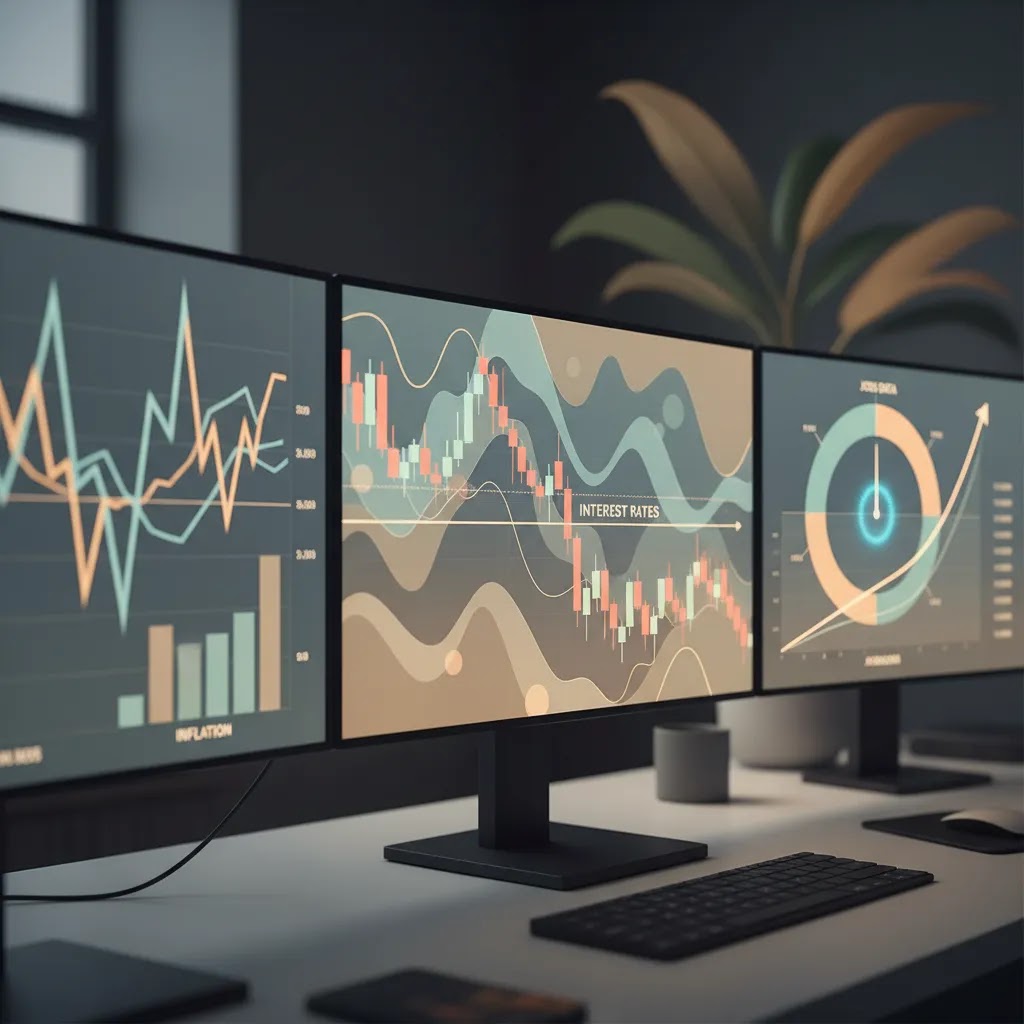
That is why forex news today can affect pairs such as EUR/USD, GBP/USD, USD/JPY, and USD/AED-related sentiment even before the full details are absorbed. A stronger-than-expected inflation reading may increase expectations of higher interest rates. A weak labor report could reduce confidence in a currency. Comments from the U.S. Federal Reserve, European Central Bank, or Bank of England may shift global markets today even if no rate decision is released that same day.
For beginners, it helps to separate two ideas. First, there is the scheduled event itself, often tracked through a economic calendar. Second, there is the market reaction, which may differ from the headline if expectations were already priced in. Understanding both is a major part of forex analysis.
What counts as forex news
Not every financial headline deserves your attention. In most cases, the updates that matter most for currency traders fall into a few categories.
- Central bank decisions: Interest rate changes, policy statements, and speeches from officials.
- Inflation data: CPI, PPI, and related releases that may influence future policy.
- Employment reports: Nonfarm payrolls, unemployment rates, wage growth, and labor participation.
- Growth indicators: GDP, PMIs, retail sales, industrial production, and consumer confidence.
- Geopolitical developments: Elections, trade disputes, sanctions, and regional conflicts.
- Risk sentiment shifts: Broad moves in equities, bonds, or commodities that can affect safe-haven currencies.
If you are still building your foundation, it helps to understand what is forex trading before trying to trade fast-moving economic releases. News trading may look simple from the outside, but price spikes, slippage, and spread widening can increase risk quickly.
A useful way to think about it is through fundamental analysis. News is not just information. It is a clue about economic strength, inflation pressure, and policy direction, all of which may influence currency valuations over time.
Trading gold (XAU/USD) and oil headlines as “forex news” signals
Here’s the thing: many “forex news today” searches are not only about EUR/USD or GBP/USD. They are also about the U.S. dollar’s broader role, especially through gold (XAU/USD) and oil-related headlines. Even though gold is not a currency pair, XAU/USD often trades like a macro barometer. When the market shifts from risk-on to risk-off, the reaction can spill into major pairs and even into commodity-linked currencies.
From a practical standpoint, commodity headlines can matter for forex because markets connect them to inflation expectations, growth fears, and interest rate assumptions. These relationships are not stable, and they can break or reverse in certain environments. Still, there are a few common drivers that often link commodities and FX in real time.
Gold tends to be sensitive to real yields and broad USD strength. If real yields rise, gold may come under pressure. If the USD strengthens sharply, XAU/USD can fall even if gold is steady in other currencies. Inflation surprises can pull gold in either direction depending on how traders think central banks will respond. Geopolitical risk can also boost demand for perceived safe havens, but it does not always translate cleanly into the same move across every currency.
Oil headlines can be especially relevant to inflation narratives. A sudden oil spike may raise inflation expectations, which could influence rate pricing and currency moves. It can also affect commodity-linked currencies in ways that depend on the driver of the move. A supply disruption can create a different market reaction than a demand shock, even if the price change is similar.
Consider this simple checklist when you see a sharp gold or oil move and wonder whether it matters for your forex pairs. First, ask whether the move is tied to a confirmed macro catalyst, such as a central bank surprise, a major inflation release, or a geopolitical escalation that is broadly covered. Second, check whether risk-sensitive assets are moving with it, such as global equities and bond yields. Third, watch whether traditional risk-off currencies such as JPY and CHF are strengthening, and whether commodity-linked currencies such as AUD and CAD are reacting. If gold spikes but everything else looks calm, it may be noise. If you see a broader shift across multiple markets at the same time, it may signal a larger sentiment move that can affect major FX pairs.
How to follow forex news step by step
You do not need to monitor every headline all day. A structured routine is usually more effective.
1. Start with the economic calendar
Before the trading day begins, check which data releases and speeches are scheduled. Focus on high-impact events tied to the currencies you actually watch. If you trade USD pairs, for example, U.S. inflation, Federal Reserve comments, and labor data may matter more than lower-tier releases from smaller economies.
2. Note market expectations
The actual number matters, but the gap between expectations and reality often matters more. If inflation comes in at 3.4% and the market expected 3.4%, the reaction may be limited. If the number is far above or below forecasts, volatility could increase.
3. Watch live price reaction carefully
Forex news live coverage can be useful, but the first move after a release is not always the lasting move. Spreads may widen, and algorithms may trigger sharp short-term swings. Waiting for the market to settle may reduce the risk of reacting emotionally.
4. Compare the headline with the broader trend
Use chart structure, support and resistance, and trend direction to see whether the news supports the existing move or challenges it. This is where a second look at a technical analysis guide may help. A bullish headline in a strong downtrend does not always reverse the market.
5. Track sentiment, not just numbers
Market sentiment often reflects how traders interpret the path ahead. One weak data release might not matter much if policymakers still sound hawkish. A modest data beat might trigger a larger rally if traders were heavily positioned the other way.
How to use a forex news calendar without getting overwhelmed
What many people overlook is that a calendar is only useful if you can prioritize. Most calendars show an “impact” rating, plus three key fields: previous, forecast, and actual. Impact ratings are a quick estimate of how much a release typically moves the market. They are not a guarantee. A “high impact” event can disappoint if it matches expectations, while a “medium” release can still matter if it changes the story for growth, inflation, or interest rates.
Previous is the last reported value, forecast is what the market consensus expects, and actual is the new number. In many cases, the gap between forecast and actual is the trigger for volatility. The direction of the surprise often matters less than what it implies for the next central bank decision. That is why releases like U.S. CPI, Nonfarm Payrolls, and central bank rate decisions often move markets more than lower-tier reports. PMIs can also be important because they are frequent and can shift growth expectations quickly, especially when they diverge sharply from forecasts.
For UAE and MENA traders, filtering by what you trade and when you trade can make your routine far more manageable. Start by narrowing the calendar to the currencies you actively follow, such as USD, EUR, GBP, and JPY. Then pay attention to session timing. London and New York hours typically concentrate liquidity and can amplify the reaction to big U.S. and European releases. Asia session events can still matter, but price behavior may be different depending on liquidity and positioning.
Think of it this way: clusters of releases can create bigger moves than any single headline. A U.S. CPI print followed by a central bank speaker, or a jobs report followed by wage data revisions, can produce a second wave of volatility. When you see multiple important releases close together, it can be sensible to treat that window as a higher-risk period, even if you only trade one of the events.
A practical workflow is to do light pre-event prep and a short post-event review, rather than constant monitoring. Before the release, mark key technical levels, identify whether the market is trending or range-bound, and write two basic scenarios: what you would expect if the number beats forecasts, and what you would expect if it misses. After the release, review how price behaved relative to those levels and whether the move held after the first burst of volatility. This approach keeps the calendar as a decision support tool, not a reason to stare at headlines all day. Trading remains risky, and no calendar filter can remove the possibility of slippage, spread widening, or unpredictable reactions.
How traders use market updates
There is more than one way to use forex market news. Your method should depend on experience, time horizon, and risk tolerance.
- Pre-event positioning: Some traders build a view before major data, based on expected outcomes and technical levels. This may carry elevated risk if the release surprises sharply.
- Reaction trading: Others wait for the number, then trade only after the initial volatility settles. This approach may reduce noise but could miss part of the move.
- Bias confirmation: Swing traders often use daily forex analysis to confirm a larger macro view rather than trade every data print.
- Risk avoidance: Many disciplined traders simply reduce exposure ahead of major events. Preserving capital may be more important than trying to catch every spike.
No approach is automatically safer or more profitable. In most cases, consistency matters more than speed. A clear plan for entry, stop-loss placement, and position size is essential because news-driven volatility can be unpredictable. Capital is at risk, and past market behavior does not guarantee future results.
Platforms and tools that may help you follow forex news
Many traders rely on their broker platform for charts, execution, and basic market monitoring. The exact tools available may differ by broker, but the products covered by Business24-7 show a few patterns that are useful for news-focused traders.
Pepperstone offers MT4, MT5, cTrader, and TradingView, with spreads from 0.0 pips on Razor and a $7/lot commission. Its advanced charting and fast execution may appeal to traders who combine macro events with technical setups. Pepperstone is regulated by DFSA, FCA, ASIC, CySEC, and BaFin, which may matter to UAE-based readers focused on regulatory oversight.
AvaTrade provides MT4, MT5, AvaTradeGO, and WebTrader, with spreads from 0.9 pips and a $100 minimum deposit. Its education offering and AvaProtect risk management feature may help newer traders who are still learning how to handle volatility around forex economic news. It is regulated by ADGM FSRA, ASIC, and other authorities listed by Business24-7.
Interactive Brokers may suit advanced users who want deeper research access across 150+ markets. It has a $0 minimum deposit, spreads from 0.25 pips, and tiered or fixed pricing. Its tools are powerful, but beginners may find TWS more complex than simpler retail platforms.
XTB may also be relevant for newer traders because it combines xStation 5 with strong education, $0 minimum deposit, and spreads from 0.1 pips. Capital.com, regulated by the SCA among others, offers a low $20 minimum deposit, spread-only pricing from 0.6 pips, and AI-powered insights. These features may help readers who want an easier starting point while learning to interpret market analysis and sentiment.
No platform removes trading risk. If you are comparing brokers before opening an account, Business24-7’s resources in Technical Analysis and Trading Fundamentals can help you assess how platform tools fit your trading process.
Best sources and formats to follow forex news (fast vs reliable)
Speed is useful, but it can also be expensive if it pushes you into impulsive decisions. The reality is that “forex news” comes in different formats, and each one has a different strength. Knowing what you are reading can help you avoid common traps, especially during high-volatility releases.
Live headlines feeds are built for speed. They can alert you to sudden central bank comments, surprise geopolitical developments, or breaking economic headlines. The weakness is context. Early headlines can be incomplete, revised, or framed in a way that exaggerates certainty. Scheduled calendar releases are the opposite. They are predictable and structured, which makes them useful for risk planning. Their weakness is that traders may overrate the importance of every “high impact” label and forget that expectations are already priced in.
Central bank statements and official communication are often slower to digest, but they can be closer to the source of what moves currencies over time. Rate decisions, policy statements, meeting minutes, and speeches can shift the market’s view of the next few months, not just the next few minutes. Market recaps, such as end-of-day summaries, can be helpful for learning because they explain what mattered and what did not. They may be less helpful for fast trading decisions because the move has already happened.
A practical workflow for many traders is a two-layer system. Use primary sources for confirmation, such as official statistics releases and central bank communication, and use secondary sources for speed and context. This reduces the risk of reacting to rumors while still staying aware of what the market is focused on. It can also help you separate “headline excitement” from information that actually changes rate expectations, growth assumptions, or risk sentiment.
Be careful with red flags in news streams. Sensational headlines that do not cite a release, unverifiable “insider” claims, and overconfident predictions can pull beginners into overtrading. If a headline is trying to force a directional call without showing the actual data, the forecast, or the central bank context, it may be more entertainment than analysis. Your goal is not to consume more information. It is to build a repeatable process that protects decision quality when volatility rises.
Pros and Cons
Strengths
- Following forex news may help you understand why currencies are moving, not just where price is moving on a chart.
- A structured routine built around calendars, expectations, and sentiment can improve discipline and reduce random trades.
- News awareness may help traders avoid entering positions just before major volatility events.
- Combining market analysis with technical levels can create a more balanced trading framework.
- Broker tools from firms such as Pepperstone, AvaTrade, XTB, Capital.com, and Interactive Brokers may support charting, research, or execution around major releases.
Considerations
- Forex news live reactions can be erratic, especially in the first few minutes after a release.
- Spreads, commissions, and slippage may increase trading costs during volatile periods.
- Headlines alone are not enough because market expectations often matter more than the actual number.
- Beginners may confuse noise with meaningful macro change and overtrade as a result.
Common mistakes to avoid
One common mistake is trading every high-impact release. You do not need exposure to each event. In many cases, fewer, better-understood setups may be more sensible than constant activity.
Another mistake is ignoring the difference between forecast and actual data. A strong headline can still produce a falling currency if the market expected something even better. That is why daily forex analysis should include expectations, positioning, and recent central bank messaging.
Many traders also underestimate execution risk. Around major events, spreads may widen on CFD and forex platforms, orders may fill at different prices than expected, and stop-losses may not behave exactly as they do in quieter sessions.
Finally, avoid relying on a single source. If you want to improve how you follow forex news sources, build a routine that combines an economic calendar, price charts, official policy statements, and a repeatable review process after each key event.
How Business24-7 can help you evaluate trading platforms
Reading forex news is only one part of the decision process. The platform you use may affect charting quality, execution speed, fee transparency, and access to education or research. Business24-7 is built for readers who want a clearer, more cautious way to assess these differences before committing capital.
Our editorial approach is shaped by Braden Chase’s background as a former research specialist at Forex.com and by a strong focus on transparency for UAE-based readers. That means reviewing brokers through practical criteria such as regulation, spreads, platform usability, asset access, and support quality. If you are moving from general market education toward broker selection, browse our broker comparison resources, check individual reviews such as Pepperstone, AvaTrade, XTB, Capital.com, or Interactive Brokers, and use Business24-7 as a reference point before opening an account.
Frequently Asked Questions
What is forex news?
Forex news refers to economic, political, and central bank updates that may influence currency prices. Common examples include inflation reports, employment data, GDP releases, and interest rate decisions. Traders watch these events because they can affect expectations for growth, inflation, and monetary policy, which often shape exchange rate movements.
Why does forex news move the market so quickly?
Currency markets react quickly because large institutions and automated systems process new information almost instantly. If a release differs materially from forecasts, traders may rapidly reprice interest rate expectations or economic outlooks. That said, the first move is not always reliable, and volatility may increase trading risk.
What is the best way to follow forex news today?
A practical approach is to start with the day’s scheduled events, note market forecasts, and focus only on the currencies you actively follow. Then watch price reaction in context rather than reacting to headlines alone. This tends to work better than trying to monitor every live update across all markets.
How important is an economic calendar for forex trading?
An economic calendar is one of the most useful tools for news-aware traders because it shows when major releases and speeches are scheduled. It may help you prepare, reduce surprise exposure, and identify periods of expected volatility. It does not predict direction, but it can improve timing and risk planning.
Should beginners trade directly on major news releases?
In many cases, beginners should be cautious. Major events can create sudden price spikes, wider spreads, and slippage. Watching the reaction without trading may be a better learning step at first. Some traders choose to wait until volatility settles before considering a position, especially if they are still building confidence.
How do forex news and technical analysis work together?
News may explain why a market moves, while technical analysis may help identify where price could react. Support, resistance, trend structure, and momentum can all provide context after a release. Using both approaches together may help reduce impulsive decisions, though it still does not remove market risk.
Which brokers may suit traders who follow market updates closely?
Based on Business24-7 product data, Pepperstone, AvaTrade, XTB, Capital.com, and Interactive Brokers each offer different strengths. Some focus on lower spreads or advanced platforms, while others emphasize education or ease of use. The right choice depends on your experience, preferred tools, fees, and regulatory comfort level.
What regulation should UAE-based traders look for?
UAE-based readers often look for oversight from bodies such as the DFSA or SCA where relevant, alongside international regulators such as the FCA, ASIC, or CySEC. Regulation does not remove trading risk, but it may provide stronger safeguards around client protection, disclosures, and operating standards.
Can I rely on live headlines alone for forex analysis?
No single source is usually enough. Live headlines can be useful for speed, but they may lack context. A stronger process combines scheduled data, forecasts, central bank communication, chart structure, and post-event review. This helps you understand whether a move is a short-term reaction or part of a larger trend.
What is a forex news calendar and how do I use it?
A forex news calendar is a schedule of upcoming economic releases and central bank events that can affect currency markets. It usually shows the release time, the previous result, the market forecast, and the actual number once published. A practical way to use it is to filter for the currencies you trade, identify the highest-impact events, and plan around them by marking key technical levels and reducing exposure if you do not want volatility risk.
What is the best forex news app for real-time updates?
The best option depends on whether you value speed, context, or confirmation. Many traders use a combination: a fast headline feed for alerts, a calendar for scheduled releases, and broker platform tools for charts and execution. The key is choosing sources that clearly separate verified releases from commentary, so you are less likely to react to rumors or exaggerated claims.
Which news events are “high impact” for forex today?
High-impact events are usually those that can change interest rate expectations or alter the growth and inflation outlook. Central bank rate decisions and guidance often rank near the top, along with major inflation releases such as CPI and labor data such as Nonfarm Payrolls. PMIs can also matter, especially when they surprise forecasts. Impact labels are only a guide, and the market reaction still depends on expectations and positioning.
Why does gold (XAU/USD) move after forex economic news?
Gold can react to the same macro forces that drive FX, especially changes in U.S. dollar strength and interest rate expectations. If an economic release shifts expectations about inflation or central bank policy, bond yields and the USD can move quickly, which may influence XAU/USD. The relationship is not fixed, and other factors like risk sentiment and geopolitics can also play a role.
Key Takeaways
- Forex news matters because currencies often react to changes in growth, inflation, and rate expectations.
- The gap between forecasts and actual results may matter more than the headline itself.
- An economic calendar, sentiment awareness, and chart context can help create a more disciplined routine.
- News trading carries added risk, including volatility, spread widening, and slippage.
- Business24-7 can help you compare broker tools, fees, and regulation before you choose a platform.
Conclusion
Learning how to follow forex news is less about speed and more about structure. If you can identify the events that matter, understand market expectations, and combine headlines with chart context, you may make calmer and more informed decisions. That is especially important for UAE-based traders trying to sort useful information from constant online noise. News can create opportunity, but it can also increase risk very quickly. Use it as part of a broader process, not as a shortcut. If you are ready to move from market education to platform research, explore Business24-7’s comparison guides, broker reviews, and category resources before making a final decision about where to trade.
Disclaimer: The content published on Business24-7 is intended for informational purposes only and does not constitute financial advice, investment recommendations, or an endorsement of any specific platform or financial product. Trading and investing carry significant risk, including the potential loss of capital. You should conduct your own research and, where appropriate, seek independent financial advice before making any investment decisions. Business24-7 does not accept responsibility for any financial losses incurred as a result of information published on this site.
Disclaimer
eToro is a multi-asset platform which offers both investing in stocks and cryptoassets, as well as trading CFDs.
Please note that CFDs are complex instruments and come with a high risk of losing money rapidly due to leverage. 61% of retail investor accounts lose money when trading CFDs with this provider. You should consider whether you understand how CFDs work, and whether you can afford to take the high risk of losing your money
This communication is intended for information and educational purposes only and should not be considered investment advice or investment recommendation. Past performance is not an indication of future results.
Copy Trading does not amount to investment advice. The value of your investments may go up or down. Your capital is at risk.
Crypto assets are complex and carry a high risk of volatility and loss. Trading or investing in crypto assets may not be suitable for all investors. Take 2 mins to learn more
eToro USA LLC does not offer CFDs and makes no representation and assumes no liability as to the accuracy or completeness of the content of this publication, which has been prepared by our partner utilizing publicly available non-entity specific information about eToro.

If you trade currencies, forex news can move prices faster than almost any chart pattern. Interest rate decisions, inflation releases, jobs data, and central bank comments may all change market sentiment within minutes. For newer traders in the UAE and wider MENA region, the challenge is rarely finding information. It is figuring out which updates matter, when they matter, and…