

If you live in the UAE and you have ever opened a trading app in the evening, you have probably noticed that not every market runs on your local clock. A stock that trades actively in Dubai in the morning may be closed by lunchtime, while U.S. shares may only become active later in the day. That timing difference can feel confusing at first, especially if you are comparing local equities, international stocks, and forex in the same platform.
Understanding stock market hours matters because timing affects liquidity, volatility, spreads, and how quickly your order may be filled. It also shapes whether you can trade during normal sessions, pre-market hours, or after-hours trading. If you are still building your foundation, our guide to trading for beginners can help you put these basics into context. At Business24-7, we look at topics like this through a practical UAE lens, so you can research platforms and markets with clearer expectations before risking capital.
What stock market hours actually mean
Stock market hours are the official times an exchange accepts and matches buy and sell orders during its regular session. In simple terms, this is the main trading window for listed shares on a given exchange.
Each exchange sets its own schedule. That means the market opening time for the Dubai Financial Market is different from the London Stock Exchange, and both differ from U.S. exchanges such as the New York Stock Exchange and Nasdaq. If you are trading through a broker, your platform may also show extra sessions outside standard exchange hours, such as pre-market hours or after-hours trading, but those sessions usually come with different conditions.
Here is the key point: trading hours affect market behavior. During regular hours, there is typically more liquidity, which means more buyers and sellers are active. In many cases, this leads to tighter spreads, better price discovery, and faster execution. Trading always involves risk of capital loss, and lower-liquidity periods may increase that risk through wider spreads and sharper price moves.
Stock market hours today and tomorrow: how to verify the live session
What many people overlook is that knowing the “normal” schedule is not the same as knowing whether a market is open today. If you are in the UAE, this gets even more confusing around U.S. daylight saving time changes, regional public holidays, and the fact that the UAE workweek does not always match Western market rhythms.
From a practical standpoint, the simplest habit is to check the live market status inside your broker platform before placing a time-sensitive order. Many brokers show a market status indicator such as “Market Open,” “Closed,” or “Pre-market,” and some will also show the next opening time in your local time zone. This is especially useful if you are trading in the UAE evening and you are not sure whether the U.S. session is active yet.
Consider this: even when a market is officially closed, you might still see price quotes moving on your platform. That does not always mean the underlying exchange is open. You could be looking at indicative pricing, derivatives pricing, or activity in related instruments. In some cases, platforms also offer products that trade outside the exchange itself, such as certain index products, which can create the impression that “the market” is open when cash equities are not.
The reality is that trading when conditions are not normal can come with extra friction. Holiday-adjacent sessions, low-volume hours, and daylight saving transitions can contribute to wider spreads and higher slippage risk. Trading involves the risk of capital loss, so it helps to confirm the session first, then decide whether the liquidity conditions are good enough for your trade idea.
If you want to verify “today” versus “tomorrow” more formally, your broker’s trading calendar or the exchange’s official calendar is the reference point. That is typically where you will see public holiday closures, special sessions, and any exchange notices that may affect when orders can be executed.
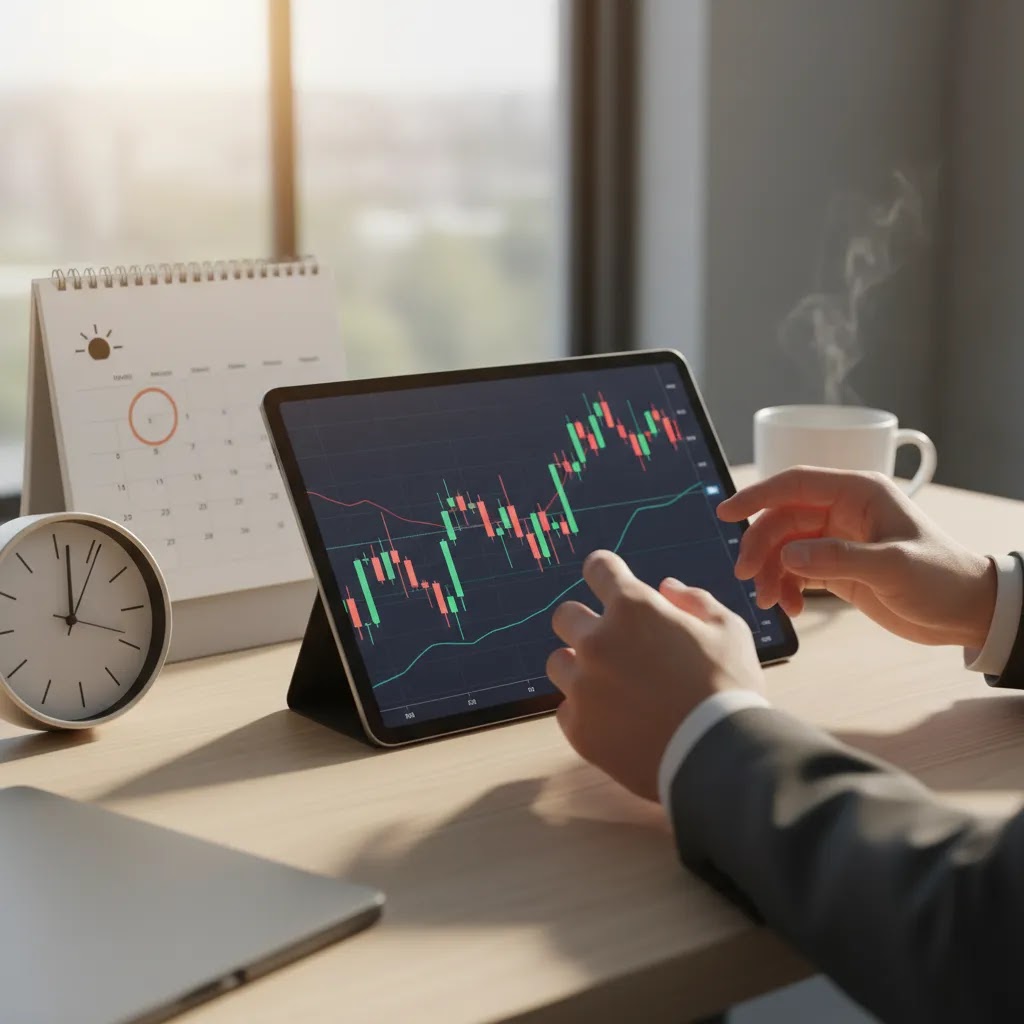
Stock market hours in the UAE
If you mainly follow local shares, the two exchanges most UAE investors watch are the Dubai Financial Market (DFM) and the Abu Dhabi Securities Exchange (ADX). You may also come across international brokers offering UAE-listed securities or regional exposure through other products.
DFM trading hours
DFM trading hours are generally structured around the local UAE business day. For many retail investors, this makes access more convenient than trading overseas markets late at night. The exact schedule may change around public holidays, special trading arrangements, or exchange notices, so you should always verify directly with the exchange or your broker before placing time-sensitive trades.
From a practical standpoint, local market hours can suit investors who prefer to monitor positions during the workday or early afternoon. If your focus is local equities and market structure, a broader uae stock market guide can help you understand where DFM and ADX fit within the region.
ADX trading hours
ADX trading hours also follow the UAE time zone, which makes them easier to track than U.S. or European exchanges. That said, do not assume both local exchanges always behave the same way. Trading volumes, listed sectors, and investor participation can differ.
What many people overlook is that local timing convenience does not remove market risk. Earnings updates, regional macro events, and global sentiment can still move prices sharply during UAE sessions. If you trade or invest in these markets, it helps to know not just when they open, but what usually drives activity near the open and close.
Major global market hours in UAE time
For UAE-based traders, converting overseas schedules into local time is often the most useful way to think about stock market hours. This helps you plan around work, family time, and periods of stronger market activity.
U.S. stock market hours
U.S. stock market hours are among the most watched globally because many popular technology, consumer, and index-linked shares trade there. In UAE time, the regular U.S. session usually begins in the late afternoon or evening, depending on daylight saving adjustments in the United States.
Think of it this way: if you want to trade U.S. stocks from Dubai or Abu Dhabi, your most active market window often arrives after local business hours. That can be useful if you work during the day, but it can also make risk management harder if you are tired or placing impulsive trades late at night.
London Stock Exchange hours
The London Stock Exchange hours usually overlap more comfortably with the UAE day. For many investors in the region, this can make London-listed shares easier to monitor than U.S. equities.
This overlap also matters because London is a major center for global finance. News flow, institutional activity, and cross-border trading interest can make the London open an important period for price movement, not only in stocks but also in currencies and commodities.
Why overlaps matter
The busiest periods often happen when major financial centers overlap. For example, the transition from European activity into the U.S. open may bring heavier volume and faster price moves across several asset classes.
If you also trade currencies, our overview of forex trading sessions explains how session overlap changes liquidity and volatility. That framework can also help you understand why some stock-related products, such as index CFDs, may become more active at certain times of day.
U.S. market holidays and early closings (2026)
Regular hours are not the full story in the United States. U.S. exchanges close for specific federal holidays, and there are also occasional early closes that shorten the trading day. If you are trading from the UAE, those changes can land right in your evening trading window, which can be frustrating if you only discover the closure after you have planned a trade.
Here’s the thing: holiday sessions can change liquidity and order execution conditions even when the market is technically open. In many cases, volume is lighter before a holiday, and price moves can become less “smooth” because there are fewer participants. That can translate into wider spreads, more slippage, and a higher chance of partial fills, especially in less liquid stocks. Trading involves risk, and holiday conditions can amplify that risk.
From a practical standpoint, planning around the U.S. calendar matters most during time-sensitive periods such as earnings season, index rebalancing weeks, or when you are managing stops and limits on U.S. positions. If you are expecting to adjust a position during the U.S. open, it helps to check the U.S. exchange holiday calendar earlier in the week, not just on the day itself, so you are not caught by a shortened session that ends earlier than usual.
What many beginners miss is that your broker may still show quotes, and some platforms may still allow certain actions, even when the underlying cash exchange is closed. Execution and pricing behavior can differ by product. Cash equities are directly tied to exchange hours, while CFDs, some index products, and certain derivatives can continue to show pricing because they reference a broader set of inputs or related markets. That does not automatically mean you will get the same pricing quality you expect during the regular U.S. session, so treat holiday periods as a different environment and verify the product’s trading schedule inside your platform.

Pre-market and after-hours trading explained
Pre-market hours refer to trading that takes place before the official exchange open. After-hours trading happens after the regular session closes. These sessions are most common in U.S. markets and are usually accessed through brokers that support extended-hours trading.
Here’s the thing: extended hours may sound convenient, but they are not the same as the main session. Fewer participants are active, which may result in wider bid-ask spreads. The bid is the highest price a buyer is willing to pay, and the ask is the lowest price a seller will accept. A wider spread means you may enter or exit at a less favorable price.
Extended-hours trading can be especially active around earnings releases, economic data, or major corporate announcements. That creates opportunity, but it also increases uncertainty. Price gaps and sudden swings are more common outside regular market hours, so new traders should be cautious about using market orders in these sessions.
In practice, this means you should check:
- whether your broker offers pre-market or after-hours access
- which instruments are eligible
- whether order types are restricted
- how spreads and execution quality may change outside regular hours
Extended hours rules: order types, restrictions, and why execution can differ
Extended hours coverage often focuses on definitions, but the practical differences are what affect your results. Pre-market and after-hours sessions typically operate with thinner order books, which is why the same order that fills quickly during the main session can behave very differently outside it.
One common constraint is order type. Many brokers and venues encourage or require limit orders during extended hours rather than market orders. A limit order sets the maximum price you will pay to buy, or the minimum price you will accept to sell. That can help protect you from unexpected pricing, but it can also increase the chance that your order does not fill if the price does not reach your level.
Reduced liquidity can also lead to partial fills, where only part of your intended order executes. Think of it this way: if there are fewer buyers and sellers at each price level, there may not be enough volume to fill your entire order immediately. You can also see larger price gaps, where the next available price is meaningfully higher or lower than the last trade, especially around major news releases.
What many people overlook is that “extended hours” access is not universal. Availability can depend on your broker, the exchange venue, and the instrument you are trading. Some platforms offer extended-hours trading on a selection of U.S. stocks, while others may only provide pricing without full execution, or they may route orders differently. Even within the same broker, eligibility can vary by stock, order size, and account configuration.
The reality is that you should treat extended hours as a different trading environment, not just a longer session. Lower liquidity and wider spreads can increase execution risk, and slippage can be more pronounced. Trading always involves the risk of capital loss, so if you choose to trade outside regular hours, it helps to use tighter controls, verify supported order types, and size positions conservatively relative to your risk tolerance.
How stock hours differ from forex and futures
One reason many beginners get confused is that not all markets follow the same schedule. Stocks trade on exchange-specific hours. Forex, which is the global foreign exchange market, operates much closer to a 24-hour weekday cycle because trading shifts across financial centers around the world.
If you are new to currencies, this introduction to what is forex trading explains why the market behaves differently from shares. A forex pair such as EUR/USD is not tied to a single stock exchange opening bell in the same way a listed company share is.
Forex market hours
Forex market hours run across the Sydney, Tokyo, London, and New York sessions. The market is not equally active all day, though. Liquidity often increases when London and New York overlap, while other periods may be slower.
For UAE traders, this can make forex feel more flexible than stocks. But flexibility should not be confused with simplicity. Currency trading still carries substantial risk, especially when leverage is involved. Leverage lets you control a larger position with a smaller deposit, which can magnify both gains and losses.
Futures trading hours
Futures trading hours can also extend beyond standard stock exchange schedules. Futures are contracts tied to an underlying asset, such as an index, commodity, or bond, and many trade on nearly around-the-clock electronic sessions during the week.
This matters because futures markets may react to overnight news before the cash stock market opens. For example, index futures may signal market sentiment ahead of the regular U.S. opening bell. That does not guarantee how the cash market will move, but it often gives traders an early read on risk appetite.
Why market hours matter for your trading decisions
Knowing market hours is not just about keeping a timetable. It affects how your orders behave and how much trading may cost you.
Liquidity and spreads
Liquidity refers to how easily an asset can be bought or sold without causing a large price change. During regular sessions, liquidity is typically stronger. That may lead to narrower spreads and smoother execution.
Outside regular hours, liquidity may thin out. This can increase trading friction, especially in less heavily traded stocks or during volatile news events.
Volatility at the open and close
The market open and close are often the most active parts of the day. Many institutional orders are executed around these periods, and new information gets priced in quickly. If you place trades at these times, expect faster movement and the possibility of slippage, which is the difference between your expected price and the actual execution price.
News timing
Corporate earnings, inflation data, central bank comments, and geopolitical headlines can all affect market opening time behavior. The reality is that a stock may look quiet for hours, then move sharply within minutes once the relevant session starts.
Business24-7 often emphasizes this basic but important idea in its educational content: timing does not remove risk, but understanding timing may help you make more measured decisions before entering a trade.
What to check in a platform before trading global hours
If you want to access local and international markets from the UAE, timing is only part of the decision. You should also examine the broker or platform itself, especially its regulatory status and market access.
In the UAE, you may come across platforms overseen by the Securities and Commodities Authority (SCA), the Dubai Financial Services Authority (DFSA), or the Financial Services Regulatory Authority (FSRA) in Abu Dhabi Global Market (ADGM). International regulators such as the Financial Conduct Authority (FCA), Cyprus Securities and Exchange Commission (CySEC), and Australian Securities and Investments Commission (ASIC) may also be relevant depending on the entity serving your account.
Always verify which legal entity holds your account and what market hours access it actually offers. A platform may advertise U.S. stocks or global instruments, but access to pre-market hours, after-hours trading, or certain exchanges could depend on your account type, residency, and the product you are trading.
Based on current Business24-7 review data, some UAE-facing brokers covered on the site include Interactive Brokers, which is listed with Dubai Financial Services Authority oversight via its Dubai International Financial Centre branch, and eToro, which is listed with regulation including Abu Dhabi Global Market and other international authorities. These details may change over time, so verify them independently before funding an account.
If you want a broader view of educational resources before comparing providers, the Trading Fundamentals and Investing and Wealth Building sections are useful starting points. Trading and investing involve risk, and platform features should never be treated as a guarantee of performance or suitability.
Frequently Asked Questions
What are stock market hours in simple terms?
Stock market hours are the official times an exchange is open for regular trading. During that session, buy and sell orders are matched under standard market conditions. Each exchange sets its own schedule, so the market opening time and closing time differ across Dubai, Abu Dhabi, London, and the United States. Your broker may also offer access outside regular hours, but those sessions usually involve different liquidity and pricing conditions. If you are trading from the UAE, it helps to convert every schedule into local time before placing orders.
What are stock market hours UAE investors should know first?
Most UAE investors begin by tracking Dubai Financial Market and Abu Dhabi Securities Exchange schedules because those align with the local time zone and business week. These are often easier to monitor than overseas markets. Still, many UAE-based traders also follow London and U.S. markets for broader exposure. The most important habit is to confirm current exchange hours directly, especially around public holidays or special market notices. Session timing may affect liquidity and price movement, so understanding local and international schedules can reduce avoidable mistakes.
What is the difference between DFM trading hours and ADX trading hours?
Both DFM trading hours and ADX trading hours are set around the UAE market day, but the exchanges are not identical. They differ in listed companies, trading activity, and sector composition. That means the same time window can produce different trading conditions on each exchange. One may show stronger volume in certain sectors, while the other may be quieter. If you trade local shares, it is worth checking not just the exchange timetable but also average activity in the stocks you follow. Low volume can affect execution even during normal market hours.
What are U.S. stock market hours in UAE time?
U.S. stock market hours usually fall in the late afternoon or evening for traders in the UAE, although the exact local timing may shift when U.S. daylight saving time changes. This is why many UAE-based investors trade U.S. shares after their own workday ends. That can be convenient, but it may also mean you are making decisions later in the evening when focus is lower. Before trading, confirm whether your broker displays U.S. session times in UAE local time and whether it supports pre-market hours or after-hours trading.
What are London Stock Exchange hours for someone in Dubai or Abu Dhabi?
London Stock Exchange hours usually overlap more naturally with the UAE day than U.S. sessions do. For many traders in Dubai or Abu Dhabi, this makes London-listed shares easier to follow in real time. That overlap can be helpful if you want to monitor price action without staying up late. It also matters because London is a major financial center, so trading activity there may influence currencies, commodities, and international risk sentiment. Even so, regular market access does not remove risk, and global headlines can still trigger sharp moves.
What are pre-market hours and after-hours trading?
Pre-market hours are the sessions before the official exchange open, while after-hours trading happens after the regular close. These sessions are common in U.S. markets and may be available through certain brokers. They can be useful when earnings or economic news breaks outside the main session. The trade-off is that liquidity is often lower and spreads may be wider. That may increase execution risk, especially if you use market orders. Newer traders should be cautious and check the broker’s rules, supported instruments, and order limitations first.
Does the US stock market close early on Christmas Eve?
In many years, U.S. exchanges have an early close on the day before Christmas, but it depends on the calendar and the exchange schedule for that specific year. The important point is that “early close” days exist, and they can shorten the session during a time when many UAE-based traders expect normal evening liquidity. If you plan to trade around late December, check your broker’s trading calendar or the official exchange notices so you understand whether the session is shortened, fully closed, or operating normally. Lower liquidity and wider spreads can be more common around holiday schedules, which can increase execution risk.
Can I trade after 3:30 PM?
It depends on which market you mean and which time zone you are using. In the UAE, many overseas markets open later in the day, so “after 3:30 PM” could still be inside the regular session for London or it could line up with the U.S. open depending on daylight saving time. You may also be able to trade in pre-market or after-hours sessions if your broker offers that access for the specific instrument. The key is to confirm the session status inside your platform, because pricing and execution conditions can change outside normal exchange hours.
What are the stock market hours for today?
Stock market hours for today depend on the exchange, your local time zone, and whether there is a public holiday or special session. For UAE-based traders, the most reliable way to confirm “today’s” hours is to check your broker’s market status indicator and trading calendar for the instrument you want to trade. This is especially important around U.S. daylight saving changes and holiday weeks, because the session timing you remember from last month may no longer be accurate. Trading involves risk, and low-liquidity conditions can increase spreads and slippage, so it is worth verifying before placing an order.
What is the 10 am rule in stock trading?
The “10 am rule” is a common trading saying, not an official exchange rule. It usually refers to the idea that the first part of the session can be unusually volatile, and some traders prefer to wait until the market has had time to establish clearer direction and liquidity. Whether that makes sense can depend on the stock, the day’s news, and your strategy. If you trade from the UAE, you can apply the same logic by being cautious around the open of whichever exchange you are trading, because spreads, slippage, and rapid price changes can be more common at that time.
How do stock market hours compare with forex market hours?
Stock market hours are tied to specific exchanges, while forex market hours run across multiple global financial centers during the trading week. That makes forex feel more continuous than stock trading. Still, forex is not equally active all day. Liquidity often rises during major session overlaps, especially London and New York. If you want to understand that structure better, reviewing the basics of forex trading sessions can be helpful. Forex trading also involves significant risk, especially where leverage is available, so timing should be viewed as one part of risk management.
Do futures trading hours matter if I mainly trade stocks?
Yes, they may matter more than many beginners expect. Futures trading hours often extend beyond regular stock sessions, so futures can react to overnight developments before the cash market opens. For example, index futures may move after economic releases or geopolitical news, which can shape expectations for the next stock market open. This does not guarantee that stocks will follow exactly, but it often offers an early signal of sentiment. If you trade stocks actively, watching futures can help you prepare for possible gaps or stronger volatility at the open.
Why do spreads and volatility change at different market hours?
Spreads and volatility usually change because liquidity changes. When more buyers and sellers are active, pricing tends to be tighter and execution can be smoother. At the market open, the close, or during extended hours, order flow may become less balanced or more reactive to fresh news. That can lead to wider spreads and sharper moves. In practice, this means the same stock may trade very differently at different times of day. Understanding stock market hours helps you decide when conditions may be more stable and when extra caution is needed.
How can I check whether my broker offers global market access safely?
Start with regulation and product access. In the UAE, look at whether the platform is connected to bodies such as the Securities and Commodities Authority, Dubai Financial Services Authority, or Abu Dhabi Global Market’s Financial Services Regulatory Authority. Then confirm which legal entity holds your account, what exchanges it supports, and whether extended-hours access is available. You should also review fees, spreads, order types, and risk disclosures. Business24-7’s broker review content can help you compare these features in plain language, but you should still verify current terms directly with the provider.
Key Takeaways
- Stock market hours vary by exchange, so UAE investors should always convert sessions into local time before trading.
- DFM trading hours and ADX trading hours are easier for UAE residents to follow, but global markets may offer different liquidity and opportunities.
- U.S. stock market hours often fall in the UAE evening, while London sessions usually overlap more comfortably with the local day.
- Pre-market hours, after-hours trading, and futures trading hours may offer flexibility, but they can also bring wider spreads and higher execution risk.
- Before using any platform for global markets, verify regulation, session access, fees, and the exact entity serving your account.
Conclusion
Once you understand stock market hours, the market feels much less random. You start to see why certain times of day bring more liquidity, why some sessions suit your schedule better than others, and why extended-hours trading can behave very differently from the regular market. For UAE-based investors, that timing awareness is especially useful because local, European, and U.S. markets all sit on different clocks.
The main goal is not to trade every session. It is to know which session you are entering, what risks come with it, and whether your platform gives you the access and protections you expect. If you want to build on that foundation, Business24-7 offers educational guides and broker reviews designed to help you compare platforms with a clearer understanding of regulation, fees, and trading access. The more informed your research is before you place a trade, the more confident and disciplined your decisions may become.
The content on Business24-7 is intended for informational and educational purposes only. It does not constitute personalized financial or investment advice. Trading financial instruments involves significant risk, and you may lose some or all of your invested capital. Always conduct your own research and consider seeking advice from an independent, licensed financial advisor before making any investment decisions. Business24-7 does not endorse or guarantee the performance of any financial platform or service mentioned in this content.
Disclaimer
eToro is a multi-asset platform which offers both investing in stocks and cryptoassets, as well as trading CFDs.
Please note that CFDs are complex instruments and come with a high risk of losing money rapidly due to leverage. 61% of retail investor accounts lose money when trading CFDs with this provider. You should consider whether you understand how CFDs work, and whether you can afford to take the high risk of losing your money
This communication is intended for information and educational purposes only and should not be considered investment advice or investment recommendation. Past performance is not an indication of future results.
Copy Trading does not amount to investment advice. The value of your investments may go up or down. Your capital is at risk.
Crypto assets are complex and carry a high risk of volatility and loss. Trading or investing in crypto assets may not be suitable for all investors. Take 2 mins to learn more
eToro USA LLC does not offer CFDs and makes no representation and assumes no liability as to the accuracy or completeness of the content of this publication, which has been prepared by our partner utilizing publicly available non-entity specific information about eToro.

If you live in the UAE and you have ever opened a trading app in the evening, you have probably noticed that not every market runs on your local clock. A stock that trades actively in Dubai in the morning may be closed by lunchtime, while U.S. shares may only become active later in the day. That timing difference can…