
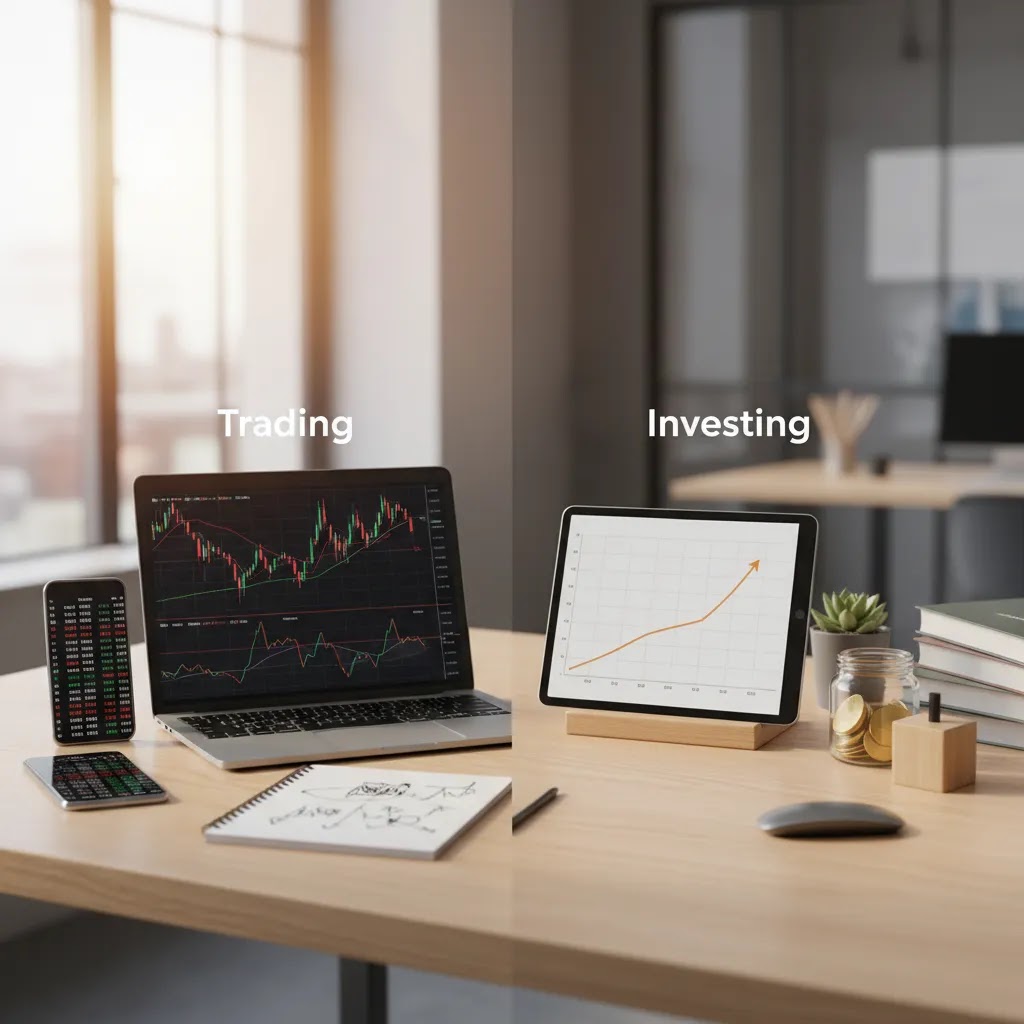
If you are new to financial markets, one of the first questions you may ask is whether trading or investing makes more sense for your goals. The answer depends on your time horizon, risk tolerance, experience, and the amount of time you can realistically commit. For many UAE-based readers, the confusion starts with terminology. Trading usually focuses on shorter-term price moves, while investing typically involves building wealth over a longer period. If you are still learning the basics, our trading for beginners guide can help you build a stronger foundation before choosing an approach. Understanding the difference matters because costs, risks, regulation, and platform choice may look very different depending on whether you plan to trade actively or invest patiently.
Trading vs investing at a glance
The simplest way to explain trading vs investing is this: traders typically try to profit from shorter-term price movements, while investors usually aim to grow capital over years through ownership of assets such as stocks, ETFs, or funds.
Trading can include forex, CFDs, commodities, crypto, indices, and short-term stock strategies. Investing usually centers on long-term holdings, compounding, and portfolio building. If you want a broader definition first, see our guide on what is trading.
Neither path is automatically better. Each comes with trade-offs. Trading may offer more frequent opportunities, but it also usually brings higher short-term risk, tighter execution demands, and more active decision-making. Investing may feel slower, but in many cases it is easier to manage consistently, especially for people with full-time jobs and limited screen time.
For UAE readers, regulation also matters. Platforms operating locally may be supervised by bodies such as the DFSA or SCA, while international brokers may be regulated by the FCA, ASIC, or CySEC. The right approach should match both your financial goals and the kind of regulated platform you are comfortable using.
The main differences that matter
There are five practical differences between trading and investing that most beginners should understand before opening any account.
1. Time horizon
Trading is usually short term. Positions may last minutes, hours, days, or weeks. Investing is usually long term, often measured in years. This is the biggest distinction in the difference between trading and investing.
2. Decision style
Traders often make frequent decisions based on charts, price action, volatility, market news, or technical signals. Investors usually focus more on long-term value, diversification, earnings potential, and economic trends.
3. Cost structure
Active trading may involve spreads, commissions, overnight funding, and slippage. Long-term investing may still include costs, but less frequent activity often means lower cumulative transaction drag. That is one reason active trading vs passive investing often leads to very different outcomes after fees.
4. Risk profile
Both involve risk, but the type of risk changes. Traders may face rapid losses from leverage and volatility. Investors may face market drawdowns and long holding periods, but typically with less need to react every day.
5. Emotional pressure
Trading may test discipline more intensely because results appear quickly. Investing usually demands patience and the ability to stay calm during broader market declines. In most cases, people underestimate the emotional side of both.
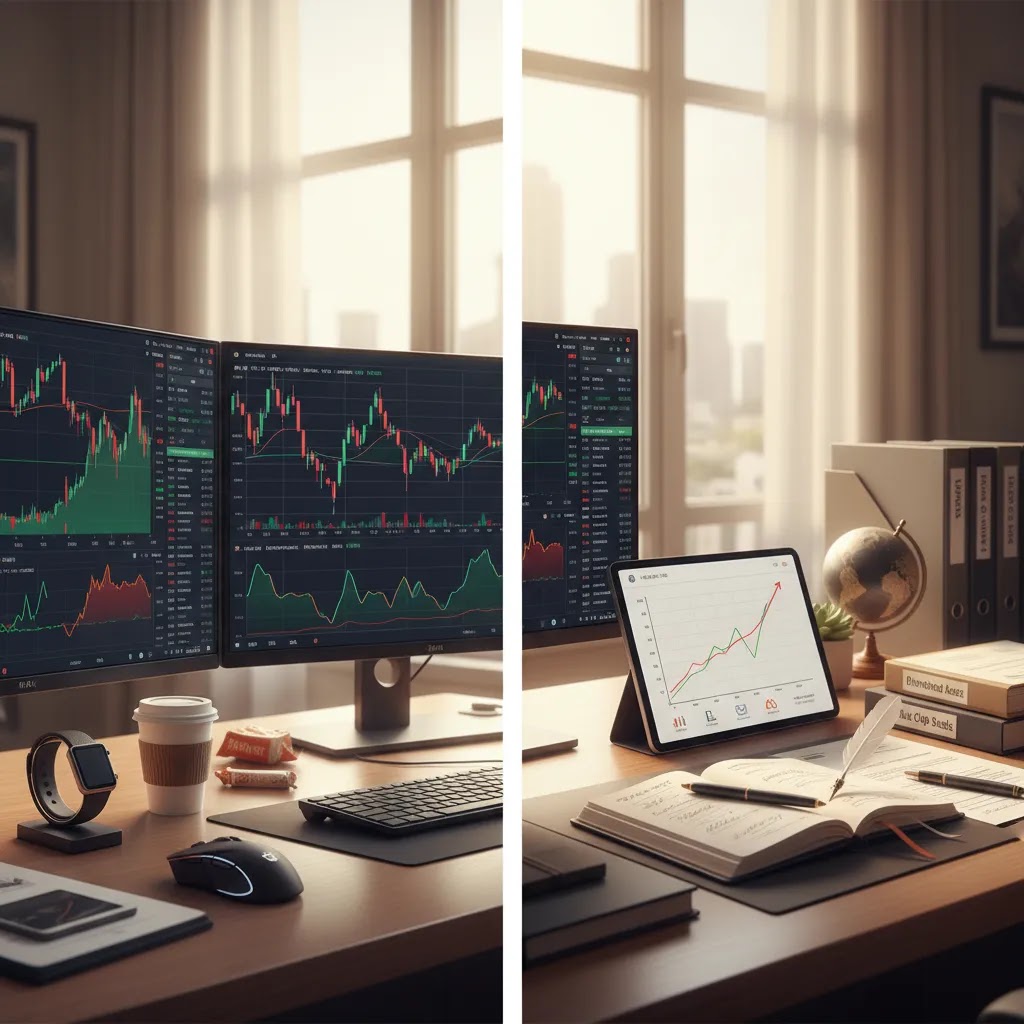
Trading vs investing vs gambling (where the line actually is)
A common question for beginners is whether trading is basically gambling. Here’s the thing: the difference is not the product alone. It is usually the process, the risk controls, and whether decisions are repeatable or impulsive.
Gambling is typically entertainment-driven and outcome-focused. The bet is the point. Many forms of trading can start to resemble that when someone is placing trades mainly for adrenaline, reacting to social media, or trying to win back losses quickly.
Trading and investing, at their best, are closer to decision systems than predictions. A trader may define a setup, position size, and exit plan before entering. An investor may define allocation, diversification rules, and rebalancing triggers. Both are trying to manage uncertainty, not eliminate it.
Consider this: even if you are “right” on direction, a lack of structure can still turn trading into gambling territory. Common behaviors that push traders there include revenge trading after a loss, increasing leverage to recover quickly, placing trades without a stop or exit plan, and changing strategy every time the market feels uncomfortable.
A more structured approach usually looks different. It tends to include written rules, consistent sizing, realistic expectations, and basic record-keeping so you can review what is working and what is not. That structure does not remove risk, and outcomes are never guaranteed, but it may reduce the chance that short-term emotion controls the entire decision.
Risk, cost, and time commitment
If you are comparing day trading vs investing, risk should be your starting point, not return expectations. Trading often involves leverage, especially in forex and CFD markets. That can magnify gains, but it can also magnify losses. Capital is at risk, and short-term trading is not suitable for everyone.
Costs matter as well. For example, some brokers in Business24-7 coverage offer spread-only pricing, while others combine low spreads with commissions. Pepperstone lists spreads from 0.0 pips on Razor with a $7 per lot commission, while Plus500 uses spread-only pricing and applies overnight funding fees. Capital.com uses spread-only pricing on most instruments, and XTB offers 0% commission on real stocks up to volume limits while applying spreads on CFDs.
These cost structures may matter more to traders than investors because frequent transactions can compound costs quickly. A long-term investor who buys diversified assets and holds them may experience fewer direct dealing costs over time.
Time commitment is another dividing line. Short term trading vs long term investing usually means choosing between active monitoring and a more hands-off approach. If you are considering very active strategies, our guide to day trading may help you understand the workload and discipline involved before risking real money.
Why many day traders lose money (and what that means for beginners)
What many people overlook is that day trading is not only about being right on market direction. In many cases, a trader can win on direction and still lose money because costs, sizing, and execution are working against them.
Transaction costs are one major factor. Day traders typically pay spreads and, depending on the account type, commissions. If you trade frequently, that cost drag can add up quickly. Slippage can also matter in fast markets, where the price you get may be worse than the price you expected, especially around news or high volatility.
Leverage is another common pressure point. It can magnify gains, but it can also magnify losses in a way that shortens your learning runway. Many beginners underestimate how quickly a series of small mistakes can compound when leverage is involved, particularly in CFDs where small price moves can have an outsized impact on your account.
Overtrading is a practical issue too. When someone feels they must trade every day, they may start taking lower-quality setups, reacting to noise, or “forcing” opportunities. From a practical standpoint, fewer trades with clearer rationale can be easier to manage than constant activity.
Behavioral mistakes may be the biggest factor of all. Chasing a move after it already happened, cutting winners quickly while letting losses run, or moving a stop because it feels uncomfortable can turn a strategy with potential into a negative one. Think of it this way: you do not need to be right most of the time to be profitable, but you usually do need position sizing and risk-to-reward to make sense. Without that, even a decent win rate can lead to losses.
If you are a beginner, the takeaway is not “never day trade.” It is that day trading should be treated as a skill-based activity with meaningful downside risk. Guardrails many new traders consider include practicing on a demo first, defining a maximum amount of capital they are willing to risk per trade, keeping leverage conservative until they understand drawdowns, and tracking results in a simple journal so mistakes can be identified early. None of this guarantees outcomes, but it can reduce avoidable errors that are common in the first stages of active trading.
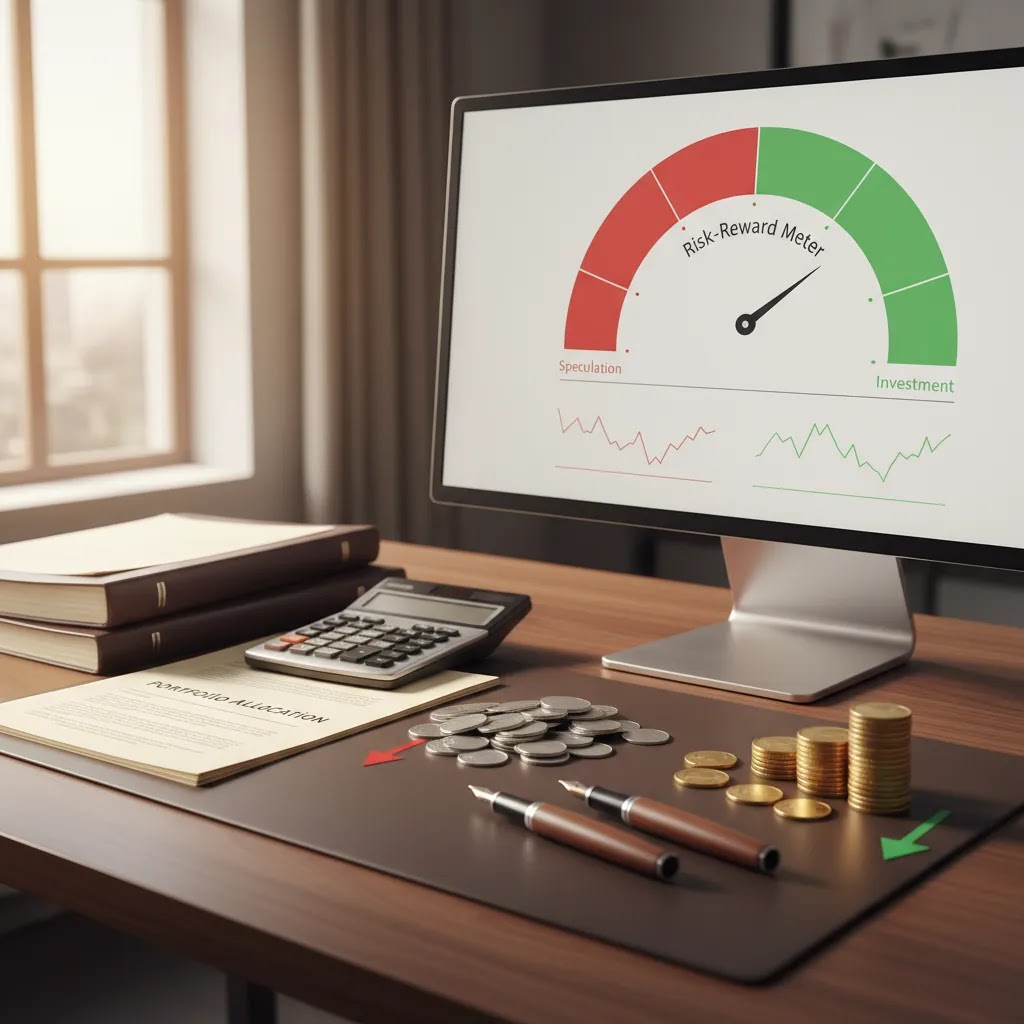
Which platforms may suit each approach
The platform you choose should reflect whether you are acting more like a trader or an investor. A trader may prioritize low spreads, execution quality, charting, and risk tools. An investor may care more about asset breadth, research, stock access, ETFs, and long-term portfolio features.
For example, Pepperstone may appeal to active forex or CFD traders because it offers MT4, MT5, cTrader, TradingView, and spreads from 0.0 pips on Razor. AvaTrade may suit newer traders who value education and risk-management features such as AvaProtect, with ADGM FSRA regulation and a $100 minimum deposit.
On the investing side, eToro stands out for copy trading, Smart Portfolios, and 0% commission on real stocks, while Interactive Brokers offers professional-grade tools, access to 150+ markets, and very broad asset coverage. Saxo Bank may also interest long-term investors who want premium research and access to 72,000+ instruments, though its $2,000 minimum deposit is meaningfully higher than most alternatives.
UAE residents may also look closely at local regulatory context. Capital.com is listed with SCA regulation, ADSS is SCA regulated and UAE-headquartered, and several platforms including Pepperstone, XTB, Plus500, Interactive Brokers, and Saxo Bank list DFSA regulation. If your goal is long-term portfolio building rather than active speculation, our how to invest uae guide may be a better next step than a trading-focused article.
For broader educational resources, readers can also browse Trading Fundamentals and Investing and Wealth Building on Business24-7.
Pros and Cons
Strengths
- Trading may offer more flexibility for people who want to focus on shorter-term market moves rather than waiting years for an investment thesis to play out.
- Investing may be more practical for busy professionals because it often requires fewer decisions and less daily monitoring.
- Active traders can choose platforms with specialized tools such as MT4, MT5, cTrader, TradingView, guaranteed stop-loss features, or copy trading, depending on the broker.
- Long-term investors can benefit from features such as 0% commission on real stocks, access to ETFs, research tools, and broad market access on some multi-asset platforms.
- Both approaches can be pursued through regulated providers available to UAE residents, including firms supervised by the SCA, DFSA, FCA, ASIC, and CySEC based on platform availability.
Considerations
- Trading usually involves higher short-term pressure, and costs such as spreads, commissions, and overnight fees may add up quickly.
- Investing still carries market risk, and long-term positions can decline in value during weak economic cycles or broad equity selloffs.
- Leverage, commonly available in trading accounts, can increase losses as well as gains and may not be suitable for inexperienced users.
- Platform choice matters because some providers are better suited to active CFD trading, while others are stronger for multi-asset investing and research.
Who each approach may suit
Trading may suit readers who are comfortable learning market mechanics, managing risk actively, and spending time on execution, chart review, and discipline. It may fit someone interested in forex, indices, commodities, or short-term strategies, provided they understand that losses can happen quickly.
Investing may suit readers who want a more patient approach to wealth building, especially those focused on stocks, ETFs, and diversification over several years. If you have limited time, prefer fewer decisions, and want a lower-maintenance approach, investing may be easier to apply consistently. Some people combine both by keeping a long-term portfolio while using a smaller portion of capital for carefully controlled trading.

Business24-7 editorial perspective
At Business24-7, the goal is not to push you toward trading or investing as if one is universally superior. The better route depends on your objectives, experience, and tolerance for volatility. That editorial approach reflects the site’s broader mission of helping UAE readers evaluate financial choices with more clarity and less noise. Business24-7 content is shaped around practical comparison points such as regulation, costs, usability, and product fit, with reference to real platform data rather than marketing claims.
If you move from learning mode into platform research, it helps to compare brokers based on your actual use case. A trader may focus on spreads, execution tools, and leverage controls. An investor may care more about stock access, ETF availability, research, and platform simplicity. As you narrow your options, explore Business24-7 broker and platform resources before opening an account, especially if local regulation by the DFSA or SCA is important to you.
How to choose between trading and investing
If you are unsure which path fits you better, use a simple decision framework rather than chasing whichever style sounds more exciting.
1. Start with your goal
If your goal is long-term wealth building, retirement planning, or gradual capital growth, investing may be the more natural fit. If your goal is active market participation and short-term speculation with strict risk controls, trading may be more relevant.
2. Be honest about time
Many people are drawn to trading without realizing how much time active strategies can require. Monitoring setups, placing orders, reviewing results, and controlling emotions can become demanding. Investing is often easier to maintain alongside a full-time career.
3. Understand your risk tolerance
If short-term losses would cause you to abandon your plan, active trading may be difficult to sustain. Investing also includes risk, but the pace is usually less intense. This is one reason the trader vs investor mindset matters as much as the product itself.
4. Match the platform to the strategy
Choose platforms based on actual needs, not broad brand recognition. A forex or CFD trader may prefer low spreads, charting, and fast execution. A long-term investor may prioritize real stock access, ETF selection, research, and portfolio tools. Always verify regulation, fee structure, and account conditions before funding an account.
5. Consider a blended approach carefully
Some readers may want both. For example, they may invest most of their capital in diversified long-term holdings and use a smaller, clearly defined amount for active trading. This can work for some people, but only if risk limits are strict and the two activities are treated differently. Trading money should not be confused with long-term investment capital.
Whichever route you choose, avoid framing the decision as which is better in absolute terms. A method that suits one person’s temperament, budget, and schedule may be a poor fit for another. Your best approach is the one you can understand, afford, and follow with discipline.
A simple starter path for UAE readers (first 30 to 90 days)
If you are at the beginning, you do not need a complex strategy right away. You need a process that helps you learn the basics, avoid obvious mistakes, and make smart platform decisions before you commit meaningful capital. This is a general learning path, not financial advice, and readers should consider their own circumstances before taking action.
First 30 days: build your baseline
Start by defining what you are trying to achieve and the time horizon. If you are leaning toward investing, your focus may be long-term wealth building and diversification. If you are leaning toward trading, your focus may be learning market mechanics, order types, and risk control.
Spend time learning core concepts such as how markets move, what leverage means, how spreads and commissions work, and why drawdowns are normal in both trading and investing. Many beginners underestimate the importance of this stage, then pay for it later through avoidable mistakes.
Days 30 to 60: choose a regulated setup and understand what you are trading
Now, when it comes to platform research, UAE due diligence matters. Check whether the platform is supervised by a recognized regulator such as the SCA or DFSA where applicable, or by established international regulators like the FCA, ASIC, or CySEC depending on the entity you are using. Regulation does not eliminate the risk of loss, but it can affect standards around disclosures, complaints handling, and how client money may be treated.
Clarify whether you are trading CFDs or buying real shares. This matters because the risks and costs are not the same. CFDs commonly involve leverage and overnight funding, and you are speculating on price rather than owning the underlying asset. Real stock investing is typically more straightforward from an ownership perspective, though market risk still applies and prices can fall.
At this stage, take fee transparency seriously. Compare spreads and commissions for trading accounts, and look for overnight funding if you plan to hold positions beyond a day. For investing accounts, look for stock commissions, any custody or inactivity fees, and understand the withdrawal process before funding.
Days 60 to 90: start small, track what happens, and tighten your process
If you choose to trade, many beginners benefit from starting with a demo or very small sizing while they learn execution and discipline. If you choose to invest, a cautious approach may mean building positions gradually rather than trying to time the market perfectly. Either way, your goal in the first few months is to develop consistency and understand your own behavior under real market movement.
Track your decisions in a simple way. Write down what you did, why you did it, what the costs were, and what you learned. Think of it this way: if you cannot explain your decision process, you are more exposed to emotion and randomness than you may realize.
Common early mistakes to watch for
Chasing hype is one of the fastest ways to get into trouble, especially when products involve leverage. Ignoring fees is another, since small costs can compound when activity is frequent. Using leverage too early, switching strategies too often, and treating short-term results as proof of skill are also common problems. The reality is that learning trading or investing takes time, and capital is at risk throughout the process.
Frequently Asked Questions
What is the main difference between trading and investing?
The main difference is time horizon. Trading usually focuses on shorter-term price changes, while investing generally aims to build value over years. Traders often rely on active entry and exit decisions, while investors usually hold assets longer and focus on compounding, diversification, and broader business or market trends.
Is trading riskier than investing?
Trading may be riskier in the short term because positions can move quickly and may involve leverage, especially in forex or CFDs. Investing also carries risk because asset prices can fall over time. The key difference is that trading often concentrates risk over shorter periods, while investing typically spreads it across longer holding periods.
Is day trading the same as investing?
No. Day trading is a form of short-term trading where positions are usually opened and closed within the same day. Investing typically involves holding assets for months or years. The skills, time commitment, costs, and emotional demands are often very different between the two approaches.
Which is better for beginners, trading or investing?
In many cases, investing is easier for beginners because it usually requires fewer rapid decisions and less constant monitoring. Trading may appeal to new market participants, but it can be difficult without a strong grasp of risk management, costs, and execution. Beginners should usually learn the basics before committing capital to either path.
Can I do both trading and investing?
Yes, some people combine both. They may keep a long-term investment portfolio while using a smaller amount for active trading. This approach can make sense if each part has a clear purpose, separate risk limits, and realistic expectations. It is important not to treat speculative trading capital as long-term savings.
Is trading gambling?
Trading can become similar to gambling if decisions are impulsive, unresearched, or driven by emotion rather than a structured plan. However, not all trading is gambling. A disciplined trader may use position sizing, stop-losses, and strategy rules. Even so, risk remains high, and losses are always possible.
How do fees differ between trading and investing?
Trading often creates more frequent costs because traders may pay spreads, commissions, and sometimes overnight funding more often. Investing may involve lower transaction frequency, which can reduce the drag from repeated dealing charges. The exact difference depends on the platform, asset type, and how often you buy and sell.
Do UAE residents need to check regulation before choosing a platform?
Yes. UAE residents should usually verify whether a platform is regulated by a recognized authority such as the DFSA or SCA, or by established international regulators like the FCA, ASIC, or CySEC. Regulation does not remove investment risk, but it may improve transparency, oversight, and client protection standards.
Can investing be completely passive?
It can be more passive than trading, but not completely hands-off in every case. Even long-term investors should review asset allocation, fees, platform safety, and overall portfolio fit from time to time. Passive investing reduces decision frequency, but it still benefits from periodic oversight and realistic expectations.
Why do so many day traders lose money?
Many day traders lose money because frequent trading can magnify the impact of spreads, commissions, and slippage, and because leverage can turn small mistakes into large drawdowns. Overtrading and behavioral errors, such as chasing moves or revenge trading, are also common. Even being right on direction does not guarantee a profit if position sizing and risk-to-reward are not managed carefully.
Can I make $1000 per day from trading?
Some traders may have days where they make large profits, but targeting a fixed daily amount is risky and often leads to overtrading or taking oversized positions. Trading outcomes are uncertain, and losses are possible at any time, especially in leveraged markets like CFDs and forex. A more realistic framing is whether you have a repeatable process and risk limits that you can follow over time.
Is swing trading closer to trading or investing?
Swing trading is typically closer to trading because it focuses on shorter-term price moves, often holding positions for days or weeks rather than years. It usually relies more on entry and exit timing than long-term ownership and compounding. That said, it may feel less intense than day trading because decisions are not made minute-by-minute.
Is trading more profitable than investing?
It depends on the person, the method, and the costs involved. Trading can create opportunities in many market conditions, but it often comes with higher fees, more behavioral pressure, and a higher chance of execution mistakes, especially for beginners. Investing may be easier to apply consistently for many people, but it still carries market risk and can go through long drawdowns. Neither approach guarantees profits.
Key Takeaways
- Trading usually focuses on short-term price movement, while investing typically focuses on long-term capital growth.
- Trading may involve higher time demands, more emotional pressure, and higher cumulative costs because of frequent transactions.
- Investing may suit readers who want a steadier, lower-maintenance approach, but it still carries market risk and no outcome is guaranteed.
- Platform choice should match your strategy, with traders often prioritizing tools and pricing, and investors often prioritizing asset access and research.
- For UAE readers, checking regulation through bodies such as the DFSA, SCA, FCA, ASIC, or CySEC is an important part of platform due diligence.
Conclusion
The trading vs investing decision is less about which approach is superior and more about which one fits your goals, time, and tolerance for risk. Trading may suit people who want active exposure to market moves and can manage the demands of short-term decision-making. Investing may suit those who prefer patience, diversification, and a longer-term view. Many readers may find that understanding both is useful before choosing either. If you are still comparing styles, keep learning through Business24-7’s educational resources, then move on to broker and platform reviews only once you know what you actually need. That step-by-step approach is often safer than choosing a platform first and strategy second.
Disclaimer: The content published on Business24-7 is intended for informational purposes only and does not constitute financial advice, investment recommendations, or an endorsement of any specific platform or financial product. Trading and investing carry significant risk, including the potential loss of capital. You should conduct your own research and, where appropriate, seek independent financial advice before making any investment decisions. Business24-7 does not accept responsibility for any financial losses incurred as a result of information published on this site.
Disclaimer
eToro is a multi-asset platform which offers both investing in stocks and cryptoassets, as well as trading CFDs.
Please note that CFDs are complex instruments and come with a high risk of losing money rapidly due to leverage. 61% of retail investor accounts lose money when trading CFDs with this provider. You should consider whether you understand how CFDs work, and whether you can afford to take the high risk of losing your money
This communication is intended for information and educational purposes only and should not be considered investment advice or investment recommendation. Past performance is not an indication of future results.
Copy Trading does not amount to investment advice. The value of your investments may go up or down. Your capital is at risk.
Crypto assets are complex and carry a high risk of volatility and loss. Trading or investing in crypto assets may not be suitable for all investors. Take 2 mins to learn more
eToro USA LLC does not offer CFDs and makes no representation and assumes no liability as to the accuracy or completeness of the content of this publication, which has been prepared by our partner utilizing publicly available non-entity specific information about eToro.

If you are new to financial markets, one of the first questions you may ask is whether trading or investing makes more sense for your goals. The answer depends on your time horizon, risk tolerance, experience, and the amount of time you can realistically commit. For many UAE-based readers, the confusion starts with terminology. Trading usually focuses on shorter-term price…