

If you are new to financial markets, the word trading can sound bigger and more complicated than it really is. A lot of people in the UAE reach the same point. You open an app, see stocks, forex, and CFDs listed side by side, and then wonder what any of it actually means, what the risks are, and how people make sense of it all before putting real money on the line. That confusion is completely normal.
This article explains what is trading in plain English, how trading works, and the main differences between stock trading, forex trading, and Contracts for Difference (CFDs). You will also see why regulation matters in the UAE, especially if you are comparing platforms licensed by the Securities and Commodities Authority (SCA), Dubai Financial Services Authority (DFSA), or Abu Dhabi Global Market Financial Services Regulatory Authority (ADGM FSRA). If you want a broader starting point first, this guide on trading for beginners can help. At Business24-7, the goal is to make these decisions clearer, not to push you toward a quick choice.
What trading actually means
At its core, trading means buying and selling a financial asset with the aim of benefiting from price changes. That asset could be a stock, a currency pair, a commodity, or a derivative such as a CFD. A trade is simply one transaction, either buying or selling.
Think of it this way, if investing is often about long-term ownership and wealth building over years, trading is usually more focused on shorter-term price movement. That could mean minutes, days, weeks, or sometimes months. The exact time frame depends on the person, the market, and the product they are using.
The reality is that trading is not just about pressing a buy button and hoping for the best. You are making a decision about market direction, timing, cost, and risk. Trading involves real risk of capital loss, and that matters even more if you are using leveraged products, where a relatively small deposit controls a larger market position.
Common trading myths beginners hear online (including the “90% rule”)
If you spend any time on trading social media, you will hear confident claims that sound simple and reassuring. The problem is that many of those claims remove the parts that actually decide real-world outcomes, costs, risk, and whether you can stay in the market long enough to learn.
One of the most repeated lines is the so-called “90% rule,” usually stated as “90% of traders lose money.” The exact number is not universal. It can vary by broker, product type, time period, and how “trader” is defined. Still, as a direction-of-travel warning, it is useful for beginners, especially in leveraged forex and CFD markets where costs and leverage can compound quickly. The key takeaway is not the percentage. It is that many retail accounts lose money with leveraged products, so you should treat trading as a high-risk, probabilistic activity, not a guaranteed income method.
What many people overlook is that common myths often encourage behavior that increases losses. Here are a few that come up repeatedly.
The first is “more trades equals more profit.” In reality, trading more can simply mean paying the spread and commission more often, and making more decisions under pressure. For many beginners, overtrading is less a strategy and more a reaction to boredom, fear of missing out, or trying to recover a loss quickly.
The second is “high leverage is an advantage.” Leverage can increase exposure, but it also increases the speed and size of losses. If you are still learning how position sizing works, high leverage can reduce the margin for error to almost nothing.
The third is “a regulated broker means you cannot lose.” Regulation can improve oversight and reduce certain operational risks, but it does not change market direction. A regulated platform can still execute your losing trade exactly as requested.
The fourth is “signals guarantee results.” Signals, copy trading, and paid groups can sometimes be educational, but none of them can remove market uncertainty. If someone promises consistent profits, pressures you to deposit quickly, or avoids explaining risk in plain terms, treat that as a red flag.
Consider this. A few simple reality checks can protect you more than most hype-driven advice: understand your costs before placing a trade, define how much you are willing to lose on a single position, and avoid urgency or profit promises. Trading might be possible to learn, but it is rarely forgiving when the basics are skipped.
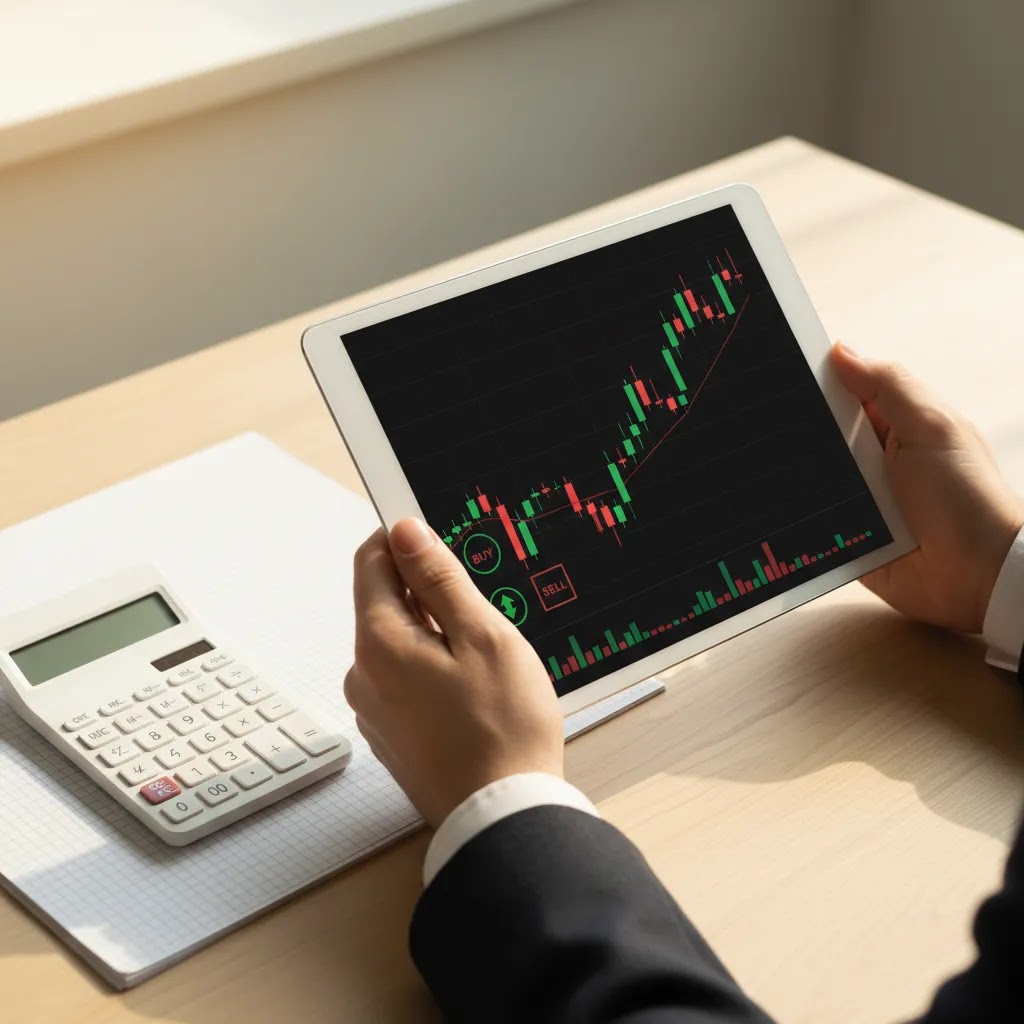
How trading works in practice
Now, when it comes to how trading works, most beginners need a simple process. You open an account with a broker or trading platform, deposit funds, choose an instrument, and place an order. If the market moves in your favor, you may make a profit. If it moves against you, you may take a loss.
Orders, prices, and positions
Every market has a buy price and a sell price. The gap between them is called the spread, and it is one of the most common trading costs. Some brokers also charge commissions, overnight financing fees, or withdrawal fees. What many people overlook is that fees can affect your result even before the market has moved very far.
When you open a position, you are entering a trade based on your view of the market. In stock trading, that might mean buying shares in a company. In forex trading, it could mean buying one currency while selling another. In CFD trading, you are usually speculating on price movement rather than owning the underlying asset itself.
Why leverage changes the risk
Leverage lets you control a larger position with a smaller amount of money. For example, retail traders may see leverage limits such as 1:30 on certain regulated platforms. This can increase both gains and losses. In practice, this means a small market move can have a much bigger effect on your account balance than you might expect.
That is why understanding margin, which is the amount you need to open and maintain a leveraged trade, is so important. If your position moves too far against you, the broker may close it automatically to limit losses. This is one reason new traders should treat leverage carefully rather than seeing it as a benefit on its own.
How traders make money (and why many do not)
Most trading profits, when they happen, come from one simple idea: you buy an instrument and later sell it at a higher price, or you sell and later buy back at a lower price. The first is what people usually think of as “buy low, sell high.” The second is effectively profiting from a falling market, which is often done through derivatives such as CFDs or leveraged forex positions where you can take a short bias without borrowing and selling the underlying asset directly.
Here’s the thing, being right about direction is only one part of the equation. Your entry price, exit price, position size, and timing all matter. The costs of trading matter too, and they can quietly turn a small theoretical win into a real-world loss.
Spreads are the most common example. You typically start a trade slightly negative because you pay the gap between buy and sell. Commissions can add to that. In fast markets, slippage may happen, which is when your order fills at a different price than expected. If you are trading CFDs or leveraged forex and hold a position overnight, you may also face overnight financing charges, which can add up over time and make longer holds more expensive than beginners expect.
Leverage is another reason outcomes can look dramatic. Leverage magnifies exposure, which means it can amplify gains if the market moves in your favor. The same mechanic can amplify losses just as quickly if the market moves against you. For many retail traders, the issue is not that they are always wrong about direction. It is that one or two oversized positions, combined with leverage and costs, can overwhelm a small account before consistent decision-making has time to develop.
The reality is that many retail accounts lose money in leveraged products, and this is why serious brokers and regulators require risk warnings. Trading should be viewed as probabilistic. You are managing uncertainty, not collecting a predictable paycheck. If you approach it with that mindset, focusing on costs, risk per trade, and realistic expectations, you are much less likely to be surprised by how quickly things can go wrong.
The main types of trading beginners see first
If you are searching what is trading online, you will usually come across three categories quickly: stocks, forex, and CFDs. They are related, but they work differently and suit different goals, risk levels, and learning curves.
Stock trading
Stock trading means buying and selling shares of publicly listed companies. If you buy real shares, you typically own part of that company. Your position may rise or fall based on company performance, market sentiment, earnings reports, economic news, and sector trends.
For many beginners, stocks feel more familiar because the underlying asset is easier to understand. You may already know the brands involved. Still, stock prices can be volatile, and owning shares does not remove risk. If you trade stocks frequently, spreads, commissions, and timing can matter just as much as the company you pick.
Forex trading
What is forex trading is one of the most common follow-up questions. Forex, short for foreign exchange, involves trading one currency against another, such as EUR/USD or USD/AED-related market exposure through broader currency activity. You are speculating on whether one currency will strengthen or weaken relative to another.
Forex markets are large and active, which is one reason they attract so many retail traders in the UAE and wider MENA region. The market often uses leverage, and that makes risk management especially important. Currency prices can react quickly to interest rates, inflation data, geopolitical events, and central bank statements.
CFD trading
CFD trading stands for trading Contracts for Difference. A CFD is a derivative, which means its value comes from an underlying asset such as a stock, index, commodity, or currency pair. You do not usually own the asset itself. Instead, you are entering a contract based on whether the price goes up or down.
Consider this, CFDs can provide flexible market access because they often let you trade rising and falling markets. But they also come with higher complexity, overnight financing charges in many cases, and leverage-related risk. For beginners, CFDs may look accessible on the surface, but they require a clear understanding of costs and position size.

Trading vs investing, what is the difference
One of the biggest sources of confusion is assuming trading and investing mean the same thing. They overlap, but they are not identical. If you want a deeper breakdown, this guide on trading vs investing is useful.
Trading usually focuses on shorter-term opportunities and active decision-making. Investors, by contrast, often hold assets for longer periods and may focus more on fundamentals, dividends, or gradual capital growth. A trader may open and close multiple positions in a week, while an investor may hold the same stock or fund for years.
From a practical standpoint, this means your platform choice, fee sensitivity, and risk tolerance may differ depending on whether you are trading or investing. A person building a long-term portfolio may care more about custody, access to real shares, and recurring investment options. A short-term trader may care more about spreads, execution speed, charting tools, and overnight costs.
Why regulation matters in the UAE
If you live in the UAE, regulation should be one of the first filters you use when looking at any trading platform. A regulated broker is not a promise of profit or safety from losses, but it may provide stronger operating standards, oversight, and formal complaint channels.
In the UAE, the main authorities you are likely to see referenced include the Securities and Commodities Authority (SCA), the Dubai Financial Services Authority (DFSA), and the Abu Dhabi Global Market Financial Services Regulatory Authority (ADGM FSRA). International regulators such as the Financial Conduct Authority (FCA), Cyprus Securities and Exchange Commission (CySEC), and Australian Securities and Investments Commission (ASIC) may also matter, especially if a platform serves UAE residents through an international entity.
Here is why that matters. A regulated platform may be required to follow rules on client money handling, disclosures, marketing standards, and risk controls. That does not remove market risk, but it may reduce the chance of dealing with a poorly supervised operator. If a platform avoids clear licensing information, promises unusually high returns, or pressures you to deposit quickly, treat that as a warning sign.
At Business24-7, one resource worth checking before choosing a broker is the site’s Broker Reviews section, where platform regulation, fees, and trading features can be compared in a more structured way.
What to check before choosing a platform
Once you understand the trading definition, the next practical question is where you would actually trade. This is where many beginners rush. A polished app or a low minimum deposit does not automatically mean a platform is right for you.
Start with regulation and account structure
Look for clear licensing details and verify them independently where possible. For example, Business24-7 currently covers brokers with different regulatory footprints relevant to UAE traders. Capital.com is listed with SCA regulation, Pepperstone with DFSA regulation, and AvaTrade with ADGM FSRA regulation. Each of these details matters because it tells you which legal framework may apply to your account, based on available information and entity structure.
Now, when it comes to practical fit, the platform type also matters. A beginner looking for a lower entry point may notice Capital.com has a listed minimum deposit of $20, while AvaTrade lists $100 and eToro lists $200. Pepperstone and Interactive Brokers are shown with $0 minimum deposits in Business24-7 review data. That does not make one automatically better than another. It simply shows why you need to compare account terms, platform tools, and risk profile, not just the headline number.
Compare costs, not just marketing claims
Trading costs usually include spreads, commissions, and possibly overnight fees. Pepperstone’s Razor account is listed from 0.0 pips with a $7 per lot commission, while Plus500 and Capital.com are presented as spread-only models on many instruments. eToro shows 0% commission on real stocks, but spreads still apply to CFDs. In short, the lowest advertised spread does not always mean the lowest total cost for your style of trading.
What many people overlook is the importance of inactivity charges, funding costs, or product limitations. AvaTrade, for example, is listed with an inactivity fee after three months. Plus500 notes overnight funding fees. Those details may matter more than a small spread difference if you trade infrequently or hold positions for longer.
Choose tools that match your experience level
A beginner may prefer a simpler interface such as Plus500’s WebTrader or eToro’s WebTrader and mobile app. Someone who wants advanced charting might look at MT4, MT5, cTrader, TradingView integration, or professional platforms such as Interactive Brokers’ Trader Workstation. If you are still comparing options, this guide to the best trading platform for beginners UAE gives you a more focused next step.
You can also browse the broader Trading Fundamentals category if you want to build your knowledge before narrowing your shortlist.

Can you start trading with $100? What that really means
Yes, in many cases you can open an account and place trades with around $100, and sometimes less, depending on the broker, the product, and the account type. But there is a difference between a platform’s minimum deposit and what it means to trade responsibly.
With a small balance, position sizing becomes the whole game. A small adverse move, a few spreads paid, or an overnight financing charge can represent a meaningful percentage of your account. This is why small accounts often feel like they are “not moving,” then suddenly drop faster than expected. It is not always the market doing something unusual. It is the math of costs and exposure against a limited balance.
Leverage can make this more intense. A $100 account can control a larger position if leverage is available, but that does not mean it should. In leveraged markets, drawdowns can arrive quickly, and margin requirements may restrict which instruments you can realistically trade. Minimum trade sizes also matter. If the platform’s smallest position size is still large relative to your account, you can end up taking oversized risk without realizing it.
From a practical standpoint, if you are starting small, it often makes sense to treat the first phase as skill building rather than income seeking. Demo accounts can help you learn order types, spreads, and platform mechanics without risking capital. If you go live, consider keeping position sizes small enough that one loss does not decide the entire account. That is not a promise of safety, but it is a healthier way to approach the learning curve.
If you are in the UAE, there is another layer. The leverage limits, product access, and protections you receive can depend on the regulated entity that holds your account, such as SCA, DFSA, ADGM FSRA, or an overseas regulator like the FCA, CySEC, or ASIC. That can change what a $100 account can actually do in practice, even if the app looks identical. Before you fund an account, check which entity you are signing up with and how that affects leverage, margin, and available instruments.
Frequently Asked Questions
What is trading in simple words?
Trading means buying and selling a financial asset to try to benefit from price changes. The asset could be a stock, currency pair, commodity, or derivative such as a CFD. The key point is that trading usually focuses more on price movement than long-term ownership. If you buy an asset and later sell it at a higher price, you may make a gain. If you sell at a lower price, you may take a loss. Trading always involves risk, and the result depends on market movement, timing, and costs.
What is a trade?
A trade is a single market transaction. For example, if you buy shares in a company, that is one trade. If you later sell those shares, that is another trade. In forex, a trade means taking a position on one currency against another. In CFD markets, a trade means opening a contract based on whether you think price will rise or fall. The term sounds technical, but it simply refers to entering or exiting a position in a financial market.
Is trading the same as investing?
No, although the two are closely related. Trading usually involves shorter time frames and more active buying and selling. Investing often focuses on holding assets for longer periods in the hope of long-term growth or income. A trader may react to short-term price moves, while an investor may focus more on company quality, diversification, and long-term market exposure. Neither approach is risk free, and your choice may depend on your goals, time commitment, and tolerance for market volatility.
What is stock trading definition for a beginner?
Stock trading means buying and selling shares in publicly listed companies. If you buy real shares, you usually own a portion of that company. The price may move based on earnings results, economic conditions, industry trends, or investor sentiment. Beginners often start with stocks because the underlying businesses feel easier to understand than some other instruments. Even so, prices can move sharply, and frequent trading can increase the importance of spreads, commissions, and timing. Risk still applies, even with familiar companies.
What is forex trading definition in practical terms?
Forex trading means trading one currency against another. You are speculating on whether one currency will strengthen or weaken relative to the other. For example, if you trade EUR/USD, you are looking at the euro compared with the U.S. dollar. Forex is popular because the market is highly active and available for long hours during the week. But it also often involves leverage, which can magnify losses. For new traders in the UAE, understanding leverage and regulation is especially important before opening an account.
What are CFDs and why do beginners need to be careful with them?
Contracts for Difference, or CFDs, are derivative products that let you speculate on price changes without owning the underlying asset. You can usually trade both rising and falling markets, which is one reason CFDs attract retail traders. The downside is that CFDs often involve leverage and overnight financing fees, which can make them riskier and more complex than they first appear. Beginners need to understand exactly how margin, fees, and liquidation risk work before trading CFDs with real money.
Do I need a lot of money to start trading?
Not always. Some brokers listed on Business24-7 have relatively low minimum deposits, and a few show $0 account minimums. But the amount needed to open an account is not the same as the amount needed to trade responsibly. A very small balance can still be exposed to significant risk, especially if leverage is involved. You should think beyond the minimum deposit and consider position sizing, total fees, and how much loss you could realistically afford without financial strain.
Can I start trading with $100?
In many cases, yes, because some platforms allow low minimum deposits. What that means in practice is different. With $100, costs such as spreads, commissions, and overnight financing can take up a larger percentage of your balance, and small market moves can have a bigger impact if you use leverage. If you start small, it often helps to focus on learning platform mechanics and risk control, using position sizes that are not oversized for your account and using demo trading as part of the process.
What is the 90% rule in trading?
The “90% rule” is a popular claim that “90% of traders lose money.” The exact figure can vary depending on the broker, product type, time period, and how results are measured. Still, it is directionally useful as a risk warning, especially for leveraged forex and CFDs where losses can build quickly and trading costs can meaningfully affect outcomes. The main lesson for beginners is to treat trading as uncertain and risk-based, not as a guaranteed income method.
How do traders make money?
Traders may make money by buying an instrument and selling at a higher price, or by taking positions that benefit if the price falls, often through derivatives such as CFDs. Results are affected by more than direction. Trading costs like spreads, commissions, slippage, and overnight financing can reduce returns, especially in leveraged products. Because market outcomes are uncertain and leverage can amplify losses, many retail accounts lose money, which is why risk management and cost awareness matter from the start.
Which trade is best for beginners?
There is no single best trade for every beginner, because it depends on what you understand, your time horizon, and how much volatility you can tolerate. Many new traders find stocks easier to grasp because the underlying asset is a company they can research. Forex and CFDs can look accessible because of leverage and low entry points, but they can also increase risk and cost sensitivity. A practical approach is to start with instruments you can explain clearly, keep position sizes small, and avoid products you do not fully understand, especially leveraged derivatives.
How do I know if a trading platform is regulated in the UAE?
Start by checking whether the broker clearly states regulation by the Securities and Commodities Authority (SCA), Dubai Financial Services Authority (DFSA), or Abu Dhabi Global Market Financial Services Regulatory Authority (ADGM FSRA). Then verify those details through the regulator’s official register where possible. International regulators such as the FCA, CySEC, and ASIC may also be relevant, depending on the account entity. A regulated status does not remove market risk, but it may offer stronger oversight and a clearer framework for complaints and disclosures.
Can I lose money even if I use a regulated broker?
Yes. Regulation may help reduce operational and conduct-related risks, but it does not protect you from market losses. If the asset you trade moves against you, your account may lose value. This is especially important in leveraged products such as forex and CFDs, where losses can build quickly. A regulated broker may provide clearer disclosures, segregation of client funds in many cases, and formal oversight, but none of that changes the fact that financial trading carries real risk.
What should I learn before making my first trade?
You should understand the asset you want to trade, how orders work, the costs involved, and the risks of leverage. It also helps to know the difference between stocks, forex, and CFDs, since each works differently. Before funding an account, check the broker’s regulation, fee schedule, platform tools, and withdrawal process. If you are still building your foundation, reviewing plain-English education before platform comparisons is usually a better move than rushing into live trading because of advertising or social media hype.
Key Takeaways
- Trading means buying and selling financial assets to try to benefit from price changes, but losses are always possible.
- Stock trading, forex trading, and CFD trading work differently, especially in terms of ownership, leverage, and fees.
- Leverage can increase exposure quickly, which is why beginners should treat margin products with caution.
- For UAE residents, checking regulation through SCA, DFSA, or ADGM FSRA is an important first step before opening an account.
- Before choosing a platform, compare total costs, account terms, and ease of use, not just marketing claims or minimum deposits.
Conclusion
So, what is trading? In simple terms, it is the act of buying and selling financial instruments based on price movement. But in practice, trading is also about understanding what you are buying, how the market works, what fees apply, and how much risk you are taking on. That is why beginners often struggle at first. The terminology can be confusing, and many platforms make the process look simpler than it really is.
Here’s the thing, you do not need to know everything at once. You do need a solid grasp of the basics before committing funds. If you are comparing stocks, forex, and CFDs, start with the product structure, then look at regulation, fees, and platform design. Business24-7 can help you continue that research with independent platform reviews and beginner-focused comparisons written for UAE readers. The more clearly you understand trading before you start, the more confident and realistic your decisions are likely to be.
The content on Business24-7 is intended for informational and educational purposes only. It does not constitute personalized financial or investment advice. Trading financial instruments involves significant risk, and you may lose some or all of your invested capital. Always conduct your own research and consider seeking advice from an independent, licensed financial advisor before making any investment decisions. Business24-7 does not endorse or guarantee the performance of any financial platform or service mentioned in this content.
Disclaimer
eToro is a multi-asset platform which offers both investing in stocks and cryptoassets, as well as trading CFDs.
Please note that CFDs are complex instruments and come with a high risk of losing money rapidly due to leverage. 61% of retail investor accounts lose money when trading CFDs with this provider. You should consider whether you understand how CFDs work, and whether you can afford to take the high risk of losing your money
This communication is intended for information and educational purposes only and should not be considered investment advice or investment recommendation. Past performance is not an indication of future results.
Copy Trading does not amount to investment advice. The value of your investments may go up or down. Your capital is at risk.
Crypto assets are complex and carry a high risk of volatility and loss. Trading or investing in crypto assets may not be suitable for all investors. Take 2 mins to learn more
eToro USA LLC does not offer CFDs and makes no representation and assumes no liability as to the accuracy or completeness of the content of this publication, which has been prepared by our partner utilizing publicly available non-entity specific information about eToro.

If you are new to financial markets, the word trading can sound bigger and more complicated than it really is. A lot of people in the UAE reach the same point. You open an app, see stocks, forex, and CFDs listed side by side, and then wonder what any of it actually means, what the risks are, and how people…