

If you are new to forex, one of the first concepts you need to understand is the currency pair. Every forex trade involves buying one currency and selling another, which is why prices are always quoted in pairs such as EUR/USD or USD/JPY. For beginners in the UAE, this topic matters because understanding forex currency pairs can help you read prices correctly, compare volatility, and avoid taking positions you do not fully understand. If you are still building your base knowledge, start with our trading for beginners guide. This article explains major, minor, and exotic pairs in plain English, along with liquidity, spreads, correlation, and the practical risks that matter before you place any live trade.
What forex currency pairs are
A forex currency pair shows the value of one currency against another. The first currency is called the base currency, and the second is the quote currency. If EUR/USD is trading at 1.1000, it means one euro is worth 1.10 U.S. dollars.
This is the foundation of the foreign exchange market. If you want a broader explanation of how the market itself works, read what is forex trading. In most cases, traders speculate on whether the base currency will strengthen or weaken relative to the quote currency.
Forex pairs are usually grouped into three categories: major currency pairs, minor currency pairs, and exotic currency pairs. These groups differ in liquidity, typical spreads, trading activity, and risk. For retail traders, those differences may affect execution quality, transaction costs, and how sharply a pair moves during major news events.
The most traded currency pairs generally involve the U.S. dollar because it remains central to global trade, reserves, and financial markets. That is one reason pairs such as EUR/USD, GBP/USD, and USD/JPY are widely followed by beginners and experienced traders alike.
Majors, minors, and exotic currency pairs
Major currency pairs are the most traded currency pairs in the forex market. They usually include the U.S. dollar paired with another large global currency. Common examples include EUR/USD, GBP/USD, USD/JPY, USD/CHF, AUD/USD, and USD/CAD.
These pairs typically have the deepest liquidity and the narrowest spreads. That may make them easier for beginners to follow, especially during active market hours. Major pairs also tend to have more available research, economic coverage, and educational material.
Minor currency pairs, sometimes called cross-currency pairs, do not include the U.S. dollar. Examples include EUR/GBP, EUR/JPY, GBP/JPY, and AUD/NZD. These pairs can still be liquid, but they often have slightly wider spreads than majors.
Minor pairs may appeal to traders who want exposure to relationships between specific economies without adding direct U.S. dollar exposure. Still, pricing can sometimes be less efficient than in the largest pairs, especially outside peak trading hours.
Exotic currency pairs combine a major currency with the currency of an emerging or smaller economy. Examples may include USD/TRY, USD/ZAR, or EUR/TRY. Exotic pairs often have lower liquidity, higher volatility, and wider spreads. That means transaction costs may be higher, and price swings can be harder to manage for less experienced traders.
For many first-time traders in the UAE, majors are usually the easiest place to start learning because pricing is more transparent and market depth is often better. That does not make them safe or predictable, but it may reduce some of the friction that comes with less liquid instruments.
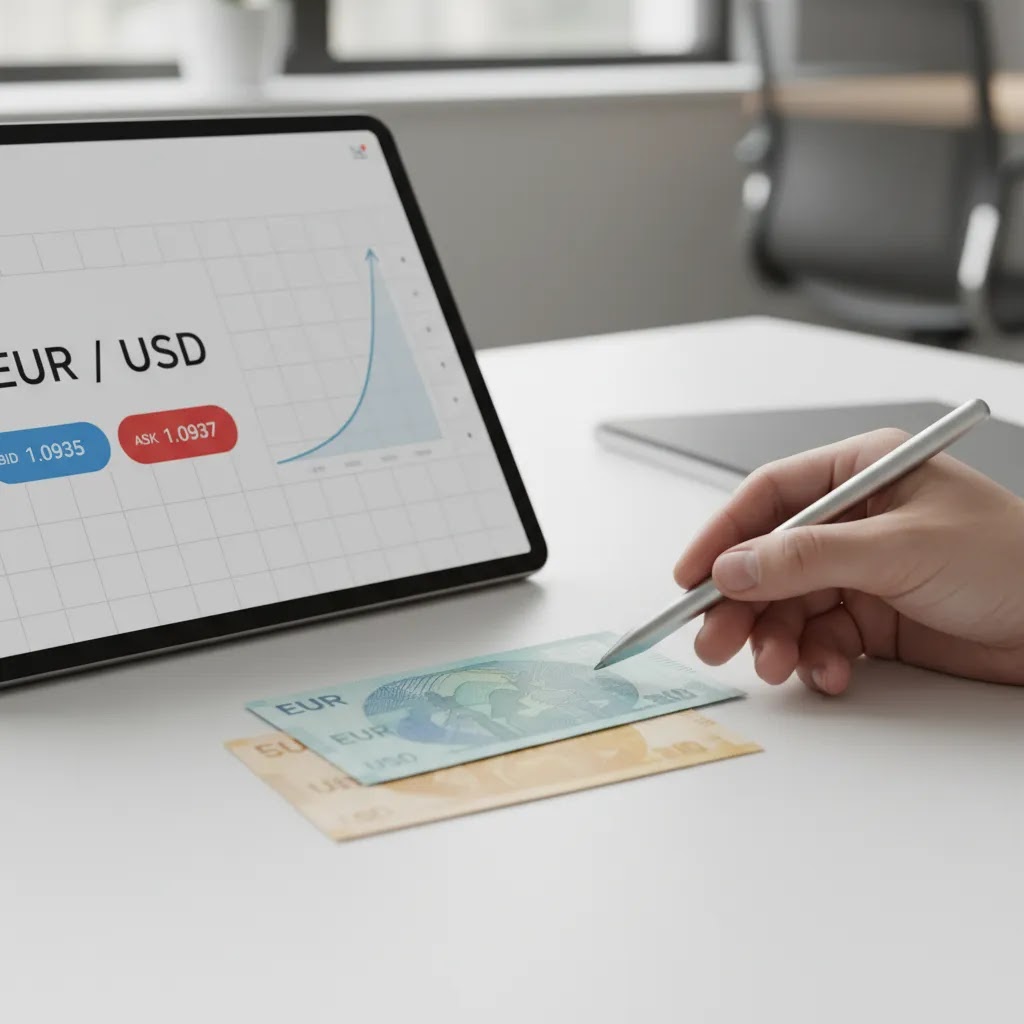
The 7 major currency pairs and why they dominate volume
If you search for “major pairs,” you will often see traders refer to the “7 major currency pairs.” This is a practical shorthand for the major pairs that tend to be most widely offered by brokers and most actively traded globally:
EUR/USD, USD/JPY, GBP/USD, AUD/USD, USD/CAD, USD/CHF, and NZD/USD.
Here is the thing: these pairs tend to dominate trading volume for a few straightforward reasons. The U.S. dollar plays a central role in global reserves and international trade, so it sits on one side of a large share of institutional hedging and investment flows. These pairs also tend to attract deep participation from banks, asset managers, and corporates, which usually improves liquidity.
From a practical standpoint, higher liquidity often translates into tighter typical spreads and more consistent execution in normal market conditions. That is one reason many beginners start with majors, because pricing is usually easier to interpret and the transaction cost hurdle is often lower than on less liquid pairs.
Still, major pairs can move sharply around high-impact news such as interest rate decisions, inflation releases, or geopolitical headlines. If you are trading with leverage, even a liquid pair can produce losses quickly. For UAE beginners, the takeaway is not that majors are “safe,” but that they often have fewer friction costs while you learn how spreads, volatility, and risk management work in real time.
How to read a currency pair
Reading forex pairs becomes much easier once you break the quote into two parts. In GBP/USD, GBP is the base currency and USD is the quote currency. If the pair rises, the British pound is strengthening against the U.S. dollar. If it falls, the pound is weakening against the dollar.
Price movements in forex are commonly measured in pips. If you want a clearer explanation of price increments, see our guide to pips spreads lots. Understanding pips matters because even small price moves can affect gains, losses, and trading costs.
For example, if EUR/USD moves from 1.1000 to 1.1050, that is a 50-pip move. Traders then calculate how much that move is worth based on position size. This is one reason forex pairs explained in simple terms should always include both price direction and trade size.
It also helps to remember that some pairs move differently due to macroeconomic factors such as interest rate expectations, inflation, central bank policy, and commodity exposure. USD/JPY, for example, may react strongly to changes in U.S. Treasury yields and Bank of Japan policy signals.
Forex currency pairs list: choosing pairs by region and trading session
Many people search for a “forex currency pairs list” because they want a quick way to narrow down what to watch. One useful way to think about currency pairs is by the economies they represent, and which trading session tends to be most active for that region.
European pairs often include combinations involving the euro, British pound, and Swiss franc. Examples include EUR/GBP and EUR/CHF. These can become more active during the London session, when European market participants are most involved and price discovery is typically strongest.
Asia-linked pairs often include JPY and AUD crosses. USD/JPY is a global major, and AUD/JPY is widely watched because it can be sensitive to broader “risk-on, risk-off” sentiment. Activity often increases during the Asia session, then can pick up again as London opens depending on the news cycle.
Commodity-linked pairs are commonly associated with currencies such as AUD and CAD. AUD/USD and USD/CAD are popular examples. They can be influenced by commodity pricing, but also by interest rate expectations and local economic data, so it helps to avoid oversimplifying them as “just oil” or “just metals.”
Consider this: session overlap matters as much as the pair itself. London and New York overlap can bring stronger volume in many USD pairs, which may tighten spreads but also increase short-term volatility. Volatility is not “opportunity” by default. It can also increase downside risk, especially for beginners using leverage or placing stops too close to current price.
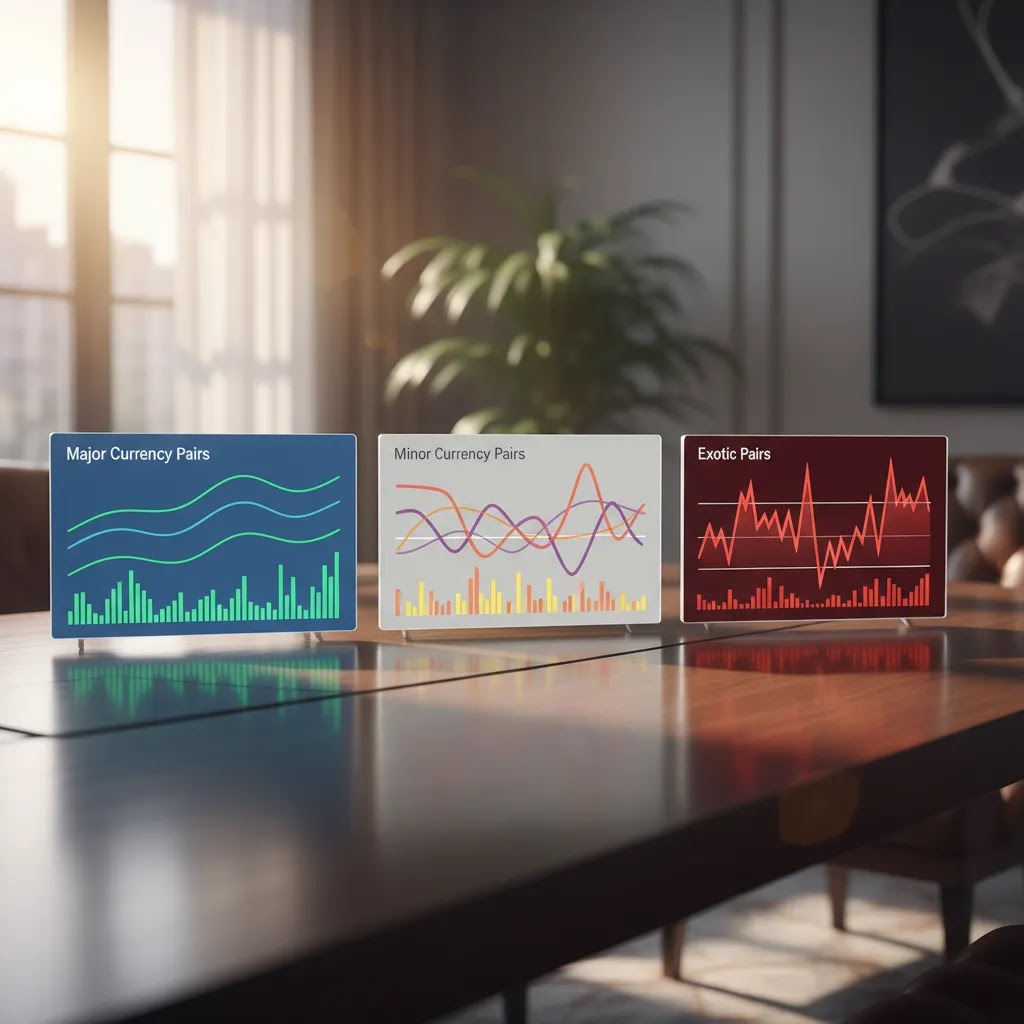
Liquidity, volatility, and spreads
The forex pairs with most liquidity are usually the majors. EUR/USD is widely considered the most liquid pair, followed by others such as USD/JPY and GBP/USD. High liquidity may lead to tighter spreads, faster execution, and lower slippage in normal market conditions.
That said, liquidity is not constant. It can vary by time of day and by trading session overlap. If you want to understand why EUR/USD often becomes more active during London and New York hours, review our article on forex trading sessions. Session timing may influence both spread costs and volatility.
The best forex pairs to trade depend on your strategy, risk tolerance, and the times you can monitor the market. Scalpers often prefer highly liquid major pairs because lower spreads may matter more to short-term trading. Swing traders may focus on pairs with cleaner trends or stronger macroeconomic drivers.
Exotic pairs can offer large moves, but higher spreads may reduce efficiency, especially for short-term traders. Wider spreads also mean the market needs to move further in your favor before a position becomes profitable. This is an important cost many beginners overlook.
No category is automatically better. In most cases, major currency pairs are simply easier to evaluate because pricing, news flow, and broker support are usually more consistent.
What people mean by the “28 forex pairs” list
You might also see traders refer to “the 28 forex pairs.” This is not a single official standard used by every broker or regulator. In many cases, it is a commonly circulated watchlist concept that groups the majors and a set of widely traded minors together, creating a convenient short list of pairs many retail traders monitor.
Think of it this way: the goal is usually not to memorize a fixed catalog, but to avoid analysis paralysis. By focusing on a relatively small set of liquid pairs, traders try to learn how a few markets move rather than jumping between dozens of symbols with different spread and volatility profiles.
From a practical standpoint, you can build your own “pairs to watch” list by considering three filters. First, liquidity and typical spreads, especially if you trade frequently or use short timeframes. Second, session timing: if you are mostly available during London or New York hours in the UAE, you may find it easier to follow EUR, GBP, and USD pairs than pairs that are most active during late Asia hours. Third, spread sensitivity: if your strategy uses tight stop losses or aims for small targets, even modest spread changes can have a meaningful impact on outcomes.
Pair availability also varies by broker, account type, and platform. Some brokers offer a wide range of crosses and exotics, while others focus on the most popular markets. Before you plan a strategy around a specific pair list, verify the exact instruments available inside your trading platform, and check the typical spreads during the hours you would actually trade. Trading still carries risk regardless of how liquid a pair is, and wider spreads or fast markets can increase the chance of unexpected losses.
Currency pair correlation and why it matters
Currency pair correlation describes how two pairs tend to move in relation to each other. Some pairs often move in the same direction, while others commonly move in opposite directions. For example, EUR/USD and GBP/USD may show positive correlation during certain market conditions because both involve the U.S. dollar as the quote currency.
This matters because opening multiple positions can increase your risk without making that risk obvious. A trader who buys EUR/USD and GBP/USD at the same time may think they have two separate trades, but both positions could be exposed to broad U.S. dollar weakness.
Correlation can change over time. It is not a fixed rule. Central bank decisions, geopolitical events, inflation data, and commodity prices may alter how pairs behave. That is why correlation should be used as a risk-awareness tool, not as a guarantee of future price movement.
For beginners, the practical takeaway is simple: do not judge positions one by one in isolation. Think about whether several trades are really expressions of the same market view.

Choosing a broker to trade forex pairs
Understanding forex currency pairs is only part of the decision. The broker you use may affect spreads, platform tools, educational support, and the range of pairs available. In the UAE, regulation is especially important. Depending on the provider, oversight may come from bodies such as the DFSA, SCA, ADGM FSRA, FCA, ASIC, or CySEC.
Based on current Business24-7 data, several regulated brokers offer access to forex pairs with different pricing structures and trading platforms. Pepperstone is rated 4.5/5 and offers spreads from 0.0 pips on Razor with a $7 per lot commission, plus DFSA, FCA, ASIC, CySEC, and BaFin regulation. AvaTrade is rated 4.5/5, starts from 0.9 pips, and is regulated by ADGM FSRA, ASIC, CBI, and FSA Japan. XTB is rated 4.0/5, offers spreads from 0.1 pips, and is DFSA regulated with strong education support.
Capital.com is another notable option for UAE readers because it is SCA regulated and has a low minimum deposit of $20, with spreads from 0.6 pips. ADSS is UAE-headquartered, SCA regulated, and offers AED accounts. These details do not mean one broker is right for everyone, but they show why platform selection should include regulation, fees, and usability, not just the list of forex pairs offered.
Before opening an account, you may want to browse the Trading Fundamentals section for educational context, then compare broker options in our Best Forex Brokers resource. Business24-7 aims to help UAE-based readers compare platforms side by side, review fee structures, and check regulatory standing before committing capital.
Pros and Cons
Strengths
- Learning forex currency pairs gives you the basic language needed to understand every forex quote and trade setup.
- Major currency pairs such as EUR/USD, GBP/USD, and USD/JPY usually offer high liquidity and, in most cases, lower spreads than exotic pairs.
- Grouping pairs into majors, minors, and exotics helps beginners compare risk, volatility, and likely trading costs more clearly.
- Understanding pair correlation may help you avoid unintentionally doubling your exposure across similar trades.
- Business24-7 data shows several regulated brokers serving UAE traders, including DFSA, SCA, and ADGM FSRA supervised options.
Considerations
- Even the most traded currency pairs can move sharply during economic releases, central bank decisions, or geopolitical events.
- Exotic currency pairs often come with wider spreads and lower liquidity, which may increase trading costs and execution risk.
- Correlation is not stable over time, so relying on past pair behavior alone may lead to poor risk assessment.
- Low spreads do not remove trading risk, and platform costs such as commissions, overnight fees, or inactivity fees may still apply.
Frequently Asked Questions
What is a forex currency pair?
A forex currency pair is the quoted value of one currency against another. The first currency is the base, and the second is the quote. When you trade forex, you are speculating on whether the base currency will rise or fall relative to the quote currency. All forex transactions work through this paired format.
What are major currency pairs?
Major currency pairs are the most actively traded forex pairs and usually include the U.S. dollar. Common examples are EUR/USD, GBP/USD, and USD/JPY. They typically offer high liquidity and tighter spreads than less popular pairs, though they still carry market risk and may become volatile during major news events.
What are minor currency pairs?
Minor currency pairs, also called crosses, are pairs that do not include the U.S. dollar. Examples include EUR/GBP and GBP/JPY. They can still be actively traded, but spreads may be a bit wider than on the majors. They may suit traders who want exposure to specific economies without direct dollar positioning.
What are exotic currency pairs?
Exotic currency pairs combine a major currency with the currency of a smaller or emerging economy. These pairs may show larger price swings and wider spreads due to lower liquidity. For beginners, they are often harder to trade consistently because costs can be higher and price behavior may be less stable.
Which forex pairs have the most liquidity?
EUR/USD is generally considered the most liquid forex pair, followed by USD/JPY and GBP/USD. High liquidity may help reduce spreads and improve execution in normal market conditions. Liquidity can still change during off-peak hours or major announcements, so it should not be treated as constant throughout the trading day.
How do I read EUR/USD?
EUR/USD shows how many U.S. dollars are needed to buy one euro. If the price is 1.1000, one euro equals 1.10 U.S. dollars. If the pair rises, the euro is strengthening against the dollar. If it falls, the euro is weakening relative to the dollar.
Are major pairs safer than exotic pairs?
Major pairs are not safe in an absolute sense, but they are usually more liquid and often have lower trading costs than exotic pairs. That may make them easier to understand and manage for beginners. Still, all forex trading involves risk, and even majors can react sharply to interest rate news or economic surprises.
What is currency pair correlation?
Correlation refers to how two currency pairs tend to move relative to each other. Some pairs often move in the same direction, while others may move in opposite directions. Traders use correlation to understand hidden exposure across multiple positions, but relationships can shift as market conditions change.
What should UAE traders look for in a forex broker?
UAE traders should usually start with regulation, fees, available forex pairs, platform quality, and customer support. Oversight from bodies such as the DFSA, SCA, or ADGM FSRA may provide an added layer of confidence. It also helps to compare spreads, commissions, minimum deposits, and whether Arabic support or AED account features are available.
What are the 7 major currency pairs?
The commonly cited 7 major currency pairs are EUR/USD, USD/JPY, GBP/USD, AUD/USD, USD/CAD, USD/CHF, and NZD/USD. They tend to be widely traded because they involve large, heavily followed economies and, in many cases, have deeper liquidity and tighter typical spreads than less traded pairs. Even so, they can still move quickly around news and carry real risk, especially if leverage is involved.
What are the 28 currency pairs?
“The 28 currency pairs” usually refers to a popular watchlist-style grouping of major pairs plus a set of commonly traded minor pairs. It is not a universal official list, and the exact composition can vary by source and by broker offering. Many traders use it as a way to focus on more liquid markets and reduce the complexity of monitoring dozens of pairs.
What are the 10 best forex pairs to trade?
There is no single set of “best” forex pairs for every trader, because the right fit depends on your strategy, costs, and when you can trade. Many beginners start by watching liquid majors and a few active crosses, such as EUR/USD, USD/JPY, GBP/USD, AUD/USD, USD/CAD, USD/CHF, NZD/USD, EUR/GBP, EUR/JPY, and GBP/JPY. What matters more than the list is whether your broker offers competitive spreads on those pairs during your trading hours, and whether you can manage the volatility and downside risk responsibly.
How to turn $100 into $1000 in forex?
This question is common, but it is framed around a specific outcome that forex trading cannot promise. Turning $100 into $1000 would typically require taking substantial risk, often using high leverage, and that also increases the likelihood of large losses or a full account wipeout. A more realistic focus is learning position sizing, understanding spreads and overnight fees, using risk limits per trade, and practicing with a demo account before committing more capital. Past performance does not guarantee future results, and trading outcomes vary widely by skill, market conditions, and discipline.
Key Takeaways
- Forex currency pairs are the basic structure of every forex trade, with one currency priced against another.
- Major currency pairs usually have the highest liquidity, while minor and exotic pairs may involve wider spreads and different risk profiles.
- Knowing how to read pairs such as EUR/USD or USD/JPY helps you interpret price direction and trade exposure more accurately.
- Liquidity, spreads, session timing, and pair correlation all matter when evaluating which forex pairs to trade.
- For UAE readers, broker regulation by bodies such as the DFSA, SCA, or ADGM FSRA may be just as important as the list of available forex pairs.
Conclusion
Forex currency pairs may seem technical at first, but the concept becomes manageable once you understand the difference between majors, minors, and exotics. For most beginners, the real goal is not finding a perfect pair. It is learning how liquidity, spreads, volatility, and correlation affect risk. That knowledge may help you make more measured decisions and avoid common mistakes. If you are planning to move from education into broker research, Business24-7 offers UAE-focused resources that can help you compare regulated platforms, review trading costs, and assess whether a provider fits your needs. Use our educational guides as a starting point, then review broker comparisons carefully before opening any live trading account.
Disclaimer: The content published on Business24-7 is intended for informational purposes only and does not constitute financial advice, investment recommendations, or an endorsement of any specific platform or financial product. Trading and investing carry significant risk, including the potential loss of capital. You should conduct your own research and, where appropriate, seek independent financial advice before making any investment decisions. Business24-7 does not accept responsibility for any financial losses incurred as a result of information published on this site.
Disclaimer
eToro is a multi-asset platform which offers both investing in stocks and cryptoassets, as well as trading CFDs.
Please note that CFDs are complex instruments and come with a high risk of losing money rapidly due to leverage. 61% of retail investor accounts lose money when trading CFDs with this provider. You should consider whether you understand how CFDs work, and whether you can afford to take the high risk of losing your money
This communication is intended for information and educational purposes only and should not be considered investment advice or investment recommendation. Past performance is not an indication of future results.
Copy Trading does not amount to investment advice. The value of your investments may go up or down. Your capital is at risk.
Crypto assets are complex and carry a high risk of volatility and loss. Trading or investing in crypto assets may not be suitable for all investors. Take 2 mins to learn more
eToro USA LLC does not offer CFDs and makes no representation and assumes no liability as to the accuracy or completeness of the content of this publication, which has been prepared by our partner utilizing publicly available non-entity specific information about eToro.

If you are new to forex, one of the first concepts you need to understand is the currency pair. Every forex trade involves buying one currency and selling another, which is why prices are always quoted in pairs such as EUR/USD or USD/JPY. For beginners in the UAE, this topic matters because understanding forex currency pairs can help you read…