
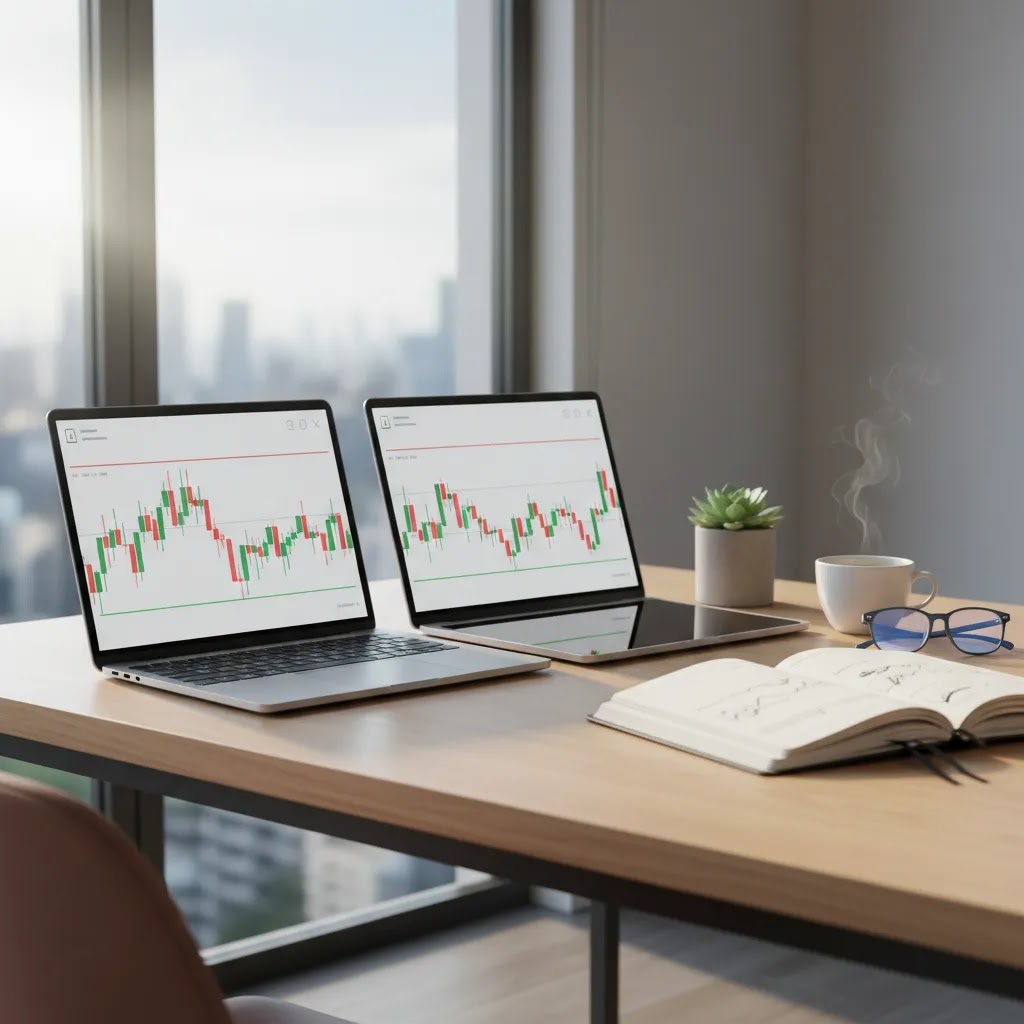
Range trading is one of the most practical approaches for traders who keep seeing price move sideways instead of trending cleanly. In a range bound market, price often rotates between support and resistance rather than breaking higher or lower with conviction. For UAE-based traders, that matters because many forex, index, commodity, and stock CFD markets may spend long periods consolidating between major news events. If you are still building confidence, range trading may feel more structured than chasing fast moves. The challenge is knowing whether the market is truly ranging, where the boundaries sit, and when a breakout could invalidate the setup. If you want broader context first, explore our guide to trading strategies before applying this method to live markets.
What range trading is
Range trading is a strategy built around the idea that price may repeatedly bounce between a lower boundary and an upper boundary. The lower area is usually called support, while the upper area is resistance. Traders try to buy near support and sell near resistance, or in some cases short near resistance and cover near support, depending on the instrument and account type.
This approach is most relevant in a sideways market where momentum is limited and neither buyers nor sellers have full control. A valid range usually shows multiple reactions at both boundaries. One touch alone is rarely enough. In most cases, traders want to see price respect the same zone more than once before treating it as actionable.
Range trading sounds simple, but it is not risk-free. Markets can stay in consolidation longer than expected, yet they can also break out suddenly. That is why confirmation, stop-loss placement, and position sizing matter just as much as finding support and resistance levels.
How to identify a sideways market
The first step is deciding whether price is actually ranging rather than trending. A range bound market often has these traits:
- Price repeatedly reverses near the same high and low zone.
- Trend structure is weak, with no consistent series of higher highs or lower lows.
- Candles may overlap more often, suggesting reduced directional conviction.
- Momentum may fade as price approaches established boundaries.
A clean way to map the setup is to start with support and resistance. Draw zones rather than single exact lines. Markets rarely reverse at the exact same price every time. In most cases, a support resistance range is better treated as an area where order flow may shift.
You can also compare timeframes. For example, a market may be trending on the daily chart but ranging on the one-hour chart. That does not invalidate the setup, but it does mean your range trade is happening inside a larger context. Beginners often make the mistake of ignoring that bigger picture.
Volume and volatility can help too, although they are not always available or equally useful across all instruments. If volatility keeps contracting and price remains trapped between clear boundaries, consolidation trading may be a reasonable working assumption until price proves otherwise.
Best timeframes and markets for range trading (and when to avoid it)
Not all ranges behave the same way, and the instrument you trade often shapes how clean the boundaries look. Consider this: some markets tend to respect technical levels more consistently, while others can cut through them with less warning, especially when liquidity or volatility shifts quickly.
In forex, ranges can form during quieter sessions or in the middle of well-telegraphed macro cycles. Major pairs may show repeatable reactions at widely watched levels, but they can also reprice sharply around central bank commentary and inflation data. Indices and commodities can range too, but they often have distinct rhythm changes around session opens and major risk events. Stocks may range between earnings, yet earnings and guidance can reset the price structure in a single session. Crypto can form ranges that look clean on a chart, but sudden volatility spikes can be more frequent, which can make stop placement and slippage a bigger part of the outcome.
Timeframe selection matters because it changes the balance between signal and noise. Many traders use a higher timeframe to define the range, then a lower timeframe to time the entry. For example, you might define the range on the 4-hour or daily chart so the support and resistance zones are based on more meaningful swings. Then you could use the 15-minute or 1-hour chart to look for rejection signals near the edges. The benefit is clearer structure. The tradeoff is fewer opportunities and potentially wider stops.
Lower timeframes can create more setups, but they can also create more false signals. Price can look like it is rejecting support on a 5-minute chart, then drift lower anyway because the higher timeframe level is not actually in play. From a practical standpoint, range trading tends to get more difficult when the range is small relative to normal intraday movement, because noise can push price beyond your level even if the broader range eventually holds.
There are also times when range trading is often a poor fit. Major economic releases, earnings, and central bank decisions can turn a stable range into a fast repricing event. Session opens can do something similar, particularly in instruments with strong open-to-close behavior. Unusually high volatility is another warning sign, because wide candles and larger gaps between bids and offers can reduce the reliability of edge-to-edge mean reversion. You can still see ranges during these periods, but you may need to reduce size, widen stops, or stand aside if execution quality is likely to deteriorate.
Range trading rules for entries and exits
A basic range trading strategy usually follows a simple logic:
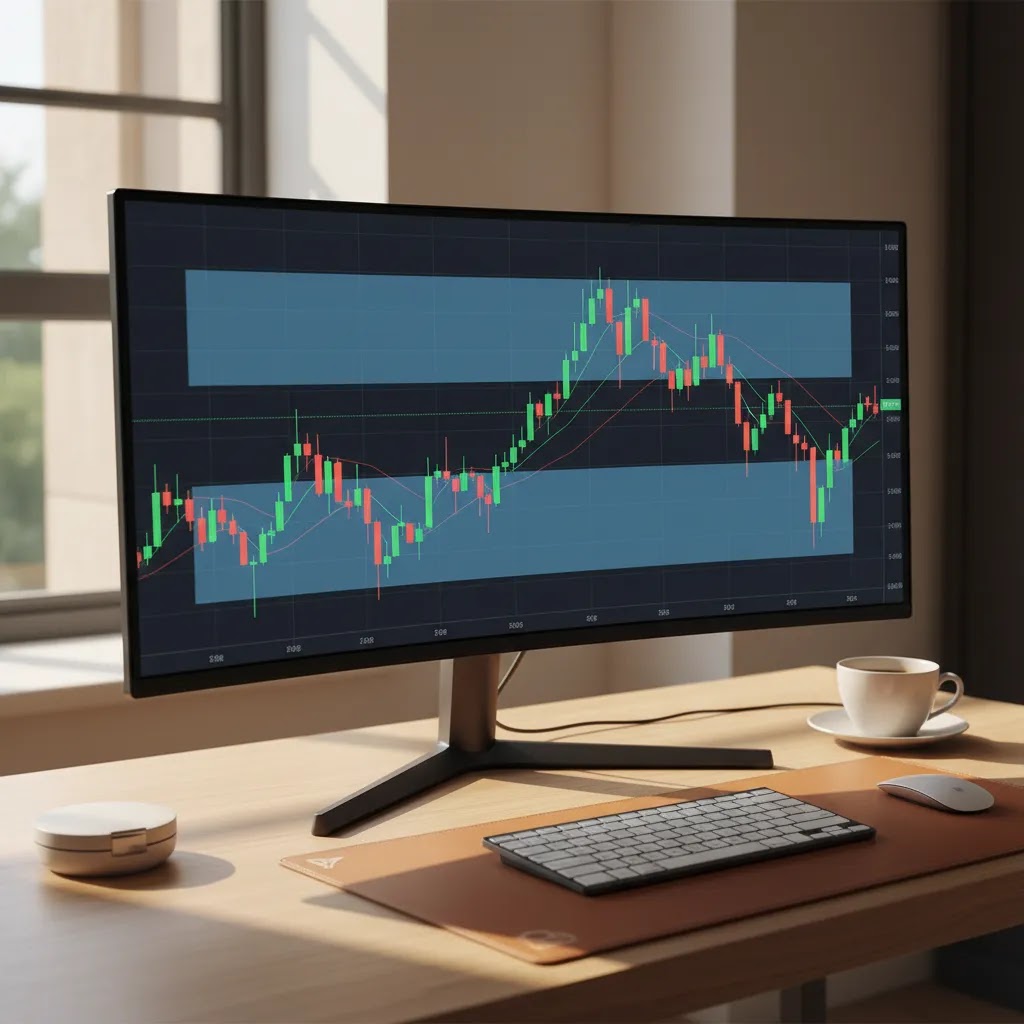
- Identify clear support and resistance with at least two or three meaningful reactions.
- Wait for price to approach one edge of the range.
- Look for signs of rejection, such as wick rejection, slowing momentum, or failure to close beyond the boundary.
- Set a stop beyond the range edge, allowing for normal price noise.
- Target the midpoint or opposite side of the range, depending on your risk tolerance.
For example, in range trading forex, a trader might buy near support on EUR/USD after price rejects a known floor and fails to break lower. The stop could sit slightly below the support zone, while the target may sit near the middle or top of the range. The same logic may apply to indices, commodities, or selected stocks during low-trend periods.
Patience is important. Entering in the middle of the range often gives you a weaker reward-to-risk profile. Many experienced traders prefer waiting near the edges, where invalidation is clearer. If price starts closing decisively outside the range, the setup may be shifting from a mean-reversion trade to a breakout trading environment.
That transition is where many losses happen. Traders keep fading the move because the market had ranged for days or weeks. Once the breakout is confirmed, the old range may no longer be relevant. Risk control has to come first.
Range trading example: planning a trade from support to resistance
Rules are useful, but many beginners struggle with turning them into a plan they can execute without second guessing. Think of it this way: a range trade is really a structured bet that price will rotate within defined boundaries, and that you will exit quickly if those boundaries stop holding.
Start by marking the range. On your higher timeframe chart, identify a support zone where price has bounced at least two or three times, and a resistance zone where price has rejected at least two or three times. Then measure the approximate range width by taking the distance between the support zone and resistance zone. You are not looking for a perfect number, you just need a realistic sense of how much room the market has to move if the range holds.
Now plan a long near support. Wait for price to approach the support zone, then look for a rejection signal. That might be a candle with a long lower wick, a failure to close below the zone, or a brief push lower followed by a quick recovery back into the range. Many traders place the stop in one of two common locations: behind the support zone (so it triggers only if the level truly fails), or inside the range (tighter risk, but a higher chance of being stopped out by noise). The placement depends on how volatile the instrument is and how often it spikes through levels before reverting.
Targets are often framed around the midpoint or the full range. A midpoint target is more conservative and may be used when you are unsure the market will travel from one edge all the way to the other. A full-range target aims toward the opposite side of the structure, which can offer a larger payoff but requires price to complete the rotation. In many cases, the midpoint can also act like a reality check. If price cannot travel to the midpoint without stalling, it may be telling you the range is weakening or that conditions have changed.
You can apply the same logic for a short near resistance, where you wait for price to approach the resistance zone and show rejection. The stop is typically placed above resistance, either beyond the zone or slightly inside the range depending on how you manage risk. The target is often the midpoint or support, using the same conservative versus full-rotation logic.
What many people overlook is invalidation. A tradable range is not just a box on a chart, it is a hypothesis that should be easy to disprove. Here is a quick checklist that often invalidates the idea:
- A decisive close outside the range, especially if it happens more than once.
- Increased momentum into the boundary, where price stops showing rejection and starts pushing through levels.
- A failed retest, where price breaks out, pulls back to the old boundary, and then continues in the breakout direction instead of snapping back into the range.
None of this guarantees a profitable trade. It is simply a way to make the setup more concrete, so your entry, stop, and target are based on structure rather than hope.
Useful range trading indicators
Indicators should support the chart, not replace it. The most useful range trading indicators tend to be the ones that help you measure volatility, boundaries, and overextension.
Bollinger Bands
Bollinger bands are often used in sideways conditions because they expand and contract with volatility. In a quiet range, price may rotate from the lower band toward the upper band. That does not create an automatic trade, but it can help confirm when price is stretching near a boundary.
RSI
RSI may help highlight short-term overbought or oversold conditions inside a range. If price reaches resistance while RSI also shows stretched momentum, some traders view that as added confluence. The same idea may apply near support.
ATR
Average True Range can help with stop placement. If volatility is low, stops may be tighter. If volatility is expanding, you may need more room or a smaller position size. ATR is useful because sideways markets are rarely identical from week to week.
Moving averages
Moving averages may help confirm whether trend conditions are weak. If price keeps crossing back and forth through a medium-term average without sustained direction, that can support the case for a sideways market. On their own, though, moving averages are not enough to define a range.
Platforms that may suit range traders
Your platform does not determine whether a range trade works, but it may affect execution, charting, fee drag, and overall usability. Based on current Business24-7 product data, several brokers may appeal to traders who rely on chart-based setups, technical tools, and controlled costs.
Pepperstone offers MT4, MT5, cTrader, and TradingView, with spreads from 0.0 pips on Razor and a $7 per lot commission. It is regulated by DFSA, FCA, ASIC, CySEC, and BaFin. For active traders, the platform choice and low-spread structure may be useful, although commission costs need to be understood clearly.
XTB provides xStation 5 and mobile access, with spreads from 0.1 pips and a $0 minimum deposit. It is regulated by DFSA, FCA, CySEC, and KNF. Its strong education offering may help newer traders who are still learning how to identify range conditions.
Capital.com may also suit beginners because of its low $20 minimum deposit, spread-only pricing from 0.6 pips, and SCA regulation in the UAE alongside FCA, CySEC, and ASIC oversight. That combination may be attractive for readers who prioritize accessibility and local regulatory relevance.
AvaTrade includes MT4, MT5, AvaTradeGO, and WebTrader, with spreads from 0.9 pips and ADGM FSRA regulation. It also offers AvaProtect risk management and educational materials, which may appeal to cautious traders. Still, its inactivity fee after 3 months is a real consideration for less active users.
If you are comparing brokers before opening an account, browse Business24-7’s trading strategies content alongside our technical analysis resources so you can match your method to the platform, not just the marketing message.
Any platform choice should still be judged through regulation, product access, pricing transparency, and how well the interface supports your process. DFSA, SCA, ADGM FSRA, FCA, ASIC, and CySEC regulation may offer an added layer of oversight, but regulation does not remove trading risk.
Pros and Cons
Strengths
- Range trading gives you a structured framework for sideways markets where trend-following setups may be less effective.
- Support and resistance levels can make entries, exits, and invalidation points easier to define.
- The strategy may work across forex, indices, commodities, and some stocks during consolidation periods.
- It can encourage patience, because better setups often appear near the edges of the range rather than in the middle.
- Indicators such as Bollinger Bands, RSI, and ATR may provide useful confirmation when used with price action.
- Many regulated brokers covered by Business24-7 offer charting platforms suitable for range-based analysis.
Considerations
- False breakouts are common, especially around news events or session changes.
- A market that looks range-bound can quickly become directional, invalidating a mean-reversion trade.
- Entering too early or too close to the middle of the range may weaken reward-to-risk.
- Spread costs, overnight financing, and commissions may reduce performance in shorter-term setups.
- Beginners may confuse random price noise with a tradable range.
Who range trading may suit
Range trading may suit beginners who want a more rule-based way to read charts, as well as intermediate traders who prefer calm, repetitive setups over momentum chasing. It may also fit traders with limited screen time if they focus on higher timeframes and wait for price to approach predefined zones.
It may be less suitable for traders who struggle with patience or who keep forcing trades in the middle of consolidation. If you prefer fast trend continuation or news-driven volatility, range trading might feel restrictive. As with any method, your platform, fees, and risk controls still matter as much as the chart pattern itself.
Business24-7 perspective
At Business24-7, our aim is to help you evaluate both strategy and platform with a safety-first mindset. That means looking beyond chart patterns to practical issues such as broker regulation, fee structure, and platform usability for UAE-based readers. The site is built around educational, unbiased research, and the brand profile identifies Braden Chase as a former research specialist at Forex.com. That background supports a measured approach rather than promotional claims.
If you are planning to use a range trading strategy in live markets, it makes sense to compare brokers through the same lens you apply to a setup: evidence, structure, and downside control. Read the full reviews for platforms such as Pepperstone, XTB, Capital.com, or AvaTrade before funding an account, and return to Business24-7 whenever you need a clearer benchmark for safety, spreads, and trading tools.
How to choose a platform for range trading
If you plan to trade sideways markets actively, there are five practical checks worth making before you open an account.
1. Start with regulation
For UAE readers, this is the first filter. Look for oversight from bodies such as the DFSA, SCA, or ADGM FSRA, or internationally recognized regulators like the FCA, ASIC, and CySEC. Regulation does not guarantee a good experience, but it may provide stronger operating standards and dispute processes than unclear offshore structures.
2. Understand the fee model
Range traders often target relatively modest price moves. That means spreads, commissions, and overnight charges can have a meaningful impact. Pepperstone’s Razor account, for example, lists spreads from 0.0 pips with a $7 per lot commission, while Capital.com uses spread-only pricing from 0.6 pips on most instruments. Neither model is automatically better. It depends on frequency, holding time, and instrument selection.
3. Check the charting environment
Because range trading depends heavily on support, resistance, and timing near boundaries, chart usability matters. Platforms such as MT4, MT5, cTrader, TradingView, xStation 5, and WebTrader may all work, but your own process should decide which is most practical. If drawing zones and tracking volatility feels clumsy, execution quality may suffer.
4. Match the account to your capital and pace
A low minimum deposit may help beginners test a process more cautiously. For example, Capital.com lists a $20 minimum deposit, XTB lists $0, and AvaTrade lists $100. Lower entry requirements may reduce pressure, but they should not encourage overtrading. Start with an amount you can afford to risk and keep expectations realistic.
5. Review support and platform extras
Educational content, Arabic support, AED funding options, mobile usability, and risk tools may all matter if you are based in the UAE. AvaTrade highlights education and AvaProtect. XTB emphasizes education. Pepperstone offers broad platform choice. Those differences may shape your experience even if your strategy stays the same.
No platform removes market risk. A regulated broker with suitable charts and transparent pricing may improve your process, but range trading still involves losing trades, slippage, and occasional failed setups. Treat broker selection as part of risk management, not as a shortcut to performance.
How to know if a range is tradable after costs
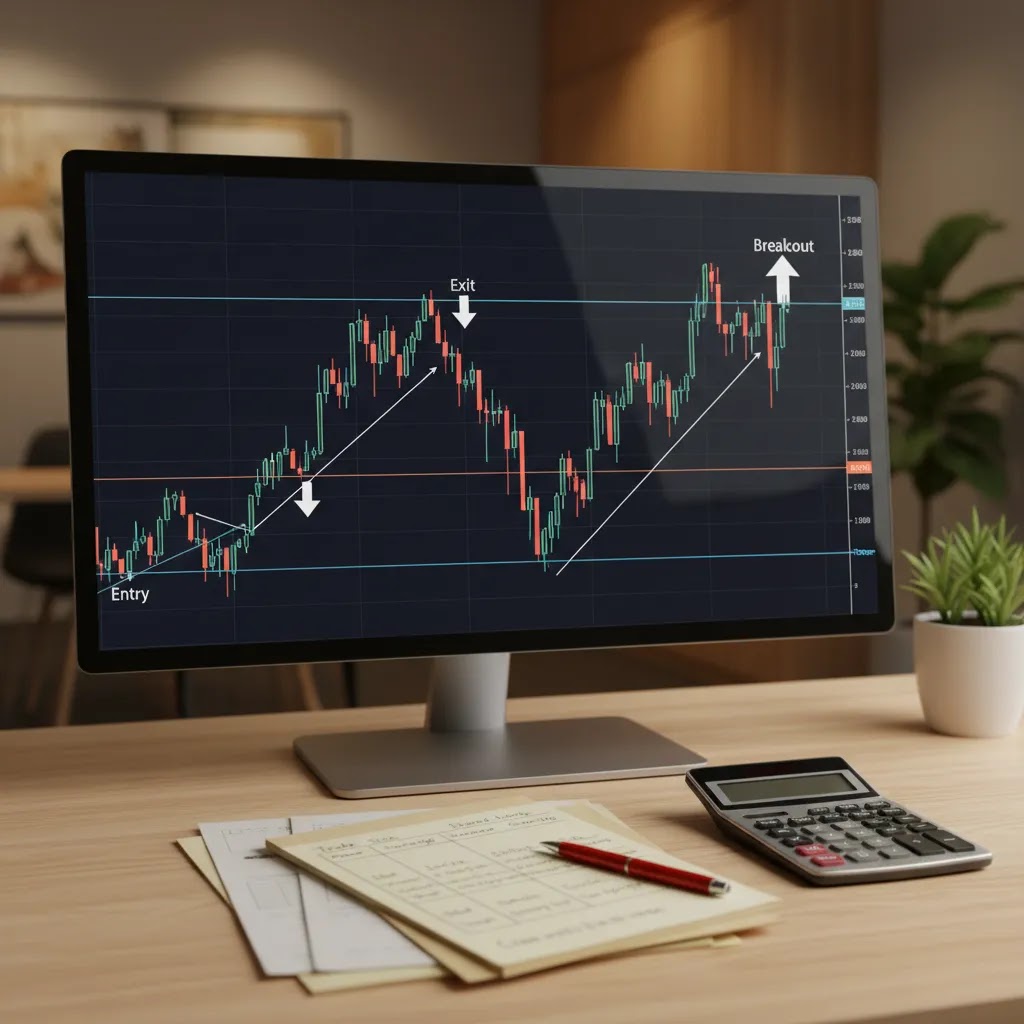
Risk management matters more than the pattern, and for range traders that includes the costs you pay to express the idea. Here is the thing: range setups can look clean on a chart and still be non-viable if the range is too tight relative to spread, commission, and typical slippage. This is especially relevant for short-term traders who may enter frequently and take smaller targets.
A simple sanity check is to compare your expected “room” to your known costs. Start with the range width and then consider how much of that move you realistically plan to capture. If you are targeting the midpoint, your profit window is roughly half the range, before you even account for trading costs. If the spread and commission consume a meaningful portion of that window, the trade may require an unusually high win rate to work over time, and that is rarely a comfortable place to be.
Slippage is harder to model because it varies with liquidity and volatility, but you can still plan for it. Ranges are often traded with limit orders near the edge or with market orders after rejection. Market orders can be more vulnerable to slippage in fast conditions, and that can turn a good-looking entry into a mediocre one. If you notice that fills frequently differ from your intended price during certain sessions, it may be a signal to reduce frequency or shift your execution approach.
ATR can also be used as a filter to avoid ranges that are too small relative to recent movement. If the range width is small compared with the instrument’s recent average true range, price can cross the structure quickly and trigger stops with ordinary noise. In many cases, traders look for ranges that are large enough to allow a stop beyond the boundary while still leaving reasonable space to the midpoint or opposite side. The goal is not perfection, it is avoiding setups where the math is working against you from the start.
Cost traps are not just spreads and commissions. Overnight financing can matter if you hold positions for longer than expected. Ranges can persist, and trades can get stuck, which may lead to holding beyond your original plan. In CFD products, overnight charges can accumulate and reduce performance even if the range eventually resolves in your favor. Frequent entries can also amplify total transaction costs, which is one reason many range traders focus on higher-quality touches at the edges instead of trading every minor fluctuation.
None of these checks eliminate risk. They are simply practical guardrails that help you avoid spending time on ranges that are not wide enough to justify the friction of trading them.
Frequently Asked Questions
What is range trading in simple terms?
Range trading is a method where traders look for price to move between support and resistance rather than trend strongly in one direction. The basic idea is to buy near support and sell near resistance, or the reverse for short setups where allowed. It may work best when the market is consolidating and volatility is relatively contained.
How do I know if a market is range-bound?
A range-bound market usually shows repeated reactions at similar high and low areas, with no clear series of higher highs or lower lows. Price often overlaps and lacks directional follow-through. Many traders confirm this by marking multiple touches of support and resistance and checking whether momentum keeps fading near those boundaries.
Is range trading good for beginners?
It may be more approachable than some fast-moving strategies because it gives beginners visible boundaries and clearer invalidation points. Still, it is not easy. False breakouts and poor timing are common. Beginners may benefit from practicing on higher timeframes first and using a regulated broker with clear pricing and strong charting tools.
Which indicators are most useful for range trading?
Bollinger Bands, RSI, ATR, and basic moving averages are commonly used. Bollinger Bands may help show volatility compression and extension. RSI may help identify overbought or oversold conditions inside a range. ATR may help with stop placement. These tools are most useful when combined with price action and support-resistance analysis.
What is the biggest risk in a range trading strategy?
The main risk is that the market stops ranging and breaks out decisively. Traders who keep betting on reversal after the range fails can take repeated losses. News events, session opens, or shifts in sentiment may trigger that change. Using stops, smaller position sizing, and confirming reactions near the edges may help reduce this risk.
Can range trading work in forex markets?
Yes, range trading forex is common, especially during quieter sessions or periods between major economic catalysts. Currency pairs may spend long stretches consolidating before the next directional move begins. Even so, forex markets can react quickly to central bank commentary, inflation data, or geopolitical news, so the range should always be treated as temporary rather than permanent.
Do I need a special broker for range trading?
You do not need a broker built specifically for range trading, but you do need one that suits chart-based execution. Key factors include regulation, spreads, commissions, platform quality, and order tools. For UAE-based traders, oversight from DFSA, SCA, or ADGM FSRA may add reassurance, though it does not remove trading risk.
Should I trade the middle of the range?
In most cases, the middle of the range offers a weaker setup because your stop and target may be less attractive. Many traders prefer waiting near support or resistance, where invalidation is clearer and the reward-to-risk profile may be better. The midpoint can still be useful as a profit target or a place to reduce exposure.
How is range trading different from breakout trading?
Range trading assumes price will remain contained and revert toward the opposite side of the structure. Breakout trading assumes price is about to escape that structure and continue in the direction of the break. The challenge is recognizing when the market shifts from one condition to the other. That is why confirmation and risk management are critical.
What is range in trading?
A range in trading is a price zone where an instrument trades back and forth between a relatively consistent high area (resistance) and low area (support). Instead of making sustained higher highs or lower lows, price tends to rotate within those boundaries. A range can last minutes, days, or months depending on the market and timeframe.
What is the best indicator for range trading?
There is no single best indicator, because most of the edge comes from correctly defining support and resistance and managing risk. Many traders use Bollinger Bands to visualize volatility contraction and extension, RSI to spot stretched momentum near boundaries, and ATR to size stops and filter out ranges that are too tight. Indicators tend to work best as confirmation tools, not as standalone signals.
Can you make $200 per day in day trading?
Some traders may have days where they make $200, but treating it as a consistent daily target can be misleading. Day trading outcomes vary widely based on account size, costs, market conditions, and execution quality, and losses are a normal part of trading. A more realistic approach is to focus on process goals, such as following your plan, limiting risk per trade, and avoiding overtrading, rather than assuming a fixed daily income.
How much money do day traders with $10,000 accounts make per day on average?
There is no reliable “average” that applies broadly, because performance varies dramatically and many retail day traders lose money over time. With a $10,000 account, even small percentage swings can feel significant, and costs like spreads, commissions, and slippage can matter if you trade frequently. If you are evaluating expectations, it is often more useful to think in terms of risk per trade and drawdown tolerance, and to assume that results can be inconsistent from day to day.
Key Takeaways
- Range trading is built for sideways markets where price respects support and resistance.
- The best setups usually appear near the edges of the range, not in the middle.
- Bollinger Bands, RSI, ATR, and price action may help confirm a consolidation setup.
- Broker regulation, spreads, commissions, and chart usability matter if you plan to trade ranges actively.
- Breakouts can invalidate the setup quickly, so stops and position sizing remain essential.
Conclusion
Range trading can be a practical approach if you understand what a sideways market looks like and accept that not every apparent range will hold. The method is most useful when support and resistance are well defined, execution is disciplined, and risk is controlled before the trade is placed. For many UAE-based readers, the next step is not just learning the setup but also choosing a broker that offers suitable charts, transparent pricing, and credible regulation. Business24-7 is designed to help with that part of the decision. Browse our platform reviews, broker comparisons, and strategy resources before you commit capital, and use them as a reference point whenever you evaluate a new trading idea or account provider.
Disclaimer: The content published on Business24-7 is intended for informational purposes only and does not constitute financial advice, investment recommendations, or an endorsement of any specific platform or financial product. Trading and investing carry significant risk, including the potential loss of capital. You should conduct your own research and, where appropriate, seek independent financial advice before making any investment decisions. Business24-7 does not accept responsibility for any financial losses incurred as a result of information published on this site.
Disclaimer
eToro is a multi-asset platform which offers both investing in stocks and cryptoassets, as well as trading CFDs.
Please note that CFDs are complex instruments and come with a high risk of losing money rapidly due to leverage. 61% of retail investor accounts lose money when trading CFDs with this provider. You should consider whether you understand how CFDs work, and whether you can afford to take the high risk of losing your money
This communication is intended for information and educational purposes only and should not be considered investment advice or investment recommendation. Past performance is not an indication of future results.
Copy Trading does not amount to investment advice. The value of your investments may go up or down. Your capital is at risk.
Crypto assets are complex and carry a high risk of volatility and loss. Trading or investing in crypto assets may not be suitable for all investors. Take 2 mins to learn more
eToro USA LLC does not offer CFDs and makes no representation and assumes no liability as to the accuracy or completeness of the content of this publication, which has been prepared by our partner utilizing publicly available non-entity specific information about eToro.

Range trading is one of the most practical approaches for traders who keep seeing price move sideways instead of trending cleanly. In a range bound market, price often rotates between support and resistance rather than breaking higher or lower with conviction. For UAE-based traders, that matters because many forex, index, commodity, and stock CFD markets may spend long periods consolidating…